Category: Restaurants

  • 5 Powerful Examples of Profitable Restaurant Property Investments

    5 Powerful Examples of Profitable Restaurant Property Investments


    TL;DR:

    • Successful restaurant investments rely on strong leases, creditworthy tenants, and prime locations.
    • Cost segregation and bonus depreciation significantly boost after-tax returns on restaurant properties.
    • Diversify investment strategies by assessing risk tolerance, location quality, and potential value-add opportunities.

    Selecting the right restaurant property is one of the most consequential decisions a real estate investor can make. Get it right, and you’re looking at predictable passive income, meaningful tax advantages, and long-term appreciation backed by a corporate guarantee. Get it wrong, and you’re stuck with a vacant shell, a struggling franchisee, and a lease that doesn’t protect you. This guide breaks down the exact criteria, real-world transactions, and financial strategies that separate high-performing restaurant investments from costly mistakes, so you can move with confidence in your next deal.

    Table of Contents

    Key Takeaways

    Point Details
    NNN leases for stability Single-tenant absolute NNN leases offer predictable, hands-off income with strong inflation protection.
    Drive-thru demand surge Modern drive-thru restaurant sites have become top-performing investments since 2020.
    Tax strategies amplify returns Cost segregation and bonus depreciation can generate major first-year tax savings for owners.
    Comparison shapes strategy Side-by-side analysis of investment types reveals risk and reward differences suited to your goals.
    Fundamentals beat hype The most successful investors prioritize real estate fundamentals and secure leases over aggressive cap rates.

    What makes a restaurant property investment lucrative?

    With a clear sense of what’s at stake, let’s clarify what makes a restaurant property investment stand out before reviewing successful real-world cases.

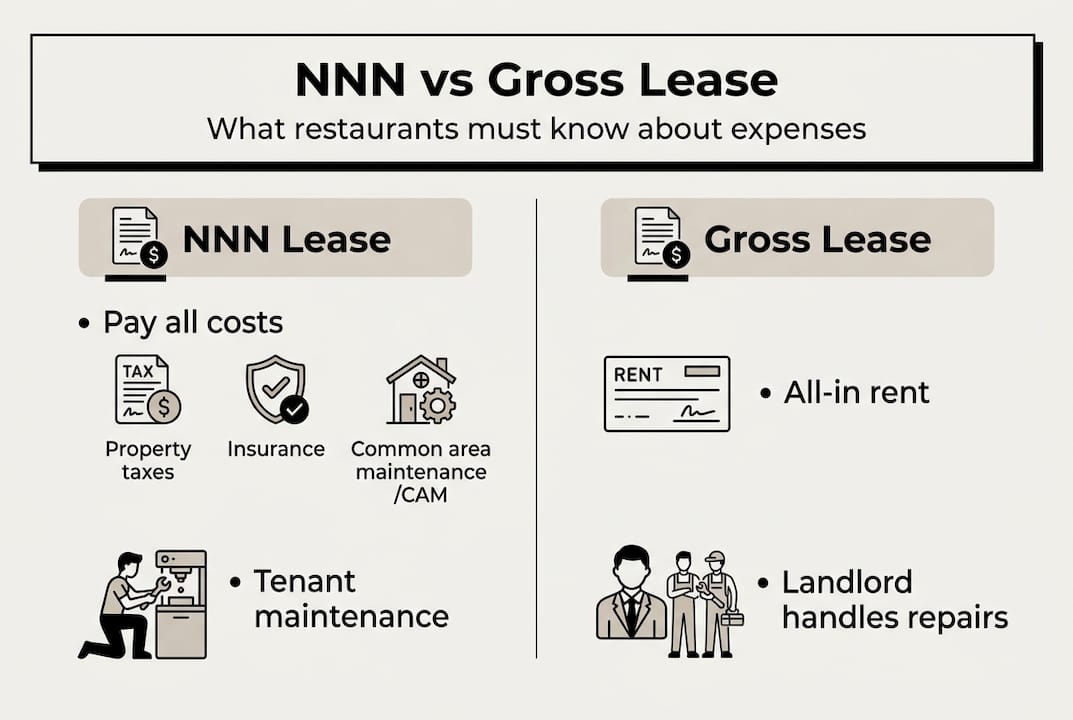
    The foundation of most successful restaurant property investments is the lease structure. The primary mechanic here is the single-tenant absolute triple-net (NNN) lease, which shifts all operating expenses, including taxes, insurance, and maintenance, directly to the tenant. This creates genuinely passive income for the landlord, with built-in rent escalations that protect against inflation. These deals are also ideal vehicles for 1031 exchanges, letting investors defer capital gains taxes by rolling proceeds into like-kind properties.

    Beyond lease structure, you need to understand a few core metrics before you evaluate any deal:

    • Cap rate: The ratio of net operating income to purchase price. A strong range for restaurant properties sits between 4% and 7%, depending on brand strength and location.
    • Tenant credit quality: Corporate-guaranteed leases from publicly traded brands carry far less risk than franchisee-backed deals.
    • Remaining lease term: More years left on the lease means more predictable income and a stronger resale position.
    • Rent-to-revenue ratio: This tells you how sustainable the tenant’s rent obligation is relative to their actual sales volume.
    • Site fundamentals: Traffic counts, demographics, proximity to anchors, and visibility all drive long-term occupancy.

    Tax strategy is another layer that separates sophisticated investors from casual ones. Cost segregation accelerates depreciation on 5 and 15-year property components, generating immediate tax savings that can reach six figures on a single acquisition. Bonus depreciation amplifies those front-loaded benefits even further, boosting your internal rate of return (IRR) in ways that simple cap rate math doesn’t capture.

    “The best restaurant investments aren’t just about yield. They’re about the intersection of a durable lease, a creditworthy tenant, and a location that makes operational sense for the brand.”

    Pro Tip: Always benchmark rent as a percentage of projected revenue. Anything below 10% signals a sustainable obligation for the tenant. Above 12%, you’re looking at a stressed unit that could close before the lease expires.

    Getting these fundamentals right starts with understanding restaurant real estate 101, and then sharpening your eye for evaluating restaurant locations using traffic and demographic data.

    Case study #1: $2.5M Chipotle NNN lease delivers passive cash flow

    Understanding key criteria, let’s see how they play out with a live market transaction involving a blue-chip tenant like Chipotle.

    Marcus & Millichap recently brokered the $2.5M sale of a 5,000 SF Chipotle single-tenant net lease property in Wausau, Wisconsin. The deal featured a 15-year corporate-guaranteed lease, meaning Chipotle’s parent company, not a franchisee, is on the hook for rent payments. That distinction matters enormously.

    Here’s what made this deal attractive to the buyer:

    • Absolute NNN terms: The landlord has zero responsibility for taxes, insurance, or any maintenance costs. The check arrives every month, and that’s the full extent of the landlord’s involvement.
    • Corporate guarantee: Chipotle Mexican Grill, Inc. is a multi-billion-dollar public company. That guarantee is about as creditworthy as you’ll find in the restaurant space.
    • 15-year lease term: Long remaining term means strong resale value and predictable income for over a decade without renegotiation risk.
    • Inflation protection: Rent escalations built into the lease ensure purchasing power doesn’t erode over time.
    • 1031 exchange compatibility: The passive, hands-off nature of the deal makes it ideal for investors rolling out of active real estate into something more manageable.

    Statistic callout: QSR cap rates averaged 5.68% in 2025, holding steady year over year. Top-tier brands like Chick-fil-A and Chipotle trade at mid-4% cap rates, reflecting the premium investors pay for credit quality and brand durability. Weaker or regional brands often price above 6%, compensating buyers for higher tenant risk.

    The Wausau deal is a textbook example of what passive investors target. Low management burden, strong credit, long duration, and a location in a stable Midwestern market. If you’re exploring similar NNN lease deal examples, the structure here is the benchmark to measure against.

    Case study #2: Panera Bread drive-thru—triple-net lessons and opportunities

    Building on the Chipotle case, here’s how the same principles apply to another A-list brand, this time with a drive-thru advantage.

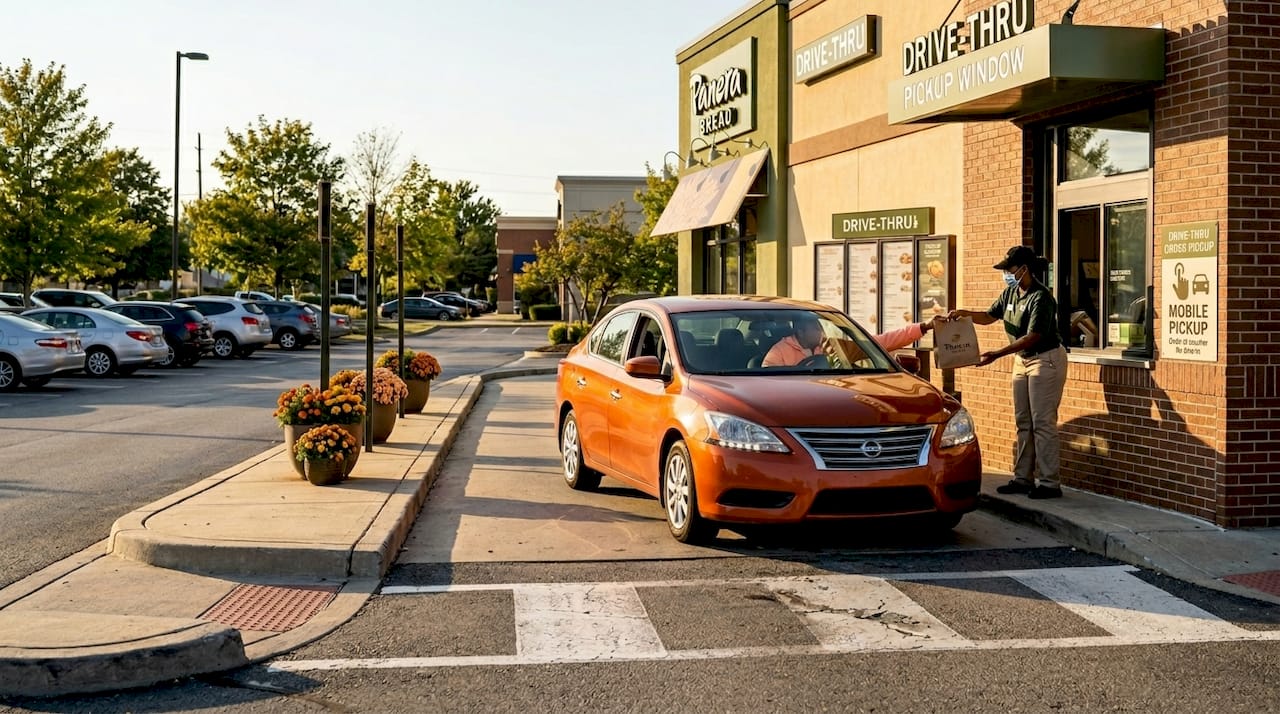
    Hanley Investment Group arranged the $3.3M sale of a 4,373 SF Panera Bread drive-thru property in Plattsburgh, New York. Built in 2020, the property came with an absolute triple-net lease and approximately nine years remaining on the term. The deal illustrates a specific subset of restaurant investment that has surged in demand since 2020: the drive-thru asset.

    Panera Bread drive-thru exterior scene

    Why do drive-thru properties command premium pricing? The answer comes down to operational resilience. During periods of disruption, whether from public health events, staffing shortages, or economic downturns, drive-thru units outperform dine-in-only locations by a wide margin. Panera’s investment in digital ordering and loyalty integration makes its drive-thru units even stickier from a revenue standpoint.

    Key takeaways from this transaction:

    • Modern construction reduces capital risk: A 2020 build means minimal deferred maintenance and compliance issues for years to come.
    • Drive-thru premium is real: Investors pay tighter cap rates for drive-thru assets because the format supports higher sales volumes and operational flexibility.
    • Nine years remaining is still investable: While longer is better, nine years provides enough runway for a stable hold period and a clean exit before renegotiation pressure mounts.
    • Location fundamentals matter even here: Plattsburgh sits near the Canadian border with consistent cross-border traffic, adding a geographic demand driver beyond local demographics.
    • Absolute NNN means no surprises: Same as the Chipotle deal, the landlord collects rent and nothing else.

    Pro Tip: When evaluating drive-thru assets, prioritize newer builds on high-traffic corridors with strong visibility from the road. Older properties with deferred maintenance can quietly erode your returns through capital calls you didn’t model. Browse current drive-thru opportunities to see how these fundamentals translate to active listings.

    Tax savings in action: Cost segregation and bonus depreciation

    Besides lease structure, savvy operators also maximize after-tax returns. Here’s how advanced strategies translate directly to the bottom line.

    Most investors focus on cap rates and lease terms. The investors who actually outperform focus on after-tax cash flow. Cost segregation is the most powerful tool in that toolkit, and the numbers from real transactions prove it.

    A fast food restaurant purchased for $1.335M generated $243,000 in first-year tax savings through cost segregation. Over a 10-year period, the net present value of those savings reached $204,000. On a sub-$1.5M acquisition, that’s a transformational boost to IRR that simple yield math completely misses.

    Scale that up: a restaurant property acquired for $9.2M produced $615,000 in first-year tax savings using cost segregation combined with 60% bonus depreciation. That’s over half a million dollars in year-one tax benefit on a single deal.

    Here’s a side-by-side look at how cost segregation outcomes vary by acquisition size:

    Acquisition price First-year tax savings Strategy used 10-year NPV
    $1.335M $243,000 Cost segregation $204,000
    $9.2M $615,000 Cost seg + 60% bonus depreciation Not disclosed

    The mechanics work by reclassifying building components (lighting, flooring, equipment hookups, site improvements) from 39-year depreciation schedules into 5 or 15-year categories. That acceleration front-loads deductions into the early years of ownership, when they have the most present-value impact.

    Key points for operators and investors considering this approach:

    • Works on both new acquisitions and properties you already own (through a “look-back” study)
    • Applicable to single-unit deals and multi-unit portfolios
    • Bonus depreciation rules have shifted over recent years, so timing your acquisition matters
    • A qualified cost segregation engineer, not just your CPA, should conduct the study

    For a deeper look at how these strategies connect to restaurant real estate tax benefits, it’s worth reviewing the full picture before your next acquisition.

    Restaurant investment types: Side-by-side comparison

    Now that we’ve walked through the numbers, compare the leading investment structures head-to-head to see which fits your profile best.

    Not every restaurant property investment looks like a Chipotle NNN deal. The market offers several structures, each with distinct risk profiles, yield expectations, and management demands.

    Investment type Typical cap rate Risk level Landlord involvement Key advantage
    Corporate NNN (single-tenant) 4% to 5.5% Low Minimal Credit guarantee, passive income
    Franchisee NNN 5.5% to 7%+ Medium Minimal Higher yield, more risk
    Drive-thru NNN 4.5% to 6% Low to medium Minimal Format resilience, demand premium
    Ground lease 3.5% to 5% Very low None No building ownership risk
    Sale-leaseback Varies Medium Minimal Unlocks operator equity

    Sale-leasebacks and ground leases each carry specific trade-offs worth understanding. Sale-leasebacks let operators unlock equity from owned real estate, but they raise occupancy costs permanently. Ground leases offer the lowest risk since you own the land but not the building, though cap rates compress accordingly. Franchisee-backed deals offer higher yields but carry meaningfully more credit risk than corporate guarantees.

    Here’s a practical framework for choosing the right structure:

    1. Define your income goal. Are you optimizing for yield, stability, or tax efficiency? Each structure serves a different priority.
    2. Assess your risk tolerance. Corporate NNN deals sacrifice yield for certainty. Franchisee deals flip that equation.
    3. Check the remaining lease term. Anything under five years requires a deep discount or a clear re-leasing strategy.
    4. Stress-test the location. Use location analysis tools to confirm the site makes operational sense for the brand, not just financial sense on paper.
    5. Model the tax impact. Run a cost segregation estimate before closing. It changes the effective yield more than most investors expect.

    What most investors miss—and when to break the rules

    As we’ve compared models and strategies, let’s look at some uncomfortable truths and unconventional plays from seasoned investors.

    The restaurant real estate market rewards discipline, but it also punishes blind adherence to formulas. The most instructive lesson of recent years came not from a successful deal but from a catastrophic failure: Red Lobster.

    Private equity’s overleveraging of Red Lobster’s real estate is a case study in what happens when financial engineering overrides operational reality. The strategy involved selling restaurant properties and leasing them back to extract equity, which looked brilliant on a spreadsheet. In practice, it permanently elevated occupancy costs, stripped the operator of location flexibility, and contributed to a bankruptcy that wiped out stakeholders across the capital stack. The lesson isn’t that sale-leasebacks are bad. It’s that structuring real estate decisions around financial optionality without stress-testing the operator’s ability to sustain the resulting rent burden is genuinely dangerous.

    Here’s what that means for your due diligence process:

    Don’t just model the upside. Most pro formas show you what happens if the tenant performs. The question you should be asking is what happens if same-store sales drop 15%. Can the tenant still cover rent? Does the location have enough demand to attract a replacement tenant at a comparable rent? Those answers matter far more than IRR projections built on optimistic assumptions.

    Location beats brand in the long run. A Chipotle in a dying strip mall is a worse investment than a regional chain in a thriving urban corridor. Brand names attract buyers at closing, but location fundamentals determine whether the asset holds value over a 10 to 15-year hold.

    Value-add plays deserve a second look. Conventional wisdom says stick to stabilized NNN assets. But some of the best returns in restaurant real estate come from acquiring distressed or vacant properties, repositioning them with a strong tenant, and capturing the spread between a value-add cap rate and a stabilized one. That requires more work and more risk tolerance, but the math can be compelling. The advanced investment strategies that experienced operators use often involve exactly this kind of repositioning play.

    The investors who consistently outperform aren’t the ones chasing the tightest cap rates on the most famous brands. They’re the ones who understand location, stress-test their assumptions, and know when the conventional playbook doesn’t apply.

    Unlock restaurant property opportunities with Pepperlot

    Armed with case studies and comparison tools, here’s how to put your strategy into action with real, vetted opportunities.

    Pepperlot is built specifically for investors and operators who take restaurant real estate seriously. Unlike generic commercial platforms, every listing on Pepperlot includes the details that actually matter for F&B investments: grease trap specs, seating capacity, existing permits, hood systems, and outdoor patio configurations.

    https://pepperlot.com

    Whether you’re looking for a restaurant space for sale to anchor a passive income strategy, or you want to lease restaurant properties for your next concept, Pepperlot’s curated listings connect you with serious counterparties fast. The platform’s location intelligence tools let you analyze foot traffic, local competition, and demographic demand before you commit, so your next investment decision is grounded in data, not guesswork. With over 500 active users including operators, landlords, and brokers, Pepperlot puts you in the right room.

    Frequently asked questions

    What is a triple-net (NNN) lease in restaurant investing?

    A triple-net lease means the tenant pays all operating expenses, including taxes, insurance, and maintenance, giving the landlord truly passive income with minimal management responsibility.

    How does cost segregation benefit a restaurant property investor?

    Cost segregation accelerates depreciation on building components, letting investors claim large upfront tax deductions that significantly improve first-year cash flow and overall IRR.

    What cap rate should I target for a quick-service restaurant?

    QSR cap rates averaged 5.68% in 2025, with top brands like Chick-fil-A and Chipotle trading in the mid-4% range and weaker operators pricing above 6%.

    Are drive-thru restaurant properties better investments post-2020?

    The $3.3M Panera Bread sale reflects strong investor demand for drive-thru assets, which have proven more operationally resilient and command premium pricing compared to dine-in-only formats.

    What common mistakes should restaurant property investors avoid?

    Overleveraging real estate without stress-testing tenant rent coverage is the most dangerous mistake, as the Red Lobster collapse demonstrated. Always prioritize location quality and lease durability over chasing yield.

  • How to list your restaurant space and attract the right tenants

    How to list your restaurant space and attract the right tenants


    TL;DR:

    • Proper preparation and documentation are essential to attract qualified restaurant tenants quickly.
    • Second-generation spaces with existing infrastructure save substantial buildout costs and time.
    • Building relationships and strategic negotiations lead to better long-term leasing success.

    Listing a restaurant space sounds straightforward until you realize how many deals fall apart before they even start. Landlords price too high, skip critical documents, or post vague listings that attract tire-kickers instead of serious operators. In a market where restaurant vacancy rates can swing dramatically by neighborhood, a poorly structured listing costs you months of carrying costs and missed revenue. This guide walks you through every step, from pre-listing preparation to measuring results, so you can move faster, negotiate smarter, and land the right tenant or buyer the first time.


    Table of Contents

    Key Takeaways

    Point Details
    Preparation is critical Having all key documents and market benchmarks ready will save time and ensure your listing stands out.
    Promote second-gen assets Highlighting existing infrastructure can save tenants major costs and attract serious operators quickly.
    Screen and negotiate wisely Proper vetting and clear terms with protections help prevent disputes and costly early failures.
    Track and refine Monitor listing performance and adjust strategy using inquiries and feedback to maximize results.

    What to prepare before listing your restaurant space

    Once you understand the stakes, it’s critical to start with solid preparation so your listing stands out for the right reasons. Skipping this phase is the single most common reason listings linger on the market for months without a qualified inquiry.

    Infographic shows restaurant listing workflow steps

    The essential document checklist

    Before you contact a broker or post anywhere publicly, gather these items:

    • Three years of profit and loss statements (P&Ls): Serious operators want to see revenue trends, not just current numbers.
    • Lease assignment clause: Confirm your lease allows assignment or sublease, and under what conditions. Missing this detail can kill a deal at the last minute.
    • Hood certifications: A pre-listing checklist should always include current hood inspection certificates, because incoming tenants and their lenders will ask.
    • Maintenance logs: HVAC, grease trap service records, and equipment warranties signal that the space has been cared for.
    • Permits and health department records: Zoning approvals, certificate of occupancy, and any conditional use permits need to be on hand.

    Pro Tip: Pull your utility bills for the past 24 months. Operators calculating their total occupancy cost will ask, and having this data ready positions you as a credible, organized seller or landlord.

    Financial benchmarks to set before you price

    Pricing blind is one of the costliest mistakes. Restaurant rents in urban markets can range from $10 to $150 per square foot annually, and your number needs to be defensible. Use this table as a starting reference:

    Market type Rent range (per sq ft/yr) Ideal rent as % of tenant sales
    Suburban secondary $10 to $40 Under 8%
    Urban mid-tier $40 to $80 6% to 8%
    High-density urban $80 to $150+ 5% to 7%
    Tourist/destination $60 to $120 5% to 6%

    If you’re thinking about selling a restaurant space rather than leasing, the same financial transparency applies. Buyers will scrutinize your numbers just as hard as tenants will.

    Gathering marketing information early

    Before you write a single word of your listing, document the physical details that restaurant operators care about most: seating capacity, hood size and CFM rating, grease trap capacity, walk-in cooler dimensions, electrical amperage, gas line size, and any outdoor patio square footage. These specifics separate a professional listing from a generic commercial real estate post.


    Step-by-step restaurant space listing workflow

    With your documentation and numbers in order, you’re ready to tackle each phase of the listing, from choosing your platform to initial outreach. The order matters here. Rushing to post before you’re ready creates a weak first impression that’s hard to recover from.

    Step 1: Choose your platform strategically

    Not every marketplace reaches the same audience. Here’s a quick comparison:

    Platform Best for Restaurant-specific features
    LoopNet Broad commercial exposure Limited
    Crexi Investor and broker audience Moderate
    Industry publications Niche operator reach Moderate
    Pepperlot Restaurant operators exclusively Full (grease trap, permits, seating)
    Local brokers Off-market and relationship deals Varies

    Platforms like LoopNet and Crexi give you broad reach, but they mix your listing in with office parks and retail strips. A restaurant-focused marketplace gets your listing in front of people who already understand what a Type 1 hood means.

    Step 2: Craft a listing that highlights second-generation assets

    Second-generation features (existing hoods, grease traps, walk-ins) are your biggest selling points. Lead with them. Don’t bury them in paragraph three. Your listing headline should name the most valuable infrastructure first.

    Step 3: State your terms clearly

    Ambiguous listings waste everyone’s time. Include asking rent, lease type (NNN, gross, modified gross), lease term length, TI (tenant improvement) allowance if applicable, and any rent abatement period you’re offering. Operators read dozens of listings. Clear terms signal a serious landlord.

    Step 4: Build your initial screening process

    Before you schedule a single tour, create a simple intake form or email questionnaire. Ask about the prospect’s restaurant concept, years of experience, estimated annual revenue from prior locations, and their timeline. This filters out dreamers and focuses your energy on qualified operators. For a detailed look at the subleasing workflow, the screening steps apply equally whether you’re subleasing or leasing directly.

    Step 5: Prepare your tour package

    When a qualified prospect tours the space, have a printed or digital package ready. Include floor plans, equipment lists, utility averages, and a summary of lease term essentials so they leave with everything they need to make a decision.

    Pro Tip: Video walkthroughs posted alongside your listing reduce unqualified tours by 30% to 40% in our experience. Operators in other cities or states can pre-qualify the space before flying in.


    Maximizing value with second-generation restaurant spaces

    Many successful listings hinge on how you leverage existing infrastructure, especially if your property is a second-gen site. Second-generation (or “second-gen”) refers to a space that was previously operated as a restaurant and still has the core infrastructure in place.

    Landlord reviews empty restaurant space details

    Why second-gen spaces command premium interest

    For an incoming operator, building a restaurant from scratch in a raw shell costs between $75 and $400 per square foot in buildout expenses. A 2,000-square-foot space could run $150,000 to $800,000 before you serve a single plate. Second-gen spaces with existing hoods and grease traps save $100,000 or more in upfront capital, which is a massive draw for operators who are watching their startup budget carefully.

    “The difference between a raw shell and a second-gen space isn’t just money. It’s six to twelve months of time. For an operator trying to open before a lease-up deadline, that time savings is worth as much as the dollar savings.”

    What to highlight in your second-gen listing

    • Hood type, size, and most recent inspection date
    • Grease trap size and last service date
    • Walk-in cooler and freezer dimensions and age
    • Existing fire suppression system certification
    • Gas and electrical capacity already in place
    • Any remaining equipment included in the lease or sale

    Understanding the full value of second-generation spaces is critical for pricing your listing correctly. Landlords who don’t account for this infrastructure often underprice their space and leave significant value on the table.

    Positioning your listing against raw shells

    When marketing, be explicit about the cost comparison. If a competing raw shell nearby is listed at $45 per square foot and yours is $55 but comes with $200,000 in existing infrastructure, your effective cost to the tenant is dramatically lower. Make that math visible in your listing. Operators who understand restaurant real estate will recognize the value immediately.


    Negotiations, protections, and avoiding costly mistakes

    Even the strongest listings can falter if you miss key negotiation and protection strategies. This is where landlords and sellers often give away value without realizing it.

    Understanding tenant incentives and your exposure

    Operators almost always seek TI allowances and rent abatement during negotiations. TI (tenant improvement) is money the landlord contributes toward buildout. Rent abatement is a free-rent period, typically two to six months, while the tenant constructs and opens. Both are legitimate tools, but you need to cap your exposure clearly in the lease.

    Key protections to negotiate into every deal:

    • TI ownership clause: If the tenant leaves before the lease term ends, who owns the improvements? Specify this upfront.
    • Personal guarantee: Require a personal guarantee from the operator, especially for new concepts without a track record.
    • Insurance minimums: Define general liability, property, and workers’ compensation minimums in the lease, not as an afterthought.
    • Use clause: Restrict the type of food service allowed to protect your property and neighboring tenants.
    • Assignment and sublease approval rights: You should have the right to approve any assignment or sublease, with reasonable standards defined.

    “Landlords who skip the personal guarantee because a tenant seems credible often regret it when the concept fails in year two. The guarantee is your last line of defense.”

    The risk of emerging vs. established markets

    Emerging areas offer cheaper rents but carry higher risk for both landlord and tenant. If foot traffic hasn’t materialized yet, even a great operator can struggle. Established high-rent corridors reduce that risk but compress margins. Know which type of location you’re offering and price and market accordingly.

    Understanding lease assignments and subleases in detail will help you structure these protections correctly before you sign anything.

    Pro Tip: Always require a certificate of insurance naming you as additional insured before handing over keys, even for a soft opening or pre-opening buildout period. Accidents happen during construction.


    Verifying your listing’s effectiveness and measuring results

    Listing is only the first step. Success depends on tracking your results and refining your approach when the numbers tell you something isn’t working.

    Key metrics to track after launch

    1. Inquiry volume in week one: A strong listing in a healthy market should generate at least three to five serious inquiries within the first two weeks.
    2. Inquiry-to-tour conversion rate: If you’re getting inquiries but no tours, your listing details or pricing may be creating doubt.
    3. Tour-to-offer conversion rate: If tours happen but offers don’t follow, the space itself or your lease terms may need adjustment.
    4. Time on market vs. local average: Research comparable spaces in your area. If you’re running 50% longer than average, something needs to change.
    5. Feedback patterns: If multiple prospects mention the same concern (rent too high, no parking, unclear terms), that’s a signal, not a coincidence.

    Benchmarks for comparison

    Use this table to check whether your listing terms are competitive before making adjustments:

    Metric Benchmark range Red flag
    Rent as % of projected sales 5% to 10% (ideal under 8%) Over 10%
    Buildout cost per sq ft $75 to $400 (second-gen lower) Raw shell over $400
    Startup total (independent full-service) $275,000 to $425,000 Over $500,000 signals risk
    NNN additions (taxes, insurance, CAM) 15% to 30% on top of base rent Over 35% of base rent

    Tracking these numbers against measuring listing success benchmarks keeps you from making emotional decisions. If the data says your rent is 12% of a typical operator’s projected sales, the fix is clear.


    Our take: What most restaurant owners miss about space listings

    Here’s what years of watching restaurant real estate deals succeed and fail has taught us: the checklist matters, but the relationship often matters more.

    Most owners treat listing as a broadcasting exercise. Post it, wait, respond. But the most successful transactions we see happen when the landlord or seller is genuinely invested in finding the right operator, not just any operator. That means reaching out directly to restaurateurs you respect in your market, talking to brokers who specialize in F&B before you go public, and sometimes holding a space off-market for two to three weeks while you quietly qualify candidates.

    The myth that public marketplaces always outperform off-market deals is worth challenging. A well-connected broker with 20 active operator relationships can close a deal faster than six weeks of public listing, and with fewer tire-kickers burning your time. The best outcome for a second-gen space isn’t always the highest bidder. It’s the operator with the concept, capital, and commitment to make the location thrive, because a successful tenant protects your asset long-term.

    The lessons from second-gen listing outcomes consistently show that landlords who invest time in operator selection outperform those who simply take the first qualified offer. Negotiation flexibility, particularly around TI and abatement, is also a tool most landlords underuse. Offering a slightly more generous TI in exchange for a longer lease term or a stronger personal guarantee often produces a better overall deal than holding firm on every point.

    The operators who win in competitive markets are the ones who treat every listing interaction as a relationship, not a transaction.


    Find and list restaurant spaces with Pepperlot

    If you’re ready to put these best practices into action, here’s how you can take the next step. Pepperlot is built specifically for restaurant real estate, which means every listing includes the details that actually matter to F&B operators: grease trap specs, hood certifications, seating capacity, outdoor patio info, and permit status.

    https://pepperlot.com

    Whether you’re a landlord looking to attract qualified tenants fast or an operator searching for your next location, Pepperlot’s curated marketplace connects you with serious players on both sides of the deal. You can explore a restaurant space with business for sale or browse a turnkey second-gen restaurant lease to see exactly how professional listings are structured. With targeted social media promotion, a network of over 500 active operators, landlords, and brokers, and tools built for F&B real estate, Pepperlot removes the friction from every step of the process.


    Frequently asked questions

    What documents are required to list a restaurant space?

    At minimum, you’ll need three years of P&Ls, a lease assignment clause, current hood certifications, and maintenance logs. Having these ready before you list signals credibility and speeds up the qualification process.

    How do I know if my rent price is competitive for restaurant spaces?

    Restaurant rents typically range from $10 to $150 per square foot annually, and the ideal target is under 8% of the tenant’s projected gross sales. If your asking rent pushes operators above that threshold, expect longer vacancy.

    What’s the advantage of a second-generation restaurant space?

    Second-generation spaces come with built-in infrastructure like hoods and grease traps, saving $100,000 or more in buildout costs. That savings also translates to faster opening timelines, which makes your listing significantly more attractive to operators on a budget.

    How can I screen potential restaurant tenants effectively?

    Use financials, prior restaurant experience, and a structured lease that includes protections like insurance and TI ownership to vet tenants before committing. A simple intake questionnaire before the first tour filters out unqualified prospects quickly.

    Are off-market deals better than public listings?

    Off-market deals via brokers sometimes yield better results by reaching motivated operators directly and reducing competition from unqualified inquiries. The right answer depends on your timeline, market, and how strong your broker relationships are.

  • How to streamline your restaurant space search

    How to streamline your restaurant space search


    TL;DR:

    • A structured process helps operators select restaurant spaces aligned with their concept and budget.
    • Conduct thorough inspections, market analysis, and negotiate lease terms to avoid costly mistakes.
    • Second-generation spaces can save costs but require careful evaluation of hidden liabilities.

    Finding the right restaurant space without a clear process is like trying to build a kitchen without a floor plan. Operators who skip the preparation phase routinely sign leases that drain their capital before they serve a single table. They overpay on buildout, discover grease trap problems after move-in, or land in a location with the wrong foot traffic pattern for their concept. A structured workflow changes all of that. This article walks you through every critical stage, from defining your requirements and running market analysis to negotiating lease terms and evaluating second-generation spaces, so you can move faster and smarter.

    Table of Contents

    Key Takeaways

    Point Details
    Start with concept definition Clarify your restaurant’s concept, target demographics, and space needs before beginning your search.
    Evaluate market and property details Check zoning, infrastructure, parking requirements, and tenant history to ensure suitability and avoid costly mistakes.
    Follow financial benchmarks Keep rent below 10% of projected revenue and look for favorable lease terms to protect your investment.
    Negotiate key lease terms Secure incentives like free rent and TI allowances, and ensure essential clauses are included in your lease.
    Inspect second-gen spaces Second-generation spaces can offer savings, but thorough inspections are vital to avoid hidden liabilities.

    Define your restaurant requirements

    Before you tour a single property, you need a clear picture of what your concept actually demands. This step is where most operators lose time, because they start browsing listings before they know what they’re looking for.

    Start with your concept and target customer. A fast-casual taco counter has entirely different space needs than a 90-seat fine dining room. Your target demographics shape everything from location to layout. Think about where your core customers live, work, and spend their evenings. That data should drive your geographic search, not just gut instinct.

    Next, get specific about square footage. Defining space requirements means accounting for 1-2 square meters per cover in the dining area and 1-1.5 square meters per seat in the kitchen, along with infrastructure needs like hoods and grease traps. Those numbers shift based on your service model. A delivery-heavy ghost kitchen needs more kitchen square footage and far less front-of-house space. A full-service restaurant needs the reverse.

    Infrastructure is where surprises get expensive. Identify your non-negotiables before visiting any property:

    • Ventilation and hood systems: What type of cooking will you do? Heavy frying requires a Type 1 hood; lighter prep may only need a Type 2.
    • Grease trap capacity: Undersized traps create compliance headaches and costly retrofits.
    • Gas line capacity: High-BTU equipment needs adequate supply. Verify before you fall in love with a space.
    • Electrical load: Commercial kitchens often require 200-400 amp service. Older buildings frequently fall short.
    • Plumbing and floor drains: Placement matters enormously for kitchen workflow.
    • ADA compliance: Restrooms, entrances, and seating configurations must meet code.
    • Outdoor patio potential: If your concept benefits from al fresco dining, factor in permitting requirements early.

    Use a thorough restaurant space checklist to document each requirement before you step foot in a property. This keeps site visits focused and prevents emotional decisions from overriding practical ones.

    Infographic illustrating restaurant space search steps

    Requirement Minimum standard Notes
    Dining area 1-2 sqm per cover Adjust for service style
    Kitchen area 1-1.5 sqm per seat Higher for complex menus
    Electrical service 200-400 amp Verify with utility
    Hood system Type 1 for heavy cooking Inspect condition
    Grease trap Sized for menu volume Check local code

    Pro Tip: Build in 15-20% extra square footage beyond your current projection. Concepts evolve, menus grow, and adding a prep station or a second POS counter becomes nearly impossible if you’ve maxed out your footprint from day one.

    Conduct market and property analysis

    Having defined your requirements, the next crucial step is evaluating both the market and individual property details. This is where analyzing location data separates operators who thrive from those who struggle through their first year.

    Restaurant manager and agent inspecting empty restaurant

    A thorough property evaluation covers a lot of ground. Restaurant analysis benchmarks tell us that good evaluation checks zoning and permits, mechanicals like gas and electrical capacity, HVAC for kitchen heat load, layout flow, parking ratios of 1 space per 150-200 square feet for casual dining, and previous tenant performance, specifically avoiding sites with two or more failures in three to five years.

    Follow this numbered workflow for every property you seriously consider:

    1. Verify zoning and permitted use. Confirm the address allows food service. Review zoning requirements specific to your state and municipality, especially for alcohol service, outdoor dining, or late-night hours.
    2. Review mechanical systems. Inspect gas lines, electrical panels, HVAC capacity, and plumbing. Hire a licensed inspector if the landlord’s disclosures are vague.
    3. Assess layout flow. Walk the space with your kitchen designer. Traffic patterns between the kitchen, service stations, and exits matter more than raw square footage.
    4. Check parking availability. Inadequate parking is a silent killer for casual and family dining concepts. Confirm whether nearby lots are shared or restricted.
    5. Research previous tenants. If two or more restaurants failed at a location within five years, dig into why. Sometimes it’s a bad operator. Often, it’s a structural problem with visibility, access, or demographics.
    6. Evaluate the competitive landscape. How many similar concepts operate within a half-mile radius? Saturation can be an opportunity or a warning sign, depending on your differentiation.

    Use a detailed property evaluation checklist to score each property against your requirements. This creates an objective comparison framework instead of relying on which space felt best during the tour.

    Property type Buildout cost Timeline Risk level
    Second-generation restaurant Low to medium 2-6 months Medium (hidden liabilities)
    Vanilla shell (new build) Medium to high 6-12 months Lower (known condition)
    Raw space (cold dark shell) High 12-18 months Higher (full buildout)
    Existing restaurant for sale Variable 1-3 months Variable (depends on deal)

    Watch out: A location that looks perfect on paper can carry invisible baggage. If the previous tenant left under financial distress, the landlord may have deferred maintenance. Always ask for the last two years of utility bills and any inspection reports before making an offer.

    Financial benchmarks and risk management

    Once you’ve assessed the property, it’s time to ensure your finances are on track and risks are minimized. Numbers don’t lie, and the restaurant industry’s margins are too thin to absorb avoidable financial mistakes.

    Here are the key financial benchmarks every operator should know before signing anything:

    • Rent as a percentage of revenue: Should not exceed 10% of projected gross revenue. Many operators stretch to 12-15% and spend years fighting to break even.
    • Occupancy cost ratio: Total occupancy costs, including rent, CAM (common area maintenance), insurance, and taxes, should stay at or below 6-10% of projected revenue.
    • QSR buildout budget: Quick service restaurant buildouts typically run $500,000 to $1 million.
    • Casual dining buildout budget: Full-service casual concepts often exceed $2 million, especially in high-cost urban markets.
    • Payback period: Target a buildout payback period of three to five years based on realistic revenue projections.

    The stakes are real. Industry failure data shows that 60% of new restaurants fail within three years, and location accounts for 60-70% of that variance. Rent discipline and location quality are not separate decisions. They’re the same decision.

    “Occupancy costs above 10% of revenue compress your margins to the point where even a strong concept can’t survive a slow quarter. Treat your rent ceiling as a hard limit, not a negotiating target.”

    Understanding the difference between sale vs. lease structures also affects your risk profile. Purchasing a building ties up capital but eliminates rent escalation risk. Leasing preserves cash flow but exposes you to renewal uncertainty. Neither is universally better. The right answer depends on your concept’s stage and your financial runway.

    Pro Tip: Negotiate a personal guarantee limitation from the start. Landlords often ask for full-term personal guarantees. Push back with a “burn-down” guarantee that reduces your personal liability as you hit revenue or tenure milestones. This protects your personal assets if the concept underperforms in its early years.

    Good hospitality maintenance planning also factors into your financial model. Budget 1-3% of revenue annually for equipment maintenance, especially in second-generation spaces where aging systems can fail without warning.

    Lease negotiation and securing your space

    After crunching the numbers, your next task is to secure favorable lease terms to protect your business and maximize potential. This is where preparation pays off in real dollars.

    The lease negotiation workflow follows a clear sequence: start with a Letter of Intent (LOI), negotiate free rent for buildout, secure a Tenant Improvement (TI) allowance of $20-150 per square foot, cap NNN/CAM increases at 3-5%, lock in exclusive use rights, negotiate assignment rights without unreasonable landlord withholding, limit your personal guarantee, and include a kick-out clause tied to a revenue threshold.

    Work through these steps in order:

    1. Submit a Letter of Intent (LOI). This non-binding document establishes your key terms before attorneys get involved. It saves everyone time and surfaces deal-breakers early.
    2. Negotiate free rent for the buildout period. Request 3-6 months of rent abatement while you construct and open. Landlords who want quality tenants often agree to this.
    3. Secure a TI allowance. Tenant Improvement allowances typically range from $20-150 per square foot depending on market conditions and landlord motivation. Push for the higher end in slower markets.
    4. Cap NNN and CAM charges. Triple-net leases pass operating costs to tenants. Negotiate annual caps of 3-5% on CAM increases to prevent surprise cost spikes.
    5. Add an exclusive use clause. Prevent your landlord from leasing adjacent space to a direct competitor. Be specific about cuisine type and service format.
    6. Negotiate assignment rights. You need the ability to transfer your lease if you sell the business. Require that the landlord cannot withhold consent unreasonably.
    7. Limit your personal guarantee. Avoid open-ended personal liability. A burn-down guarantee or a capped dollar amount protects you without killing the deal.
    8. Include a kick-out clause. If revenue falls below a defined threshold for a sustained period, this clause lets you exit the lease without full penalty.

    Understand every term before you sign. Review lease term explanations and the difference between assignment vs. sublease rights so you know exactly what flexibility you’re negotiating for.

    Pro Tip: Hire a restaurant-specialized attorney to review the final lease, not a general commercial real estate lawyer. Restaurant leases contain use clauses, co-tenancy provisions, and exclusivity language that general practitioners routinely miss or misinterpret.

    Second-generation space: Pros, pitfalls, and expert tips

    Finally, consider the often-overlooked opportunities and risks in second-generation restaurant spaces. A second-gen space is any location that previously operated as a restaurant. The existing infrastructure, hoods, grease traps, plumbing, and sometimes even equipment, can dramatically reduce your buildout cost and timeline.

    The savings are real, but so are the risks. Second-generation space benefits are compelling, but hidden liabilities can turn a bargain into a money pit. Common issues include:

    • Faulty or undersized hood systems that fail inspection after you’ve signed the lease
    • Grease traps in poor condition that require full replacement, often costing $15,000-$40,000
    • Outdated electrical panels that can’t support modern kitchen equipment
    • Plumbing layouts that don’t match your kitchen design, requiring expensive rerouting
    • Previous tenant violations that created unresolved code issues or permit holds
    • Lease restrictions inherited from prior tenants, especially in markets like New York City where use clauses can limit service hours, alcohol licensing, or even specific meal periods like brunch

    Always verify infrastructure condition through independent inspection before signing. Don’t rely on the landlord’s representations or a visual walkthrough. Pull permits, check inspection records with the local health department, and have a licensed plumber and electrician assess the systems.

    Pro Tip: Ask the landlord for the previous tenant’s utility bills, health inspection history, and any equipment service records. This data tells you more about the true condition of the space than any tour will.

    For a broader foundation, restaurant real estate basics can help you contextualize whether a second-gen space or a fresh buildout makes more sense for your specific concept and financial position.

    Here’s the uncomfortable truth that most real estate guides won’t tell you: the majority of restaurant space searches go wrong not because operators lack information, but because they rush. The excitement of a promising location overrides the discipline of due diligence. We’ve seen operators skip the mechanical inspection on a second-gen space because the landlord seemed trustworthy, only to discover a condemned grease trap after opening day.

    The single most common mistake is treating the search as a linear process when it’s actually iterative. You define requirements, then the market teaches you something new, and you refine your requirements again. Operators who resist this loop end up forcing a bad fit.

    Previous tenant failures deserve more attention than most guides give them. Two failed restaurants at the same address in five years is not a coincidence. It usually signals a structural problem: poor visibility from the street, a parking configuration that frustrates customers, or a demographic mismatch that no amount of marketing can fix. The lessons from second-generation space research consistently show that operators who investigate failure history before signing outperform those who don’t.

    Rushing to sign is the other major trap. Landlords create urgency. “We have another offer” is a negotiating tactic as old as commercial real estate itself. Operators who hold their process, complete their inspections, and insist on legal review consistently secure better terms than those who panic-sign. The few weeks you save by skipping steps will cost you years of margin compression or an exit you can’t afford.

    Find your ideal restaurant space with Pepperlot

    With the workflow and expert perspectives in mind, make your search easier by leveraging dedicated tools and listings built specifically for the restaurant industry.

    https://pepperlot.com

    Pepperlot is the only marketplace built exclusively for restaurant and food and beverage real estate. Every listing includes the details that actually matter to operators: grease trap specs, seating capacity, permit status, hood systems, and outdoor patio availability. Browse an active restaurant lease listing or explore a turnkey restaurant for sale in Inglewood, CA to see how curated listings save you hours of back-and-forth with generic commercial brokers. Pair that with Pepperlot’s location intelligence tools to analyze foot traffic, local competition, and demographic fit before you ever schedule a tour. Your next location decision deserves better data.

    Frequently asked questions

    What is a second-generation restaurant space and why consider it?

    A second-generation restaurant space is a location previously used for restaurant operations, and it often saves time and money on buildout. However, always inspect for hidden liabilities like faulty hoods or grease traps, and in markets like New York City, review use clauses carefully to avoid restrictions on alcohol or specific meal service.

    How much space do I need per seat or cover for my restaurant?

    Plan for 1-2 square meters per cover in dining areas and 1-1.5 square meters per seat in the kitchen, adjusting based on your service model and menu complexity.

    What financial benchmarks should guide my lease or purchase decision?

    Rent should not exceed 10% of projected revenue, occupancy costs should stay at 6-10%, and QSR buildouts run $500k-1M while casual restaurant buildouts often exceed $2 million.

    What are the most critical lease negotiation terms for restaurant space?

    Prioritize free rent for buildout, TI allowances of $20-150 per square foot, NNN/CAM caps at 3-5%, exclusive use clauses, reasonable assignment rights, and a limited personal guarantee with burn-down provisions.

    How do I avoid hidden liabilities when acquiring restaurant space?

    Always conduct independent inspections of hoods, grease traps, and electrical systems, and review previous tenant history with the local health department and permit office before signing any lease or purchase agreement.

  • Restaurant property zoning: What every operator must know

    Restaurant property zoning: What every operator must know


    TL;DR:

    • Zoning issues often cause more restaurant deal failures than poor locations.
    • Understanding local zoning codes, permits, and restrictions is critical before signing leases.
    • Community opposition and overlay district rules can delay or prevent restaurant openings.

    Zoning kills more restaurant deals than bad locations do. Most operators spend months negotiating lease terms, hiring architects, and pricing out equipment, only to discover that the space they signed on doesn’t legally permit a restaurant, or requires a conditional use permit that takes six months and a public hearing to obtain. That gap between “this looks like a great spot” and “this space is legally cleared for our concept” is where capital goes to waste. Understanding zoning before you tour a space, let alone sign a lease, is the single most valuable habit any serious restaurant operator or investor can build.

    Table of Contents

    Key Takeaways

    Point Details
    Zoning is highly local Restaurant property zoning rules vary dramatically by city or county, so always check local codes before committing to a lease.
    Parking can derail deals Strict parking requirements for restaurants often limit capacity or render some sites infeasible unless mitigated through variances or shared arrangements.
    Many features need extra permits Drive-thrus, alcohol service, and outdoor seating often require conditional use permits involving public hearings and neighbor input.
    Edge cases affect eligibility Density limits, drive-thru bans, and proximity rules can block restaurants even in commercial zones, so double-check for unusual restrictions.
    Early zoning analysis reduces risk Proactive zoning verification and lease contingencies protect against last-minute compliance issues and costly project failures.

    Restaurant property zoning basics: Understanding land use and regulations

    Zoning is the framework cities and counties use to control how land gets used. Every parcel of land sits inside a zone, and that zone determines what can legally happen there. Residential zones allow housing. Industrial zones allow manufacturing. And commercial or mixed-use zones, generally speaking, are where restaurants live. But that broad picture misses the details that actually matter.

    Restaurant property zoning refers to local government regulations that divide land into districts specifying permitted land uses, with restaurants typically allowed in commercial or mixed-use zones but subject to specific standards including permitted use categories, bulk requirements like setbacks, height, and lot coverage, parking minimums, and operational restrictions. The key phrase there is “typically allowed.” Typical is not the same as guaranteed, and the gap between those two words is where deals fall apart.

    Infographic shows restaurant zoning essentials

    Zoning is always controlled at the city or county level. There is no national zoning code. That means a rule in Austin, Texas has zero bearing on what’s allowed in Austin, Minnesota. Every municipality writes its own code, uses its own terminology, and enforces its own processes. This is why understanding zoning requirements before lease signing is so critical, especially for operators expanding across state lines or into unfamiliar markets.

    Here’s a quick breakdown of the zone types most relevant to restaurant operators:

    Zone type Typical use Restaurant allowed?
    General commercial (C-2, C-3) Retail, services, restaurants Usually yes
    Neighborhood commercial (C-1) Small retail, cafes Sometimes, with limits
    Mixed-use (MU) Retail, office, residential Often yes, ground floor
    Industrial (M-1, M-2) Manufacturing, warehouses Rarely, unless rezoned
    Special overlay district Historic, pedestrian, transit Varies widely

    Beyond zone type, you also need to understand three core concepts:

    • Permitted use: Your exact restaurant concept must match a listed or conditional use in that zone.
    • Bulk standards: These are physical rules like building setbacks from property lines, maximum height, and lot coverage percentages that affect what you can build or modify.
    • Occupancy classification: Fire codes and building departments assign occupancy types that determine how many people can legally be in the space, which affects seating and revenue projections.

    Operators often treat zoning as a formality. It’s not. It’s a governing legal document, and skipping it early almost always creates expensive delays later.

    Once you know which zone a property sits in, the next step is pulling the actual zoning code and reading the use table. Most municipalities post their codes online, and many have interactive zoning maps. You search the address, identify the zone designation, and then look up what’s permitted in that zone. The use table will tell you whether a standard restaurant is permitted by right, conditional (requiring a permit), or prohibited outright.

    Key mechanics include verifying permitted uses via zoning maps and codes, obtaining zoning verification before leasing, and complying with bulk standards such as parking, loading zones, setbacks, signage limits, and lighting restrictions. Parking requirements are often the most painful of these. The formula sounds simple but causes enormous headaches in practice.

    Parking requirements in many cities demand roughly 1 space per 75 square feet of gross floor area for restaurants, with national retail and restaurant averages running 4 to 5 spaces per 1,000 square feet, and restaurants sitting at the higher end due to customer turnover. Drive-thru stacking lanes often require 150 to 200 feet of minimum stacking distance, and outdoor dining areas typically count toward gross floor area calculations. A 3,000 square foot restaurant could require 40 dedicated parking spaces under strict local codes, which is physically impossible on many urban parcels.

    Property manager checks restaurant parking lot

    Pro Tip: Before you even walk through a space, count the parking spots on and adjacent to the property. Then pull the zoning code and calculate the required spaces for your intended square footage. If the numbers don’t match and there’s no shared parking agreement in place, you may already have a problem.

    Here’s a practical research checklist every operator should run before signing anything:

    • Confirm the zone designation at the county assessor or city planning portal
    • Pull the use table and verify your specific concept type (fast casual, full-service, drive-thru) is permitted
    • Check parking ratios for your estimated gross floor area
    • Review setback requirements, especially if you plan exterior renovations or a patio
    • Look for signage restrictions that could affect your branding visibility
    • Identify any overlay districts that add a second layer of rules on top of the base zone

    Review your restaurant expansion checklist alongside the zoning code so nothing slips through. And remember that bulk standards can affect construction budgets significantly. A required loading zone on a tight urban lot might consume space you planned to use for seating. A setback requirement might prevent you from installing the entrance you designed. Always factor hidden build-out costs that stem directly from zoning constraints into your pro forma before committing.

    Conditional use permits, variances, and special restaurant features

    Some restaurant features aren’t automatically allowed even in commercial zones. They require a separate approval layer. This is where conditional use permits, commonly called CUPs, and variances come into play. Understanding the difference between them is not just academic. It determines how long your timeline stretches, how much money you spend on applications and legal fees, and whether neighbor opposition can actually kill your project.

    Many features like alcohol service, outdoor seating, drive-thrus, and late-night operations require conditional use permits involving public hearings, neighbor input, and potential conditions attached to approval. CUPs authorize uses listed as conditional in the zone based on their compatibility with surrounding properties. The logic is that these features have potential negative effects on neighbors, and the community should have a say before they’re approved.

    The CUP process typically follows this sequence:

    1. Submit a formal application with site plans, hours of operation, and concept details
    2. Staff review and environmental analysis (if required by state law)
    3. Public notice mailed to neighboring property owners within a defined radius
    4. Planning commission hearing where the public can speak in favor or opposition
    5. Commission vote with conditions attached, such as restricted hours, sound barriers, or limited occupancy for outdoor areas
    6. Appeal period where neighbors can challenge the decision

    “The neighbor who objects loudest at a planning hearing often has more power than the operator thinks. A single vocal opposition rarely kills a well-prepared application, but it can trigger procedural delays of three to six months and add conditions that fundamentally change your concept’s viability.”

    Variances provide exceptions to dimensional standards such as reduced parking or setbacks upon proving property-specific hardship, and are distinct from CUPs which address use compatibility. Both require hearings, but variances are harder to obtain because you must demonstrate that the hardship is unique to your parcel, not just inconvenient for your business plan.

    Think of it this way: a CUP asks “does this use belong here?” while a variance asks “can this property physically comply with the standard?” If your site has an unusually irregular lot that makes standard parking ratios impossible, a variance might be appropriate. If you want to serve alcohol and stay open until 2 a.m., you need a CUP. Both take time. Neither is guaranteed. Planning for restaurant real estate 101 means knowing which approval path applies to your concept before you’re under contract.

    Pro Tip: If a property’s previous tenant held a CUP for alcohol service or outdoor dining, check whether that permit is transferable or attached to the property rather than the operator. Inherited CUPs can save months of process time, making second-generation spaces especially valuable from a permitting standpoint.

    Zoning edge cases and real-world examples: What can go wrong

    Standard zoning code research covers most situations, but the cases that actually destroy well-funded projects are the edge cases. These are the rules buried in overlay districts, density caps hidden in neighborhood-specific plans, and procedural invalidities that send permits back to square one.

    New Orleans imposes density limits that cap standard restaurants at five per block in certain districts and as few as one per 100 linear feet on Harrison Avenue. That rule is invisible unless you read the neighborhood overlay standards, not just the base zone. Operators have signed leases in New Orleans commercial corridors only to discover the density cap was already maxed out by neighboring restaurants.

    “Drive-thru bans in pedestrian overlay districts are becoming more common in cities prioritizing walkability. A national QSR brand can build out a full prototype site, only to be told that the drive-thru lane, a core revenue driver for the concept, is not permitted in that specific overlay zone.”

    Real-world denials illustrate this clearly:

    • Little Rock, Arkansas: A Little Caesars location near the Governor’s Mansion was rejected by zoning panel due to neighborhood character concerns, despite meeting base zone standards.
    • Penfield, New York: A proposed Chick-fil-A faced opposition in an overlay district, with residents citing traffic and incompatibility with the neighborhood design standards.
    • San Jose, California: A Chick-fil-A permit was initially conditioned in a procedurally invalid manner, requiring the operator to restart the hearing process entirely.

    These aren’t obscure situations. They happen to well-resourced operators with experienced legal teams. The pattern is consistent: a site looks clean at the base zone level, but an overlay district, a density limit, or a procedural error creates a months-long delay or an outright denial.

    Risk factor Common cause Mitigation strategy
    Density cap exceeded Too many restaurants on block Check neighborhood overlay plans
    Drive-thru ban Pedestrian or transit overlay Confirm overlay rules before design
    Neighbor opposition CUP hearing Community outreach before filing
    Nonconforming use Prior tenant’s certificate of occupancy Review COO before lease
    Procedural invalidity Flawed hearing process Hire land use attorney early

    If you’re evaluating a restaurant drive-thru site, the overlay district and stacking requirements deserve as much attention as the lease rate. A site that fails zoning approval after design work begins is one of the most expensive mistakes in restaurant real estate.

    Expert perspective: What most operators miss about restaurant zoning

    Most operators we talk to treat zoning as a checkbox. Something to confirm after the deal is essentially done. That’s backwards, and it’s an expensive way to learn the lesson.

    The real insight isn’t just “check zoning early.” It’s that zoning is site-specific in ways that brokers and landlords often don’t fully understand either. A broker may tell you a space is “zoned commercial” with complete confidence, and still be missing an overlay district rule that changes everything. We’ve seen that exact scenario stall projects by six months in markets across the country.

    The move that protects you is simple: include a zoning contingency in every letter of intent. Give yourself 30 to 60 days to verify the zoning is clean for your specific concept, including any CUPs you’ll need, before your deposit goes hard. Review the full California zoning checklist as a model, even if you’re operating in another state, because it covers the categories most codes share.

    Neighbor opposition is also underestimated as a risk factor. A single well-organized neighborhood group can stall a CUP for months, add costly operating conditions, or force design changes that gut your concept’s economics. Savvy operators do informal community outreach before filing, not after. That one conversation with the adjacent property owner can be the difference between a smooth hearing and a six-month procedural fight. Zoning is not just a legal process. It’s a community process, and the operators who treat it that way move faster.

    Find compliant restaurant properties faster with Pepperlot

    Knowing the rules is one thing. Finding a property that already clears them is another.

    https://pepperlot.com

    Pepperlot is built specifically for restaurant operators who don’t want to waste time on properties that won’t work for their concept. Every listing on the platform includes restaurant-specific details: grease traps, existing permits, seating capacity, outdoor patio information, and drive-thru configurations. You can filter for turnkey spaces that already hold relevant permits, reducing the CUP timeline before you’ve even picked up the phone. Browse a live example like this restaurant for sale in Inglewood to see how detailed listings remove guesswork. Pair that with Pepperlot’s restaurant location intelligence tools to verify parking ratios, density data, and local competition before you commit to a site.

    Frequently asked questions

    Can I open a restaurant in any commercial zone?

    No. While restaurants are typically permitted in commercial or mixed-use zones, each zone has its own standards, and many require conditional use permits for specific features like alcohol service, outdoor dining, or late-night hours.

    How do parking requirements affect restaurant property viability?

    Parking minimums such as 1 space per 75 sq ft can force capacity reductions or kill deals entirely unless variances or shared parking agreements are negotiated with neighboring property owners.

    What steps are required to get a conditional use permit (CUP) for a restaurant?

    You must submit an application, pass through a public hearing, collect neighbor input, and satisfy conditions set by the local planning authority for features like alcohol service, drive-thrus, or extended operating hours.

    What is the difference between a variance and a conditional use permit?

    A variance grants an exception to a physical or dimensional standard due to property-specific hardship, while a conditional use permit addresses whether a particular use is compatible with the surrounding zone and requires public hearing approval.

    Are there any unusual zoning restrictions for restaurants?

    Yes. Jurisdictions can impose density caps, drive-thru bans, minimum distance rules from schools or residences, and overlay district requirements that apply on top of base zone standards.

  • Maximize Restaurant Sale Success: The Value of Staging

    Maximize Restaurant Sale Success: The Value of Staging


    TL;DR:

    • Proper staging of restaurant properties enhances first impressions, speeds up sales, and attracts serious buyers.
    • Focus on cleanliness, lighting, layout, and operational readiness to maximize buyer appeal and reduce objections.
    • Investing in deep cleaning, repairs, professional photography, and neutral decor delivers high returns with minimal costs.

    Most restaurant sellers focus almost entirely on pricing strategy and listing placement, yet they overlook one of the most powerful levers for a faster, higher-value sale: staging. Staged properties attract more buyer interest and typically sell faster, yet the practice remains underused in commercial food and beverage real estate. Staging is not just for residential homes. When done right, it transforms how buyers perceive your restaurant’s potential, reduces their hesitation, and positions your property as a walk-in-ready opportunity rather than a project. This article breaks down exactly what staging means for restaurant properties, how it changes buyer behavior, the specific steps to get it right, and the mistakes that cost sellers money.

    Table of Contents

    Key Takeaways

    Point Details
    Staging attracts buyers Well-staged restaurants spark interest by helping buyers visualize a thriving business.
    Marketability matters Clean, welcoming, and operational venues stand out in competitive listing environments.
    Simple upgrades deliver ROI Improvements like cleaning, lighting, and professional photos offer big returns without major expense.
    Avoid common staging mistakes Steer clear of clutter, neglected kitchens, and over-personalized decor for best results.
    PepperLot connects sellers Designed listings and support help restaurant sellers achieve faster, higher-value sales.

    What is restaurant staging and why does it matter?

    In residential real estate, staging means arranging furniture and decor to help buyers picture themselves living in the space. Restaurant staging follows the same principle but targets a completely different audience: operators, investors, and entrepreneurs who want to picture a functioning, profitable business.

    Restaurant staging means presenting your property in a way that communicates operational readiness, cleanliness, and revenue potential. It includes everything from polishing the kitchen surfaces to optimizing the dining room layout for traffic flow. Unlike home staging, which leans on comfort and aesthetics, restaurant staging must speak to business logic. A buyer walking through your space is mentally calculating covers per night, kitchen efficiency, and customer experience.

    Infographic on restaurant staging essentials

    Staging helps highlight a restaurant’s potential for future operators and investors, making the leap from vacant space to thriving concept far easier in the buyer’s mind. That mental shortcut has real financial value.

    Here is a quick summary of what effective staging delivers:

    • Enhanced first impressions that immediately signal a well-maintained, quality property
    • Emotional connection that helps buyers picture their own concept in the space
    • Faster sale timelines by reducing the number of objections buyers raise during tours
    • Stronger offers because buyers perceive less risk and less remediation work
    • Broader appeal across operator types, from fast casual to fine dining

    “The way a space looks on day one of a showing shapes every assumption a buyer makes about the business they’re acquiring. A cluttered, worn-out kitchen signals hidden costs. A clean, organized space signals a business worth paying for.”

    Think of staging as the difference between attracting restaurant tenants who are serious and motivated versus tire-kickers who see too many problems. It also mirrors the principles behind optimizing restaurant profitability, where small operational improvements compound into significant gains.

    How staging influences buyer perception and marketability

    Buyer psychology plays a massive role in commercial real estate decisions. When a potential buyer walks into a restaurant, they form their first impression within seconds. Staging controls that impression before a single word is spoken.

    Here is a before-and-after comparison showing the concrete impact staging has on key property features and buyer outcomes:

    Feature Unstaged property Staged property
    Dining room layout Chairs stacked, tables mismatched Clean, consistent setup with proper spacing
    Kitchen condition Grease buildup, cluttered surfaces Spotless, organized, equipment on display
    Lighting Harsh fluorescents or burned-out bulbs Warm, layered lighting that creates ambiance
    Photography quality Dark, low-resolution listing photos Professional images with wide-angle shots
    Buyer reaction Questions about condition and costs Interest in move-in timeline and business terms
    Average days on market Longer, with frequent price reductions Shorter, with competitive offer activity

    Well-staged restaurant properties are shown to attract more competitive offers and shorten time on market, which directly protects your negotiating position as a seller.

    Couple touring staged restaurant property

    Staging also addresses the doubts buyers typically carry into a showing. Is this kitchen up to code? Will I need to tear everything out? Can I picture my brand here? A well-staged space answers those questions before they are asked. It signals that the previous owner cared about the business, which reassures buyers that maintenance and operations were handled responsibly.

    Understanding restaurant real estate basics helps sellers frame staging not as cosmetic fluff but as a strategic communication tool. Much like the benefits of hospitality training teach staff to project confidence and professionalism, staging teaches your space to do the same.

    Pro Tip: Focus your staging energy on three high-impact areas first: flow, lighting, and cleanliness. These three factors shape the emotional experience of every buyer who walks through your door, and they cost far less to address than most owners expect.

    Key steps to stage your restaurant property for sale

    A structured staging process can make your listing stand out while minimizing sale friction. Here is a step-by-step framework tailored specifically for restaurant sellers:

    1. Deep clean everything. Start with the kitchen, bathrooms, and dining room. Remove grease buildup, sanitize all surfaces, and eliminate odors. This is non-negotiable.
    2. Make necessary repairs. Fix broken chairs, cracked tiles, malfunctioning equipment, and flickering lights. Buyers notice deferred maintenance and price it into their offers.
    3. Optimize the dining room layout. Arrange tables and seating to demonstrate the maximum comfortable cover count. Show buyers what a full house looks like, not a storage situation.
    4. Neutralize personal branding. Remove your logos, branded signage, and personal decor. Buyers need to visualize their own concept, not yours.
    5. Address lighting throughout. Replace burned-out bulbs, add warm lighting to dining areas, and ensure the kitchen is well-lit and visible on camera.
    6. Stage the kitchen for operational readiness. Organize equipment, clean the hood system, and display key appliances. If equipment conveys with the sale, make sure it looks like an asset.
    7. Add subtle, neutral decor. Fresh plants, clean menus on tables, or simple table settings help buyers picture a functioning dining room without overwhelming them.
    8. Invest in professional photography. This is the single highest-return staging investment. Great photos drive more showings, and more showings drive better offers.

    Here is a quick reference for cost versus impact:

    Staging action Estimated cost Impact on buyer perception
    Deep cleaning $200 to $800 Very high
    Minor repairs $100 to $1,500 High
    Lighting upgrades $150 to $600 High
    Neutral decor additions $50 to $300 Medium
    Professional photography $300 to $1,000 Very high

    If your budget is tight, prioritize cleaning, repairs, and photography. These three actions deliver the highest return. You can also use a restaurant staging checklist to make sure nothing critical gets missed before your first showing.

    Common mistakes and expert tips for effective staging

    Knowing what not to do is just as important as knowing the right steps. Avoiding clutter and strategic cosmetic updates can immediately improve your restaurant’s marketability, yet many sellers fall into predictable traps.

    Here are the most common staging mistakes restaurant sellers make:

    • Over-personalizing the space. Leaving your brand’s signage, color scheme, and personal memorabilia makes it hard for buyers to see anything but your concept.
    • Ignoring the kitchen. Many sellers focus all their energy on the dining room and forget the kitchen is often the deciding factor for an operator buyer.
    • Neglecting lighting. Poor lighting in listing photos is one of the top reasons buyers scroll past a listing without scheduling a showing.
    • Skipping professional photography. Smartphone photos, no matter how well-intentioned, rarely capture the scale, light, and layout that attract serious buyers.
    • Leaving equipment in disrepair. Broken or visibly aged equipment raises red flags about the property’s overall condition and maintenance history.

    Pro Tip: Invest in neutral decor and targeted deep cleaning before any showing. These two actions deliver the highest return on investment for sellers with limited staging budgets. For cafe owner staging tips and efficiency strategies, smaller venue owners can find practical guidance tailored to their scale.

    Staging strategy also changes depending on the type of restaurant. A fine dining establishment benefits from elegant table settings, polished glassware, and soft lighting. A fast casual venue should emphasize counter efficiency, cleanliness, and visible storage solutions. Specialty concepts like ghost kitchens or bakeries need to showcase production capacity and equipment condition. Understanding your buyer’s concept helps you stage for their specific vision.

    If you are exploring options for buying a restaurant or selling one, working through restaurant-only platforms ensures your staged property reaches buyers who already understand its value.

    Our take: Why staging wins in today’s restaurant real estate

    Here is something most listing guides will not tell you: unstaged restaurant listings do not just sell slower, they attract the wrong buyers. When a space looks worn or unclear in its purpose, it filters in bargain hunters and filters out serious operators who are ready to move quickly and pay fairly.

    The overlooked psychological value of a walk-in-ready space is enormous. Buyers are not just evaluating square footage and equipment. They are evaluating risk. A clean, well-presented restaurant says, “This business was run with care.” That message is worth more than almost any price reduction you could offer.

    Staging is not about tricking buyers. It is about removing the mental friction that stops them from committing.

    We also believe staging reflects a seller’s deeper commitment to the transaction. When you invest time and resources into presenting your property well, you signal to buyers and their brokers that you are a motivated, professional seller worth working with. That reputation matters, especially in a competitive market where attracting serious tenants and buyers comes down to first impressions. Staging is not an optional extra. In 2026’s restaurant real estate market, it is a baseline expectation for sellers who want results.

    Find your next restaurant opportunity with PepperLot

    Staging your restaurant property the right way opens the door to better offers and faster closings. PepperLot makes the next step straightforward.

    https://pepperlot.com

    Our marketplace features restaurants with business for sale and a full restaurant for lease, all with restaurant-specific listing details that serious buyers actually care about. From grease traps to seating capacity to permit status, every listing is built to inform, not confuse. Sellers benefit from targeted promotion, access to over 500 active users in the F&B real estate network, and location intelligence advantages that help buyers and sellers understand exactly what a property is worth. List your space or explore current opportunities at PepperLot today.

    Frequently asked questions

    Does staging a restaurant property really affect sale price?

    Yes, staged restaurant properties often receive higher offers by appealing to buyers’ vision and reducing perceived risk. Staged properties attract more buyer interest and typically sell faster, giving sellers a stronger negotiating position.

    How much should I budget for staging my restaurant?

    Costs vary, but targeted improvements like deep cleaning and professional photography offer the best ROI without major expense. A structured staging process can make your listing stand out while minimizing sale friction.

    What are the most important things to stage in a restaurant?

    Focus on cleanliness, lighting, functional kitchen areas, and a welcoming layout to maximize buyer appeal. Avoiding clutter and cosmetic updates can immediately improve your restaurant’s marketability.

    Should I hire a professional stager or can I do it myself?

    Many owners handle basic staging themselves, but professionals can add market insight, especially for larger or unique venues. Staging highlights a restaurant’s potential for future operators and investors in ways that DIY efforts sometimes miss.

    What’s the difference between staging a restaurant and staging a home?

    Restaurant staging focuses on operational flow, cleanliness, and business features, while home staging centers around comfort and residential style. Understanding key staging differences between commercial and residential properties helps sellers tailor their approach effectively.

  • Types of restaurant real estate listings: A guide for 2026

    Types of restaurant real estate listings: A guide for 2026


    TL;DR:

    • Restaurant real estate listings are categorized into For Lease, For Sale, and Sublease/Assignment, each with distinct risks and benefits.
    • Leasing is the most common, offering flexibility and lower upfront costs, suitable for new operators.
    • Off-market deals can provide better value due to less stigma and motivated landlords.

    Searching for restaurant real estate can feel like reading a menu written in a foreign language. You see listings marked “For Lease,” “For Sale,” or “Sublease/Assignment,” and each one carries a completely different set of risks, costs, and opportunities. Pick the wrong type for your situation and you could burn through capital before you flip your first sign to “Open.” Restaurant real estate listings are categorized by transaction type, including For Lease, For Sale, and Sublease/Assignment, and each serves a different kind of operator. This guide breaks down every category so you can move fast and move smart.

    Table of Contents

    Key Takeaways

    Point Details
    Three main listing types Restaurant properties are listed as for lease, for sale, or sublease/assignment, each with unique risks and benefits.
    Turnkey spaces require scrutiny Not all ‘turnkey’ listings are ready to operate; always check compliance and hidden costs.
    Off-market deals offer advantages Brokers use off-market listings to deliver better deals and avoid the stigma of failed tenant spaces.
    Match listing type to strategy Choose your listing path based on capital, experience, and long-term business goals.

    What are the main types of restaurant real estate listings?

    Before you filter a single listing, you need to understand what you’re actually buying into. The three core categories are structurally different deals, not just different price points. Knowing the main listing types upfront saves you from wasting time touring spaces that don’t fit your business model or budget.

    Listing type What you get Typical commitment
    For Lease Right to occupy the space Monthly rent + lease term
    For Sale Property or business ownership Purchase price or business acquisition
    Sublease/Assignment Takeover of existing lease Remaining lease term + obligations

    Here’s a quick breakdown of what each category involves:

    • For Lease: You rent the property, often with equipment and fixtures already installed. This is the most common for operators looking to scale without heavy capital commitment.
    • For Sale: You purchase the property outright (freehold) or buy the operating business along with a transferable leasehold interest.
    • Sublease/Assignment: A current tenant with an existing lease steps aside, and you take over. Terms are inherited, not negotiated fresh from a landlord.

    Each path has a distinct risk profile. Leasing keeps cash in your pocket but ties you to someone else’s property. Buying builds equity but requires capital and patience. Subleasing can be fast and affordable but comes loaded with inherited legal obligations.

    For Lease: The most common path for operators

    Leasing is where most operators start, and for good reason. It carries less upfront financial risk than buying, offers more flexibility if your concept evolves, and is the preferred route for operators managing multi-unit growth. Instead of locking millions into real estate, you preserve that capital for equipment, staffing, and marketing, which directly drive your revenue.

    When reviewing a lease listing, pay close attention to these key features:

    • Base rent and escalations: Know your starting rate and how much it increases annually.
    • Lease term: Standard restaurant leases run 5 to 10 years, often with renewal options.
    • Included fixtures: Hoods, grease traps, walk-in coolers, and plumbing lines already in place can save you $50,000 or more in buildout costs.
    • Tenant improvements (TI): Many landlords offer TI allowances to attract strong operators. This is negotiable and worth fighting for.
    • Personal guarantee: Understand what you’re signing on the dotted line. Many leases require a personal guarantee, which puts your personal assets on the hook.

    For a real-world sense of what a strong lease deal looks like, browse this detailed lease example or review the restaurant leasing process on Pepperlot.

    Now, the caveat that catches operators off guard: the word “turnkey.” A space marketed as turnkey implies you can open quickly with minimal work. But failed tenant spaces often list as “turnkey” yet need hood cleaning, grease trap resets, or permit renewals before a health inspector will approve you. Never assume turnkey means compliant.

    Pro Tip: Before signing any lease, bring in a restaurant equipment technician and a code compliance consultant. Their combined fee is a fraction of the cost of surprises after you’ve taken possession.

    For Sale: Buying the business or property

    When you purchase a restaurant property, you’re making a fundamentally different bet. Instead of paying rent and building a landlord’s asset, you’re building your own. For Sale listings come in two distinct structures: freehold, where you buy the real estate itself along with the business, and leasehold, where you buy the operating business and a transferable lease.

    Here’s how the features compare between a typical sale listing and a typical lease listing:

    Feature For Sale listing For Lease listing
    Equipment included Usually yes Often yes
    Real property ownership Freehold only No
    Lease inherited Leasehold only Negotiated fresh
    Permits/licenses Transferred (verify) New applications
    Upfront capital required High Moderate
    Long-term cost Lower (no rent) Ongoing rent expense

    Buying gives you control. You’re not subject to a landlord deciding not to renew or raising rent 30% at the end of your term. You build equity over time. For operators with strong capital positions or family businesses seeking generational assets, owning the real estate often makes more financial sense over a 20-year horizon.

    Restaurant owner sorting real estate documents

    Before committing, understand what you’re getting into by reviewing buying vs. leasing considerations specific to restaurant operators, as well as sale vs. lease considerations that many buyers overlook.

    Key questions to ask on any sale listing:

    • Are permits, health licenses, and certificates of occupancy transferable?
    • What is the condition of the kitchen equipment, and is a warranty included?
    • For leasehold sales, does the landlord approve the assignment of the lease?
    • What financials does the seller provide, and have they been independently verified?

    Sublease and assignment: Taking over existing leases

    For experienced operators who know how to read between the lines of a deal, subleases and assignments can be some of the best-value opportunities in the market. Both let you enter a space under an existing lease, but they work differently in a critical legal sense.

    • Sublease: The original tenant remains on the lease with the landlord. You pay rent to that tenant, not the landlord. The original tenant retains liability.
    • Assignment: The original tenant transfers all lease rights and obligations to you. You deal directly with the landlord, and the original tenant is typically released.

    Why do these deals sometimes offer better value? Brokers often keep sublease listings off-market to avoid the perception that a failed concept operated there. That stigma can deflate interest, which creates negotiating leverage for a savvy buyer who does their own due diligence.

    “The best sublease deals I’ve seen never hit a public portal. A broker calls an operator they trust, the terms are agreed on quietly, and the deal closes in weeks, not months.”

    For operators who can evaluate inherited equipment, verify existing lease obligations, and absorb the complexity of a three-party negotiation, assignment vs. sublease arrangements offer a faster and often cheaper path to a fully equipped space.

    Pro Tip: Always get independent legal review of the full lease before accepting a sublease or assignment. You’re inheriting the terms someone else negotiated, and some of those terms may not protect you.

    Compare restaurant listing types: Features at a glance

    With all three types covered, here’s the side-by-side summary to guide your decision fast.

    Factor For Lease For Sale Sublease/Assignment
    Upfront cost Moderate High Low to moderate
    Risk level Medium High Medium to high
    Flexibility High Low Low
    Equity building No Yes No
    Speed to open Fast Slower Fastest
    Negotiation leverage High Moderate Varies

    Choosing the right listing type comes down to your specific situation. Here’s a numbered framework to guide that decision:

    1. Assess your capital. Limited capital favors leasing or subleasing. Strong capital opens up purchase options.
    2. Evaluate your experience. New operators do best with fresh leases where they control their terms. Experienced operators can handle sublease complexity.
    3. Match your timeline. If speed matters, sublease or lease a turnkey space. If you’re building long-term, a purchase makes sense.
    4. Factor in your growth plan. Multi-unit operators need flexibility, which makes leasing superior. Single flagship concepts may justify buying the real estate.
    5. Check ownership decision factors specific to your market before committing. Local market conditions can flip the math entirely.

    As restaurant listings are categorized by these distinct transaction types, treating them as interchangeable is the most expensive mistake you can make.

    A practitioner’s perspective: What most guides overlook

    Most articles about restaurant real estate listings stop at definitions. The real issue is what happens when theory meets the street.

    “Turnkey” is the most abused word in restaurant real estate. A kitchen that was shut down six months ago is not ready to operate. The hood system needs cleaning and inspection. The grease trap may need pumping and certification. Health permits don’t transfer automatically. These are not minor inconveniences, they are deal-defining costs that inexperienced buyers fail to price in before signing.

    Off-market listings, on the other hand, are where the genuine value often lives. Failed tenant spaces avoid public exposure through specialized brokers who quietly match the space to qualified operators. The stigma that holds other buyers back is actually your advantage if you know how to assess the physical condition and legal standing of the property independently.

    An off-market restaurant space listed discreetly often comes with more motivated landlords, better TI packages, and less competition. Build relationships with specialized restaurant real estate brokers now, before you need a space, not after.

    Find your perfect restaurant property with Pepperlot

    Now that you understand what separates a lease from a sale from a sublease, the next step is finding live listings that match your strategy.

    https://pepperlot.com

    Pepperlot is built specifically for restaurant operators, landlords, and brokers who need more than a generic commercial real estate search. Every listing on the PepperLot marketplace includes restaurant-specific details like grease trap status, hood type, seating capacity, and permit history. You can browse a full restaurant for lease or explore opportunities like a restaurant space with business for sale. Stop filtering through irrelevant results and start finding spaces that were built for operators like you.

    Frequently asked questions

    What is a ‘turnkey’ restaurant listing?

    A turnkey listing advertises a space as ready to operate, but failed tenant spaces often require hood cleaning, grease trap resets, and permit renewals before a health department will approve reopening. Always verify compliance independently.

    Are off-market restaurant listings better than public listings?

    Not always better, but often more advantageous. Brokers access off-market deals to avoid the stigma of failed tenants, which can mean less competition and a more motivated landlord willing to negotiate.

    Which listing type is best for new operators?

    For lease is typically the strongest starting point because, as the most common for operators, it offers lower upfront costs and the flexibility to renegotiate or exit without owning a depreciating asset.

    What’s the difference between a sublease and an assignment?

    In a sublease or assignment situation, the key legal difference is liability: a sublease keeps the original tenant responsible to the landlord, while an assignment fully transfers all lease obligations to the incoming operator.

  • NNN leases for restaurants: what operators must know

    NNN leases for restaurants: what operators must know


    TL;DR:

    • NNN leases require tenants to pay property taxes, insurance, maintenance, and other operating costs directly.
    • Restaurant-specific NNN expenses include grease trap cleaning, hood maintenance, and high HVAC costs, increasing overall risk.
    • Careful lease review, expense caps, and ongoing monitoring are essential to avoid unexpected costs and protect margins.

    Signing an NNN lease sounds straightforward until the first year-end reconciliation lands on your desk and your total occupancy cost is 35% higher than you budgeted. Many restaurant operators walk into triple net deals assuming the label tells the whole story. It doesn’t. The fine print determines who fixes the grease trap, who absorbs a property tax hike, and who pays when the HVAC fails in July. Getting these details right before you sign isn’t just good practice. It’s the difference between a profitable location and one that quietly drains your margins for years.

    Table of Contents

    Key Takeaways

    Point Details
    NNN means more responsibility Restaurant tenants pay not just rent but real estate taxes, insurance, and property maintenance.
    Costs can vary widely Base rent may be lower, but total occupancy is often higher and rises with uncapped expenses.
    Negotiation is critical Clarifying definitions and setting expense caps can prevent nasty surprises down the road.
    Owners gain steady income Property owners enjoy less management and more predictable cash flow under NNN structures.
    Lease language beats labels Always study what ‘NNN’ covers in your agreement—labels often don’t match real obligations.

    What is an NNN lease? Definitions and essentials

    The term “triple net” gets used casually in commercial real estate, but its meaning shifts depending on the lease in front of you. At its core, a triple net lease is a commercial real estate agreement where the tenant pays base rent plus property taxes, building insurance, and maintenance costs, the three “nets,” along with utilities and often common area maintenance (CAM) fees in multi-tenant settings. The word “net” means the landlord receives rent that is net of those expenses. The tenant absorbs them directly.

    This structure stands in contrast to a gross lease, where the landlord bundles all expenses into one rent figure and manages them independently. A modified gross lease splits the difference, with some costs included in rent and others passed through to the tenant. For restaurant operators, restaurant leasing basics matter here because the cost exposure in an NNN structure is significantly higher and more variable than most operators initially realize.

    Infographic comparing NNN and gross leases for restaurants

    Cost type NNN lease Gross lease Modified gross lease
    Base rent Tenant Tenant Tenant
    Property taxes Tenant Landlord Split/negotiated
    Building insurance Tenant Landlord Split/negotiated
    Maintenance/repairs Tenant Landlord Split/negotiated
    Utilities Tenant Often included Often tenant
    CAM fees Tenant Landlord Varies

    The key takeaway: in a true NNN lease, you are essentially operating as if you own the building without the equity benefit of ownership. Everything that keeps the property running lands on your budget.

    • Property taxes: can increase annually based on local assessments, often beyond your control
    • Building insurance: covers the structure itself, separate from your own business liability coverage
    • Maintenance: includes HVAC systems, parking lots, plumbing, and structural elements unless specifically excluded
    • CAM fees: apply in shared retail centers and cover shared spaces like parking areas and landscaping

    Pro Tip: Before signing any NNN lease, ask the landlord for a full expense history going back three years. What you see will tell you more than any broker ever will.

    One important note: a real-world restaurant lease rarely matches the textbook definition exactly. Some leases labeled NNN exclude roof repairs. Others cap CAM increases. The label is a starting point, not a guarantee.

    Unique features of NNN leases for restaurants

    Retail tenants deal with NNN leases too, but restaurants face a distinct category of risk. The physical demands of a food service operation create maintenance expenses that a clothing store never encounters.

    Kitchen manager performs grease trap maintenance

    Consider a quick-service restaurant (QSR) scenario. A 5,000 square foot QSR at $30 per square foot base rent runs $150,000 per year in base rent alone. Add property taxes, insurance, CAM, HVAC maintenance, and utilities, and total occupancy costs can climb well above $200,000 annually. Franchisees operating brands like McDonald’s or Taco Bell often face exactly this math.

    What makes restaurants different from standard retail tenants:

    Obligation Restaurant NNN tenant Retail NNN tenant
    Grease trap cleaning Yes, frequently Not applicable
    Hood/exhaust maintenance Yes, required Not applicable
    HVAC wear and tear Heavy, high-frequency Moderate
    Plumbing demands Intensive (3-compartment sinks) Standard
    Health code compliance Ongoing tenant responsibility Not applicable
    Structural exclusions Often roof, parking Often roof only

    Restaurant-specific operating expense examples show just how quickly costs accumulate when you factor in commercial kitchen requirements. Grease traps need cleaning every one to three months depending on volume. Hood systems require semi-annual professional inspections for fire code compliance. These are not optional line items.

    Here are the key operator risks you need to model before signing:

    1. Variable tax hikes: Local property tax reassessments can spike suddenly, and NNN tenants absorb those increases directly.
    2. Uninsured maintenance: Some repairs fall outside the landlord’s insurance and outside the tenant’s policy, leaving a gray zone.
    3. HVAC replacement costs: A full commercial HVAC replacement can cost $15,000 to $40,000 and may fall entirely on the tenant.
    4. Lease language gaps: Exclusions buried in exhibits can shift roof and structural costs to you unexpectedly.
    5. Reconciliation surprises: End-of-year CAM reconciliations can result in large lump-sum payments if estimates were low.

    Rising taxes and insurance alone can add 20 to 30 percent to your costs over a lease term if there are no caps negotiated. For a restaurant operating on 10 to 15 percent net margins, that kind of swing isn’t just uncomfortable. It can be the difference between staying open and closing.

    Looking at a real NNN lease case study helps ground these numbers in practice before you commit to a specific location.

    Pros and cons: Restaurant operator and owner perspectives

    NNN leases didn’t become the dominant structure for freestanding restaurant properties by accident. They offer real advantages, but those advantages flow differently depending on which side of the transaction you’re on.

    For landlords, the appeal is straightforward. Passive income with predictable cash flow and minimal management responsibility makes NNN leases attractive to investors who want real estate exposure without active property management. A landlord with a 15-year NNN lease to a national QSR brand essentially owns a bond with a building attached.

    For restaurant operators, the calculus is more complicated. You gain control over your own maintenance standards and can often negotiate longer terms that protect your investment in build-out and equipment. But you absorb all the variability.

    Operator pros:

    • Control over maintenance quality and vendor selection
    • Potentially lower base rent compared to gross lease equivalents
    • Long-term lease security supports investment in the space
    • Ability to negotiate specific exclusions (roof, structure) to limit exposure

    Operator cons:

    • Unpredictable total occupancy costs year to year
    • Requires in-house or contracted facilities management expertise
    • Large capital reserves needed for major system replacements
    • CAM reconciliation disputes with landlords are common

    Property owner pros:

    • Low management overhead
    • Stable, long-term income stream
    • Tenant absorbs inflation-driven cost increases

    Property owner cons:

    • If the tenant fails financially, vacancy risk is high
    • Deferred maintenance by tenants can damage property value
    • Refinancing or selling depends heavily on tenant credit quality

    “Lease language trumps label. An NNN lease may exclude the roof entirely. Always abstract every key term before you sign anything.”

    Understanding whether an NNN deal fits your operation requires comparing it honestly against alternatives. The restaurant sale vs. lease decision also shapes whether NNN exposure is worth it relative to your capital structure. And if you’re considering subleasing part of your space later, knowing your assignment vs. sublease rights matters just as much as the NNN terms themselves.

    Pro Tip: Always negotiate expense caps on property taxes and insurance increases. Even a 5% annual cap can save tens of thousands over a 10-year lease term.

    How to negotiate and manage an NNN lease effectively

    Knowing the risks is only useful if you act on them. Here’s a practical sequence for handling NNN negotiations and ongoing management.

    Before you sign:

    1. Itemize every expense: Request a full written breakdown of what the NNN covers and what it excludes. Do not rely on verbal summaries.
    2. Clarify each party’s responsibility: Confirm in writing who handles roof, parking lot, structural walls, HVAC units, and plumbing.
    3. Negotiate expense caps: Push for annual caps on tax and insurance pass-throughs, typically 3 to 5 percent per year.
    4. Check for exclusions: Ask specifically whether roof, foundation, and exterior walls are included or excluded from your obligations.
    5. Review CAM calculations: Understand how the landlord calculates your share in a multi-tenant center. Management fees buried in CAM are common.

    After you sign:

    1. Build a maintenance schedule: Document every critical system, its age, and its expected replacement timeline. Budget accordingly.
    2. Reconcile annually: Review landlord-provided expense statements against actual invoices every year. Billing errors happen regularly.
    3. Track tax assessments: Monitor local property tax records so you’re not blindsided by increases before they hit your monthly statement.
    4. Negotiate HVAC clauses: Older buildings often have aging systems. Push for landlord responsibility on full replacements above a certain dollar threshold.

    Following these lease term best practices protects you both at signing and throughout the term. And reviewing real lease examples gives you a concrete sense of how these terms appear in actual documents.

    A solid NNN lease checklist confirms that lease language ultimately controls everything. The label “NNN” can mean very different things in two leases side by side.

    Pro Tip: Preventive maintenance isn’t optional under an NNN lease. Skipping scheduled service on grease traps or hood systems can trigger health code violations that close your doors faster than any rent dispute.

    Why most restaurants underestimate NNN lease risks

    Here’s an uncomfortable truth: most operators who struggle with NNN leases didn’t miss the numbers. They trusted the label.

    The term “NNN” sounds clean and defined. It isn’t. We’ve seen operators sign leases assuming “triple net” covers everything in a clear formula, only to discover mid-term that roof repair costs weren’t included or that CAM reconciliations included management fees no one mentioned at signing.

    The real failure mode isn’t ignorance of NNN mechanics. It’s the assumption that all NNN leases are the same. Labels in commercial real estate are shorthand, not contracts. The actual lease challenges that sink operators are almost always buried in exhibits and addenda, not the main lease body.

    Survivors in this industry treat annual lease reviews as seriously as they treat P&L reviews. They build margin cushions for tax and insurance spikes. They add service contracts for HVAC and grease traps before problems arise. They question every line on a CAM reconciliation statement. This isn’t paranoia. It’s the operational discipline that separates operators who thrive from those who get surprised into closure.

    Find the right restaurant lease for your next venture

    Now that you understand what NNN leases actually cost and how to protect yourself, the next step is finding the right space under the right terms.

    https://pepperlot.com

    Pepperlot lists restaurant spaces for lease with the details that actually matter: grease trap specs, hood systems, seating capacity, parking, and existing permits. No generic commercial listings that make you dig for restaurant-relevant information. You can also use Pepperlot’s location intelligence tools to analyze local competition, demographics, and demand before you commit to any location. Smarter site selection starts before the lease negotiation, and having the right data changes every conversation with a landlord.

    Frequently asked questions

    What does a restaurant NNN lease typically include?

    A restaurant NNN lease requires you to pay base rent, property taxes, building insurance, maintenance, utilities, and often CAM fees on top of your base rent figure.

    Is NNN leasing better for landlords or restaurant tenants?

    NNN leases typically favor landlords with passive income and minimal management needs, but restaurant tenants who negotiate caps and exclusions can still structure favorable deals.

    Do NNN restaurant leases always include all repairs?

    No. Lease language controls what’s included, and many NNN leases specifically exclude roof, foundation, or certain HVAC replacement costs from tenant obligations.

    How can operators protect against rising NNN costs?

    Negotiate annual expense caps on taxes and insurance, clarify all exclusions in writing, and budget for 20 to 30 percent cost increases over a multi-year lease term as a conservative baseline.

  • Step-by-step guide to buying restaurant property

    Step-by-step guide to buying restaurant property


    TL;DR:

    • Defining whether to buy real estate, an asset, or lease shapes your entire acquisition strategy.
    • Proper due diligence and understanding lease terms are critical to avoid costly mistakes.
    • Most restaurant operators prefer leasing over ownership, valuing flexibility and lower initial costs.

    Buying restaurant property is one of the highest-stakes decisions you will make as an operator or investor. One wrong move, whether it is a bad lease structure, skipped due diligence, or an inflated purchase price, can wipe out years of profits before you even open your doors. Most first-time buyers feel overwhelmed because there are so many moving parts: financing, legal review, equipment audits, permits, and negotiation all happening at once. This guide walks you through every phase of the process, from building your acquisition strategy to closing the deal, so you can move forward with clarity and confidence instead of guesswork.

    Table of Contents

    Key Takeaways

    Point Details
    Choose your strategy Decide if buying or leasing restaurant property fits your goals, resources, and growth plans.
    Get prepared Line up financing, advisors, and deal criteria before starting your property search.
    Do thorough due diligence Check the lease, financials, assets, and risks before making an offer to avoid costly mistakes.
    Understand costs and value Know industry benchmarks for valuation, buildout, and occupancy so you don’t overpay.
    Leases often drive success For most first-timers, securing the right lease matters more than owning the real estate itself.

    Define your acquisition strategy

    The first decision you make shapes every step that follows. Most restaurant property acquisitions start by defining whether you are buying the real estate itself, buying an existing restaurant business as an asset sale, or leasing space for a new concept. These three paths are very different, and mixing them up early causes confusion later.

    An asset sale means you are buying the equipment, permits, brand, and sometimes the lease, but not the physical building. A real estate purchase means you own the land and structure. A lease means you occupy and operate without ownership. Each path has real tradeoffs you need to weigh before you talk to a single broker.

    Infographic shows restaurant buying steps and options

    Factor Buying real estate Asset sale Leasing
    Upfront cost High Medium Low
    Equity building Yes Limited No
    Flexibility Low Medium High
    Control Full Operational Tenant-level
    Cash flow impact Capital-heavy Moderate Lower fixed cost

    Owning versus leasing impacts cash flow, flexibility, risk, and long-term wealth in ways that vary widely depending on your concept, market, and timeline. An operator planning to scale to five locations in three years needs flexibility. An operator building a flagship concept they plan to hold for twenty years may benefit from ownership.

    Here is something worth knowing: the vast majority of restaurant operators lease rather than own their real estate. Independent operators and even large chains often choose leasing vs owning to protect capital and stay nimble. Ownership tends to make more sense when real estate is the actual investment thesis, not just a means to run a restaurant.

    Some experienced operators use hybrid models, owning a flagship location while leasing expansion sites. This balances wealth building with operational flexibility. Understanding the differences between a buying vs leasing situation is foundational before you ever tour a property.

    Key strategic questions to answer before you search:

    • Are you investing in real estate or in the restaurant business?
    • Do you need flexibility to grow or relocate in the next five years?
    • Can you absorb the capital required for a property purchase?
    • Are you acquiring an existing concept or building from scratch?

    Understanding the restaurant sale or lease differences at this stage will save you from pursuing the wrong deals entirely. Once your strategy is locked in, every subsequent decision becomes sharper.

    Pro Tip: Write down your acquisition strategy as a one-page brief before approaching any broker. It saves weeks of misdirected touring and signals to sellers that you are serious.

    Requirements, deal sourcing, and preparation

    Once your overall strategy is clear, it is time to get prepared and start sourcing actual opportunities. This phase separates buyers who close deals from those who spend months spinning their wheels.

    Upfront requirements include equity, credit, professional advisors, and knowing your deal parameters. Most lenders want to see 20-30% down for a commercial purchase. Your credit score, business plan, and operating history all affect financing options. Get pre-approved or at least pre-qualified before you start serious property tours.

    Requirement Details
    Down payment 20-30% of purchase price typical
    Credit score 680+ preferred for SBA loans
    Professional team Broker, attorney, CPA at minimum
    Site criteria Size, hood/grease trap, seating, zoning
    Deal benchmarks 2-4x SDE for business; under 10% occupancy cost

    Your professional team is not optional. A commercial real estate broker who specializes in restaurant properties understands what a grease trap, Type I hood, and occupancy permit actually mean for a deal. A restaurant attorney reads lease clauses that a general attorney might miss. An accountant familiar with hospitality helps you evaluate true profitability numbers.

    Where to find quality restaurant deals:

    • Specialized platforms like Pepperlot with restaurant-specific listings
    • Local commercial brokers with F&B specialization
    • Business brokers listing restaurant assets
    • Industry networks, trade associations, and local operator communities
    • Off-market introductions through your attorney or accountant

    Knowing your restaurant deal benchmarks before you look protects you from overpaying. Businesses typically sell at 2-4x seller’s discretionary earnings. Buildout costs commonly run $150k to $500k or more depending on condition. Equipment packages add $100k to $400k. Occupancy cost (rent as a percent of revenue) should stay under 10% for most concepts.

    A common prep-stage mistake is touring properties without a clear site criteria list. You need to know minimum square footage, required equipment (hood systems, grease trap size, walk-in coolers), parking, zoning, and neighborhood demographics before you visit. Use a restaurant expansion location checklist to stay organized and consistent across every property you evaluate.

    Pro Tip: Run a quick occupancy cost test on any listing before you visit. Take the annual rent, divide by projected revenue, and if the number is above 10-12%, your margins will be under serious pressure from day one.

    Screening and due diligence

    You are ready to evaluate real opportunities. Here is how to dig deeper and avoid costly mistakes before you commit a dollar.

    Screening includes in-depth financial review, lease evaluation, equipment and asset checks, and due diligence on permits and property condition. This is the phase where deals look very different on paper than they do in reality.

    Step-by-step screening process:

    1. Request three years of P&L statements, tax returns, and sales data
    2. Review the lease terms including base rent, CAM charges, term length, and renewal options
    3. Inspect all equipment for age, condition, and ownership status (owned vs leased)
    4. Verify all permits: health, fire, certificate of occupancy, and liquor license if applicable
    5. Assess physical condition of the space including hood systems, grease trap, and HVAC
    6. Check for any unpermitted work, outstanding violations, or pending litigation

    Understanding restaurant lease terms is critical during this phase. Look for personal guarantee requirements, radius restrictions, exclusivity clauses, and options to renew. A lease with no renewal option is a serious risk: your landlord can decline to renew and you lose your entire investment in the business.

    Red flags to walk away from: Occupancy costs above 12-15% of current revenue. Equipment that is past useful life with no replacement plan. Permits tied to the current owner personally rather than the business or space. Significant deferred maintenance on kitchen infrastructure.

    Quick due diligence checklist:

    • Verified P&L and tax returns (not just projections)
    • Lease reviewed by your attorney (especially assignment and sublease rights)
    • Equipment list with ages and service records
    • Permit and license status confirmed with local authorities
    • Health department inspection history
    • Structural and mechanical inspection of the physical space

    Knowing the difference between a lease assignment vs sublease matters here too. If you are buying the business, you need to understand whether the existing lease can be assigned to you or whether you will need a new lease negotiated from scratch.

    Review everything through the lens of your site visit checklist so nothing gets missed in the excitement of a promising deal.

    Making offers, financing, and closing the deal

    Once you have identified the right property and completed due diligence, the offer and closing stage is your path to ownership.

    Owner signing restaurant purchase documents

    Key steps include a Letter of Intent, financing, final negotiations, closing, and the transition period. Each step has real timelines and paperwork you need to plan for.

    The offer and closing process:

    1. Submit a Letter of Intent (LOI) outlining price, terms, contingencies, and timeline
    2. Negotiate key terms: price, included assets, training period, non-compete clause
    3. Secure financing: SBA 7(a) loans, SBA 504 for real estate, seller financing, or conventional commercial loans
    4. Complete final due diligence and satisfy all contingencies
    5. Review and execute purchase agreement, lease assignment, or new lease
    6. Close and receive all keys, permits, and transfer of accounts

    Financing options vary widely. SBA loans are popular for first-time buyers because they require less down and offer longer repayment terms. Seller financing, where the seller carries a portion of the price, is common in restaurant deals and signals seller confidence in the business. For first-time buyer steps, understanding which loan type matches your deal structure saves weeks.

    Industry benchmarks to anchor your offer:
    Restaurants typically sell for 2-4x SDE or EBITDA. Buildout and equipment are separate from the business valuation. Occupancy costs should stay under 10% of revenue. Use these benchmarks to test whether the asking price is grounded in reality or wishful thinking.

    Post-closing transition is often overlooked. Plan for a seller training period of two to four weeks minimum. Transfer all vendor relationships, supplier accounts, and staff information. Update permits and licenses to your name promptly. Ignoring these steps leads to operational disruptions right when you need momentum. Review the restaurant real estate FAQ for common closing questions.

    Pro Tip: Always include a training and transition clause in your purchase agreement. A seller who disappears the day after closing leaves you without critical operational knowledge that no document can fully replace.

    What most guides get wrong about buying restaurant property

    Here is the truth that most buyer guides skip: obsessing over whether you own the building is the wrong priority for most restaurant operators. The lease is the real asset. A well-structured lease with strong renewal options, below-market rent, and favorable assignment rights creates more business value than owning a building ever will for most concepts.

    The majority of restaurant transactions are asset sales with lease assignments, not real estate purchases. Yet buyers regularly fixate on ownership and overpay for property, then wonder why margins are thin. The biggest mistake we see is paying a premium for real estate while accepting a weak lease structure on the operating business.

    Operators who understand why leases drive value approach acquisitions differently. They negotiate hard on rent escalation caps, renewal options, and permitted use clauses. They treat the lease as a core asset, not a line item. That mindset is what separates operators who build long-term value from those who are always one lease renewal away from losing everything they built. The benefits of owning restaurant property are real, but only when ownership fits your actual strategy.

    Find your ideal restaurant property on Pepperlot

    If you are ready to take the next steps, finding the right listings and expert tools will make your property search significantly more focused.

    https://pepperlot.com

    Pepperlot is built exclusively for restaurant and F&B real estate, so every listing includes the details that actually matter to operators: grease trap size, hood systems, seating capacity, permits, and outdoor space. You can explore a restaurant business for sale with full infrastructure already in place, or browse available restaurant spaces for lease tailored to your concept. Use Pepperlot’s location intelligence tools to analyze competition, demographics, and site potential before committing. With over 500 active users including operators, landlords, and brokers, Pepperlot connects serious buyers with serious sellers, cutting out the noise of generic commercial real estate platforms.

    Frequently asked questions

    Is it better to buy or lease restaurant property?

    Leasing is preferred for flexibility and lower upfront costs, making it the typical starting point for most operators, while buying builds equity and long-term control for those with the capital and commitment to own.

    What are typical costs when buying a restaurant?

    Businesses sell at 2-4x SDE/EBITDA for the operating business, with buildout costs commonly ranging from $150k to $500k or more and equipment packages adding $100k to $400k on top.

    What is due diligence when buying a restaurant property?

    Due diligence means checking the property’s financials, lease terms, equipment condition, permit status, and any legal or operational risks before you sign anything or commit funds.

    How long does it take to buy a restaurant property?

    The full acquisition process typically takes two to six months from initial search to closing, depending on deal complexity, financing approval timelines, and how smoothly negotiations proceed.

  • Expert Restaurant Real Estate Tips: Secure the Ideal Space

    Expert Restaurant Real Estate Tips: Secure the Ideal Space


    TL;DR:

    • Choosing the right location involves evaluating physical fit, visibility, parking, demand, and competition.
    • Keep occupancy costs under 10% of projected gross sales and request detailed lease breakdowns.
    • Match your restaurant concept to the location and use data-driven analysis to prevent mismatched failures.

    Your restaurant’s location can generate a packed dining room every Friday night, or it can quietly drain your savings until you close your doors. The difference often comes down to two decisions most operators underestimate: choosing the right space and negotiating the right lease. Unlike other business costs, your real estate commitment locks you in for years, sometimes decades. A miscalculation at the start creates a burden that clever marketing or great food cannot fix. This guide walks you through the critical criteria, cost frameworks, negotiation tactics, and specialist considerations you need to secure a restaurant space that actually supports your concept and your bottom line.

    Table of Contents

    Key Takeaways

    Point Details
    Right-sizing your space Match your location’s layout and size to your menu, service style, and projected guest count for operational success.
    Occupancy costs matter Cap rent and occupancy costs at no more than 10% of projected sales for long-term profitability.
    Negotiate smart Always seek key lease terms like kick-out and co-tenancy clauses to protect your investment.
    Team up for deals Use experienced restaurant brokers and legal experts to avoid costly mistakes during negotiations.
    Adapt for your segment QSR and fast casual restaurants may face different lease terms but can thrive with the right strategy.

    Essential criteria for choosing a restaurant location

    Site selection is not just about picking a busy street. It is a structured evaluation of how a space will serve your concept, your staff, and your customers every single day.

    Start with the physical fit. Your kitchen needs to accommodate your equipment layout, your storage requirements, your hood ventilation system, and your service flow. A beautiful dining room means nothing if your back-of-house is cramped and inefficient. As Bank of America outlines, the space must match your concept in terms of kitchen operations, storage, and seating capacity before any other factor gets considered.

    Beyond the building itself, assess these external factors:

    • Visibility and signage: Can drivers and foot traffic see your restaurant clearly? Poor visibility kills awareness before you even open.
    • Parking and access: Is there dedicated parking, nearby lots, or strong public transit? Barriers to entry reduce covers.
    • Local demand: Are your target customers actually living, working, or passing through this area in meaningful numbers?
    • Zoning and permits: Does the space have the right municipal classification for food service? Are permits transferable from a previous tenant?
    • Competition density: How many similar restaurants operate within a half-mile radius? Use a restaurant site checklist to score each factor systematically.

    On competition, the nuance matters. Some competition confirms demand, which is a healthy signal. But too many similar concepts fighting over the same customer pool creates a race to the bottom on pricing and marketing spend. The smarter play is either to enter an area with clear unmet demand or to position your concept as genuinely complementary to what already exists.

    Pro Tip: Visit any shortlisted location at least three different times during peak hours. Lunch, dinner, and weekend service will each reveal different traffic patterns, parking realities, and neighborhood energy that a cold Tuesday morning visit will completely hide.

    Do not rush this stage. Every hour you spend evaluating locations before signing saves months of operational pain after opening.

    How to analyze occupancy costs and set your lease budget

    Once you have a feel for your target location, the numbers need to work. This is where many operators make emotionally driven decisions they later regret.

    Manager preparing restaurant financial budget

    The core benchmark you need to know: keep occupancy costs under 10% of your projected gross sales. Under 6% is excellent, 6 to 8% is healthy, 8 to 10% is acceptable, and anything over 10% puts your operation in a risky position from day one. Occupancy costs include your base rent plus all additional fees.

    Here is how a typical lease cost structure breaks down:

    Cost component What it means
    Base rent The fixed monthly amount per square foot
    NNN (triple net) fees Property taxes, building insurance, and maintenance passed to tenant
    CAM charges Common area maintenance fees for shared spaces like lobbies or parking lots
    Percentage rent Additional rent tied to a portion of your gross sales above a threshold

    To put this into practice, here is a sample budget table based on projected annual gross sales:

    Annual gross sales Max safe occupancy cost (10%) Target cost (7%)
    $800,000 $80,000/year $56,000/year
    $1,200,000 $120,000/year $84,000/year
    $2,000,000 $200,000/year $140,000/year

    To set your maximum safe lease commitment, follow these steps:

    1. Build a conservative revenue projection based on your concept, covers per service, and average check size.
    2. Multiply projected gross sales by 0.07 to 0.10 to get your occupancy cost ceiling.
    3. Request full NNN and CAM breakdowns from the landlord, not just the base rent headline figure.
    4. Factor in buildout costs amortized over your lease term.
    5. Leave a cash reserve for permitting delays and pre-opening expenses that often run longer than expected.

    You can also explore restaurant real estate 101 for a deeper breakdown of how lease structures vary by property type and market.

    Pro Tip: Buildout and permitting delays average two to four months in most urban markets. Budget at least three months of rent at zero revenue when calculating your true pre-opening cost. Many operators skip this and find themselves cash-negative before their first customer walks in.

    Lease negotiation strategies: what to ask for (and avoid)

    Knowing your numbers gives you power at the negotiating table. Now use that power strategically.

    The clauses below are non-negotiable asks for any serious restaurant operator:

    1. Kick-out clause: If your sales fall below a defined threshold for a sustained period, you can exit the lease without catastrophic penalties. This is critical protection against underperforming locations.
    2. Co-tenancy clause: If a major anchor tenant leaves the center or building, you have the right to reduce rent or exit. Losing an anchor can decimate foot traffic overnight.
    3. Assignment and subletting rights: If you need to sell your business or restructure, you want the right to transfer the lease without landlord approval blocking the deal.
    4. Renewal options with fixed terms: Lock in your right to renew at a predetermined rate, not a vague “market rent” figure that can spike unpredictably.

    As restaurant lease experts advise, negotiating kick-out clauses for low performance and co-tenancy protection for anchor tenant dependency are two of the most overlooked but highest-impact lease protections available.

    Here is a quick comparison of negotiation wins versus deal-breakers:

    Negotiate to win Watch out for
    Kick-out clause Unlimited personal guarantees
    Co-tenancy protection Vague “market rate” renewal language
    Assignment rights No cap on NNN cost escalations
    Free rent period during buildout Exclusivity clauses that are too narrow
    Tenant improvement allowance Short renewal windows with no notice period

    “Never negotiate a restaurant lease alone. Assemble a team with a restaurant-specialized broker, a commercial real estate attorney, and a CPA who understands hospitality financials before you open any discussion with a landlord.”

    This advice from lease negotiation specialists reflects a reality that catches solo operators off guard repeatedly. Landlords negotiate leases every week. Most operators do it once or twice in their careers. The experience gap is real.

    Review your local real estate FAQ for answers to common lease questions before your first landlord meeting.

    Special considerations: QSRs, NNN leases, and when the math changes

    Not every restaurant deal fits the same mold. Quick service restaurants operate under different real estate math, and understanding that math matters whether you are a franchisee or an independent operator entering fast casual.

    For QSRs and franchise concepts, NNN leases are the standard, with cap rates around 5.7% in 2025 and total occupancy costs that can reach 9 to 11% of gross sales in some markets, which technically exceeds the standard benchmark. Yet these operations succeed because their sales volume and customer throughput more than compensate for the higher cost ratio.

    Here is how QSR lease metrics compare to full-service restaurant benchmarks:

    Metric Full-service restaurant QSR or fast casual
    Typical occupancy cost ratio 6 to 10% of gross sales 9 to 11% of gross sales
    Common lease structure Modified gross or NNN Triple net (NNN)
    Cap rate expectation Varies widely ~5.7% in 2025
    Lease term length 5 to 10 years 10 to 20 years

    Key considerations specific to QSR and fast casual deals:

    • High throughput offsets high costs: Drive-through and counter service models generate more transactions per hour than sit-down restaurants, making a higher occupancy ratio sustainable.
    • Brand covenant matters: Franchised locations with proven national brands receive better lease terms because landlords see lower default risk.
    • Location type shifts the analysis: A standalone pad site with strong drive-through access justifies premium rents that an inline strip center location does not.
    • Franchise disclosure documents define your range: Many franchise agreements cap the rent you can agree to, so read the FDD carefully before touring spaces.

    For operators exploring this segment, browsing fast casual lease examples gives you a real-world sense of how these properties are structured and priced in today’s market.

    The overlooked art of matching restaurant concept and location

    Here is something the standard real estate playbook rarely says out loud: most restaurant location failures are not caused by bad markets. They are caused by mismatched concepts.

    Operators fall in love with a deal. The space is beautiful, the rent is low, the landlord is motivated. But the neighborhood skews young and fast-paced while the concept is a sit-down tasting menu. Or the location is buried in an office park that goes quiet by 7 PM, and the concept depends on dinner revenue. The numbers looked fine on paper. The concept never had a chance.

    Location intelligence is the discipline that closes this gap. Instead of relying on gut feel or walkability impressions, you layer demographic data, competition density, average check affinity, and foot traffic patterns to score how well a space actually fits your model. The buy vs. lease insights discussion adds another layer, because the right financial structure also depends on your concept’s growth trajectory.

    The most durable restaurant real estate decisions we see are made by operators who start with their concept identity and work backward to location requirements, not the other way around. Find the space that fits your brand, your customers, and your operational model. A slightly higher rent in the right location will always outperform a bargain space that fights your concept every service.

    Find your next restaurant space with Pepperlot

    Pepperlot was built specifically for operators who take restaurant real estate seriously. Every listing on the platform includes the details that actually matter to restaurateurs: hood systems, grease traps, seating capacity, patio access, existing permits, and equipment included.

    https://pepperlot.com

    Whether you are evaluating a featured restaurant for lease, exploring a restaurant business for sale, or running location analysis before you commit, Pepperlot’s location intelligence tools give you the competitive and demographic context to make a data-driven decision. Stop guessing. Start evaluating with the right information in front of you.

    Frequently asked questions

    What is the ideal percentage of rent in restaurant revenue?

    Aim to keep total occupancy costs under 10% of projected gross sales. Under 6% is excellent, 6 to 8% is healthy, and anything above 10% creates real financial risk.

    What clauses are critical in a restaurant lease negotiation?

    Prioritize kick-out clauses, co-tenancy protection, and assignment rights. Kick-out and co-tenancy clauses are among the most overlooked but highest-value protections you can negotiate.

    How do QSR lease terms differ for franchisees?

    QSRs commonly use triple net leases with cap rates near 5.7% and may carry occupancy costs of 9 to 11% of gross sales, supported by high transaction volumes.

    Should I buy or lease restaurant space?

    Leasing offers lower upfront cost and operational flexibility, while buying builds equity and long-term control but requires significantly more capital and carries greater financial exposure early on.

    How can I make my restaurant stand out in a competitive area?

    Differentiate your concept clearly or seek locations where your offer is complementary to existing businesses. Some competition signals healthy demand, but saturation without differentiation is a trap worth avoiding.

  • Restaurant Space Valuation: Core Methods & Smart Decisions

    Restaurant Space Valuation: Core Methods & Smart Decisions


    TL;DR:

    • Restaurant space valuation focuses solely on real estate factors, separate from business performance.
    • Key metrics include sales per square foot, rent-to-sales ratio, and capitalization rates.
    • Lease terms, tenant quality, and build-out costs significantly influence property value.

    Most restaurant owners assume that valuing a space is simply part of valuing the business. It is not. Restaurant space valuation is a separate discipline focused purely on real estate factors, not on your sales volume, brand equity, or goodwill. This distinction matters enormously when you are deciding whether to buy, lease, or walk away from a location. Pay too much for the wrong space and no amount of great food will save your margins. Understand the real drivers of space value and you gain a genuine competitive edge before you sign anything.

    Table of Contents

    Key Takeaways

    Point Details
    Space vs business valuation Restaurant space value focuses only on the real estate, not operational profits or goodwill.
    Main valuation methods Income, sales comparison, and cost approaches offer different views—use the right one for your scenario.
    Benchmarks matter Check sales per square foot, rent ratios, and cap rates to ensure your deal is in market range.
    Lease terms change value Lease length, rate, and tenant quality can swing value more than most buyers realize.
    Expert support helps Using trusted frameworks and listings makes it easier to secure a space that adds value to your restaurant business.

    What is restaurant space valuation?

    Restaurant space valuation means appraising the real estate component of a food and beverage property. That is it. You are not measuring how profitable the restaurant inside is, how loyal the customers are, or how much the owner spent on the kitchen. You are measuring what the physical location is worth as a piece of commercial real estate, adapted for the specific risks and features of the food service industry.

    Business valuation, by contrast, factors in everything: sales revenue, goodwill, brand value, and FF&E (furniture, fixtures, and equipment). The two are related but separate. A restaurant business might sell for $800,000 while the space it occupies is worth far more or far less on the real estate market, depending on lease terms, condition, and location demand.

    Why does this distinction matter? Because buyers, tenants, and investors often make critical errors by blending the two. An operator who conflates strong sales with a strong property value can overpay for a location that carries hidden real estate risks.

    Here are the restaurant-specific risks that make space valuation uniquely complex:

    • High tenant turnover: Restaurants fail at higher rates than most retail businesses, which increases vacancy risk for landlords.
    • Expensive build-outs: Custom kitchen infrastructure, grease traps, and ventilation systems cost hundreds of thousands of dollars and do not always add portable value.
    • Lease and layout constraints: Below-market rents, unusual lease structures, or awkward floor plans can severely limit what a buyer is willing to pay.
    • Permit dependencies: Health permits, liquor licenses, and zoning approvals are location-tied and can either add or subtract from value.

    “Restaurant space valuation uses standard commercial real estate methods adapted for food and beverage properties, accounting for unique risks like high tenant turnover and specialized infrastructure.”

    Getting this right starts with understanding restaurant real estate basics before you ever walk into a negotiation. If you have general questions about how these deals work, exploring restaurant space FAQs can clarify the process quickly.

    Core methods of restaurant space valuation

    Appraisers and investors use three primary methods to determine what a restaurant space is worth. Each has strengths, weaknesses, and appropriate use cases. Most experienced buyers use a combination rather than relying on any single method.

    1. Income capitalization approach: This method calculates value by dividing the property’s Net Operating Income (NOI, meaning rent income minus operating expenses) by the local market cap rate. For example, a property generating $120,000 in annual NOI at a 6% cap rate would be valued at $2,000,000. This method works best when the space is already leased and generating stable income.

    2. Sales comparison approach: Here, appraisers look at recent sales of comparable restaurant spaces in the same market, adjusting for differences in size (price per square foot), lease terms, condition, and location. This method is most useful when there are enough nearby sales to build a reliable comparison set.

    3. Cost approach: This calculates the land value plus what it would cost to rebuild the structure from scratch, then subtracts depreciation. It is less common for restaurant leases but matters when evaluating owner-occupied buildings or new construction.

    Method Strengths Best for
    Income capitalization Tied to actual cash flow Leased investment properties
    Sales comparison Market-grounded, intuitive Active sale markets
    Cost approach Good for new or unique buildings Owner-occupied, new builds

    Three primary methodologies are recognized across commercial real estate, with income capitalization the most relied upon for income-producing restaurant spaces.

    Infographic of restaurant space valuation methods

    Pro Tip: For leased restaurant properties, the income approach is the most relevant. But for owner-operators who occupy their own building, use a hybrid of income and cost methods, since there is no market rent to anchor the income calculation. You can read more about this in our valuation methods guide.

    Understanding restaurant build-out costs is also essential here, since expensive infrastructure can inflate the cost approach estimate while not always delivering equivalent market value.

    Contractor evaluating unfinished restaurant space

    Key benchmarks: Rents, sales, and cap rates

    Once you understand the methods, you need reference points to judge whether a specific space is overpriced, attractively valued, or a risk worth taking. These benchmarks give you a practical lens.

    Sales per square foot is one of the clearest indicators of how productive a space can realistically be. Full-service restaurants average $150 to $250 per square foot in annual sales, while counter-service and quick-service concepts typically land between $200 and $300 per square foot. If a landlord is pricing rent based on projections far above these ranges, that is a warning sign.

    Rent as a percentage of gross sales is arguably the most critical ratio for operators evaluating space cost. Industry best practice is to keep rent below 7% of gross sales. Anything approaching 10% starts to stress operations. Above 10% is high risk territory for most concepts.

    Metric Healthy range Caution zone High risk
    Rent as % of sales Below 7% 7 to 10% Above 10%
    Full-service sales per SF $150 to $250 Below $150 Below $100
    Counter-service sales per SF $200 to $300 Below $175 Below $125
    QSR cap rate (2026) 5.5 to 6.5% Below 5% Above 8%

    Cap rates reflect investor risk expectations. QSR cap rates average around 5.68% in competitive markets, with full-service properties typically carrying slightly higher rates due to greater operational risk. A lower cap rate means higher demand and a premium price. A higher cap rate means more risk or less desirable conditions.

    For a deeper look at how these numbers connect to what investors actually pay, detailed valuation benchmarks from industry advisors provide additional context. You can also review lease term benchmarks to understand how rent structures interact with cap rate expectations.

    Most sustainable operations keep rent below 7% of sales. If the math does not work at that threshold, the space is likely overpriced for your concept.

    Critical factors: Lease terms, property type, and special situations

    Numbers on a page only tell part of the story. Real-world variables can swing a restaurant space’s value dramatically up or down, even when the square footage and asking rent look comparable.

    Lease length and tenant credit: A 10-plus year lease with a financially strong tenant is worth considerably more to an investor than a month-to-month arrangement. Stable, long-term leases reduce vacancy risk and allow investors to underwrite the property with confidence. Lease duration and tenant quality are among the most powerful value drivers in restaurant real estate.

    Fee simple vs. leasehold ownership: Fee simple means the buyer owns the land and building outright. Leasehold means the building sits on land leased from a third party. Fee simple properties command significant premiums because the owner controls the full asset. Leasehold deals can still work, but the ground lease terms must be carefully reviewed since they cap the usable life of the investment.

    Unique build-outs and tenant improvement costs: A custom sushi restaurant with imported stone counters and specialized ventilation may cost $500,000 to build but only $150,000 to replace with a flexible kitchen another operator can actually use. High specialty fit-outs often reduce rather than increase space value for buyers who need adaptability. More insight on how fit-out considerations factor into value is worth reviewing before assuming build-out dollars translate to appraised value.

    Here is a checklist of factors that shift restaurant space value most significantly:

    • Lease term remaining and renewal options
    • Above-market or below-market rent relative to current conditions
    • Escalation clauses (annual rent increases built into the lease)
    • Tenant credit quality and personal guarantees
    • Layout adaptability for different restaurant concepts
    • Grease trap capacity, hood system, and ventilation specs
    • Proximity to dense foot traffic or anchor tenants
    • Commercial lease inclusions like CAM charges and exclusivity clauses

    Pro Tip: Escalation clauses are the most commonly overlooked value factor. A lease with 4% annual rent increases looks manageable today but can price a tenant out of profitability within five years. Always model out the full rent stack over the lease term, not just the starting rate. Review restaurant lease types to understand which structures protect your position.

    Why most buyers get restaurant space valuation wrong—and how to avoid it

    The most common mistake we see is operators using business sale multiples to value just the space. Someone hears that a similar restaurant sold for 3x EBITDA (earnings before interest, taxes, depreciation, and amortization) and assumes that tells them something about the real estate. It does not. Business multiples and real estate cap rates measure fundamentally different things.

    The second big miss is treating lease language as a formality. The difference between a favorable NNN lease (where the tenant pays taxes, insurance, and maintenance) and a gross lease (where the landlord covers those costs) can represent tens of thousands of dollars per year. That gap matters for both appraisal and operating reality.

    Appraisers and business brokers also see value differently. Reconciling those perspectives requires anchoring to stabilized NOI using realistic, market-based lease terms, not the current operator’s sweetheart deal or inflated projections. Our view is that the smartest evaluators always request comparable lease abstracts (formal summaries of actual lease terms in the area) rather than relying solely on broker sales packages, which are built to sell, not inform.

    For anyone starting this process, restaurant space selection tips can ground your search before you start comparing appraisal numbers.

    Find quality restaurant spaces with expert-backed valuation support

    Understanding how restaurant space valuation works is only useful if you can apply it to real properties with real numbers in front of you.

    https://pepperlot.com

    Pepperlot is built specifically for this moment. Every listing on the platform includes the restaurant-specific details that actually matter for valuation: seating capacity, grease trap specs, lease structure, and equipment included. You can see full restaurant listings from operators ready to lease, or browse available restaurant properties for sale with the infrastructure already in place. Whether you are underwriting your first space or your fifth, Pepperlot gives you the data and the listings to make a grounded decision.

    Frequently asked questions

    How is restaurant space value calculated differently from restaurant business value?

    Restaurant space valuation focuses exclusively on real estate factors like rent, cap rate, and market comps, while business valuation includes sales performance, goodwill, and operational assets. The two should never be used interchangeably when making a leasing or purchasing decision.

    What is a good rent-to-sales ratio for a restaurant?

    The industry standard is to keep rent below 7% of gross sales, with rent above 10% of revenue considered financially risky for most restaurant concepts. Anything in between requires careful cash flow modeling before committing.

    Which valuation method is best for owner-occupied restaurant spaces?

    A hybrid of the income and cost approaches is most appropriate for owner-operators, since the absence of market-rate rent makes a pure income approach unreliable. Hybrid methods for owner-occupied spaces account for unique fit-out costs and real occupancy economics.

    How do lease length and tenant credit affect value?

    Long-term leases with financially strong tenants increase appraised value by reducing risk for investors, while short or weak leases lower it by introducing uncertainty about future income. This single factor can shift a property’s valuation by hundreds of thousands of dollars.