TL;DR:
- Proper staging of restaurant properties enhances first impressions, speeds up sales, and attracts serious buyers.
- Focus on cleanliness, lighting, layout, and operational readiness to maximize buyer appeal and reduce objections.
- Investing in deep cleaning, repairs, professional photography, and neutral decor delivers high returns with minimal costs.
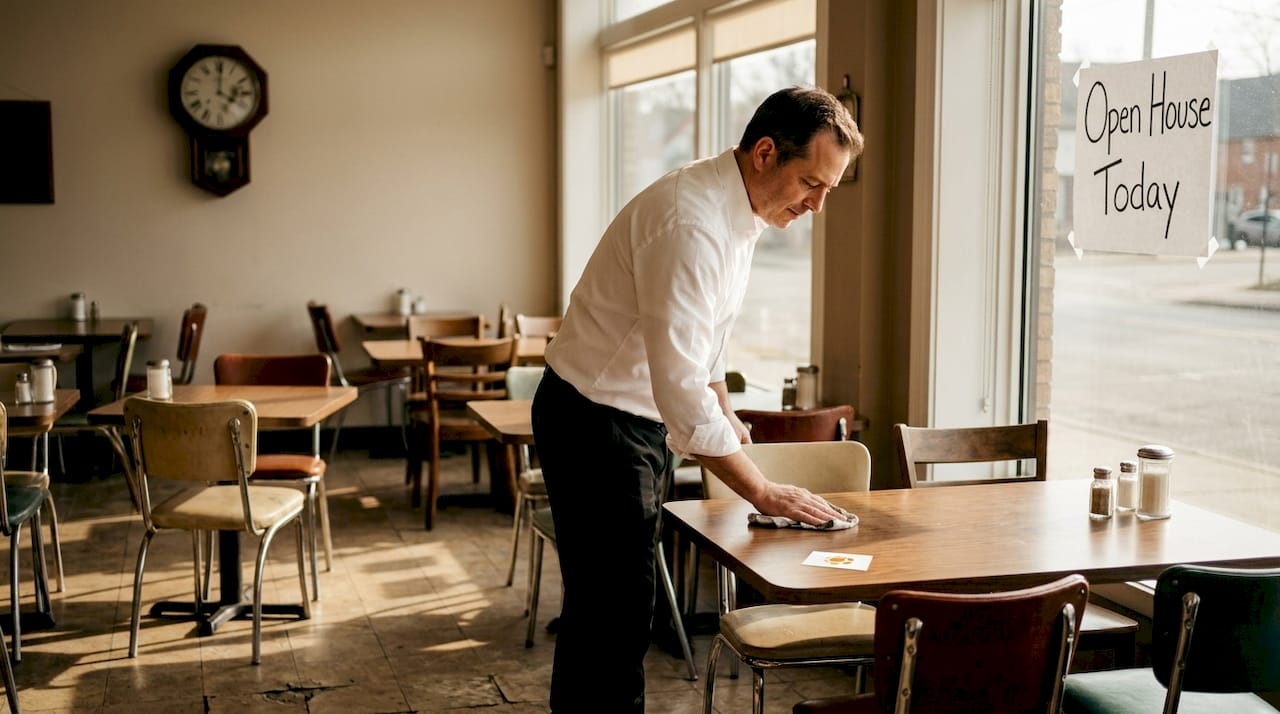
Most restaurant sellers focus almost entirely on pricing strategy and listing placement, yet they overlook one of the most powerful levers for a faster, higher-value sale: staging. Staged properties attract more buyer interest and typically sell faster, yet the practice remains underused in commercial food and beverage real estate. Staging is not just for residential homes. When done right, it transforms how buyers perceive your restaurant’s potential, reduces their hesitation, and positions your property as a walk-in-ready opportunity rather than a project. This article breaks down exactly what staging means for restaurant properties, how it changes buyer behavior, the specific steps to get it right, and the mistakes that cost sellers money.
Table of Contents
- What is restaurant staging and why does it matter?
- How staging influences buyer perception and marketability
- Key steps to stage your restaurant property for sale
- Common mistakes and expert tips for effective staging
- Our take: Why staging wins in today’s restaurant real estate
- Find your next restaurant opportunity with PepperLot
- Frequently asked questions
Key Takeaways
| Point | Details |
|---|---|
| Staging attracts buyers | Well-staged restaurants spark interest by helping buyers visualize a thriving business. |
| Marketability matters | Clean, welcoming, and operational venues stand out in competitive listing environments. |
| Simple upgrades deliver ROI | Improvements like cleaning, lighting, and professional photos offer big returns without major expense. |
| Avoid common staging mistakes | Steer clear of clutter, neglected kitchens, and over-personalized decor for best results. |
| PepperLot connects sellers | Designed listings and support help restaurant sellers achieve faster, higher-value sales. |
What is restaurant staging and why does it matter?
In residential real estate, staging means arranging furniture and decor to help buyers picture themselves living in the space. Restaurant staging follows the same principle but targets a completely different audience: operators, investors, and entrepreneurs who want to picture a functioning, profitable business.
Restaurant staging means presenting your property in a way that communicates operational readiness, cleanliness, and revenue potential. It includes everything from polishing the kitchen surfaces to optimizing the dining room layout for traffic flow. Unlike home staging, which leans on comfort and aesthetics, restaurant staging must speak to business logic. A buyer walking through your space is mentally calculating covers per night, kitchen efficiency, and customer experience.
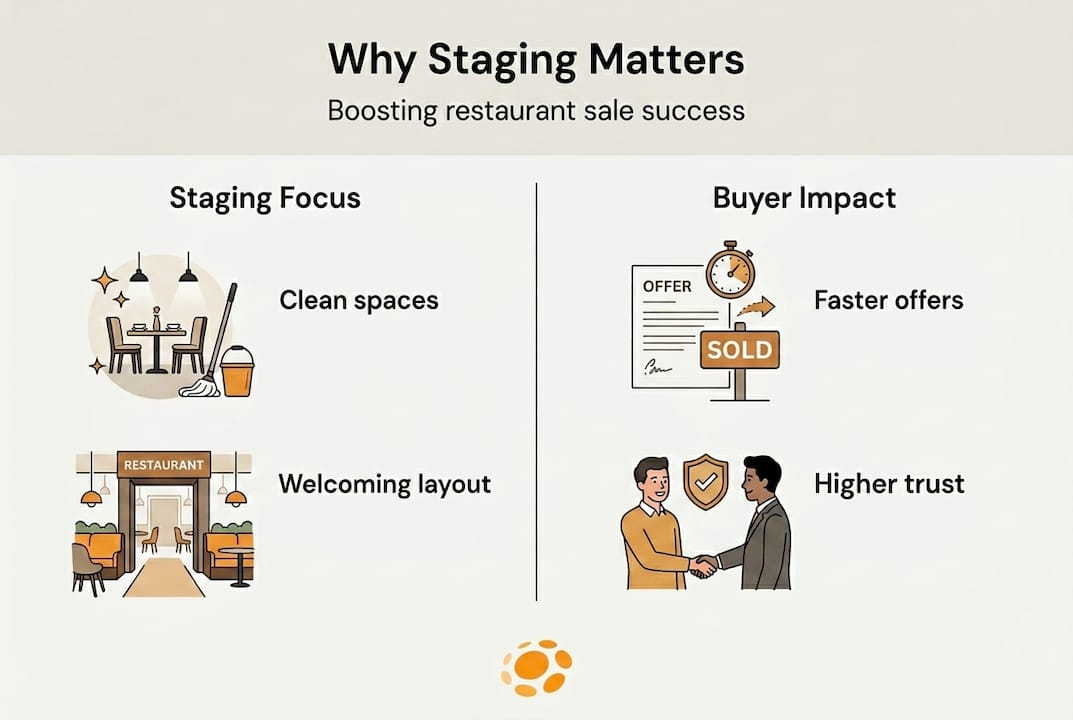
Staging helps highlight a restaurant’s potential for future operators and investors, making the leap from vacant space to thriving concept far easier in the buyer’s mind. That mental shortcut has real financial value.
Here is a quick summary of what effective staging delivers:
- Enhanced first impressions that immediately signal a well-maintained, quality property
- Emotional connection that helps buyers picture their own concept in the space
- Faster sale timelines by reducing the number of objections buyers raise during tours
- Stronger offers because buyers perceive less risk and less remediation work
- Broader appeal across operator types, from fast casual to fine dining
“The way a space looks on day one of a showing shapes every assumption a buyer makes about the business they’re acquiring. A cluttered, worn-out kitchen signals hidden costs. A clean, organized space signals a business worth paying for.”
Think of staging as the difference between attracting restaurant tenants who are serious and motivated versus tire-kickers who see too many problems. It also mirrors the principles behind optimizing restaurant profitability, where small operational improvements compound into significant gains.
How staging influences buyer perception and marketability
Buyer psychology plays a massive role in commercial real estate decisions. When a potential buyer walks into a restaurant, they form their first impression within seconds. Staging controls that impression before a single word is spoken.
Here is a before-and-after comparison showing the concrete impact staging has on key property features and buyer outcomes:
| Feature | Unstaged property | Staged property |
|---|---|---|
| Dining room layout | Chairs stacked, tables mismatched | Clean, consistent setup with proper spacing |
| Kitchen condition | Grease buildup, cluttered surfaces | Spotless, organized, equipment on display |
| Lighting | Harsh fluorescents or burned-out bulbs | Warm, layered lighting that creates ambiance |
| Photography quality | Dark, low-resolution listing photos | Professional images with wide-angle shots |
| Buyer reaction | Questions about condition and costs | Interest in move-in timeline and business terms |
| Average days on market | Longer, with frequent price reductions | Shorter, with competitive offer activity |
Well-staged restaurant properties are shown to attract more competitive offers and shorten time on market, which directly protects your negotiating position as a seller.
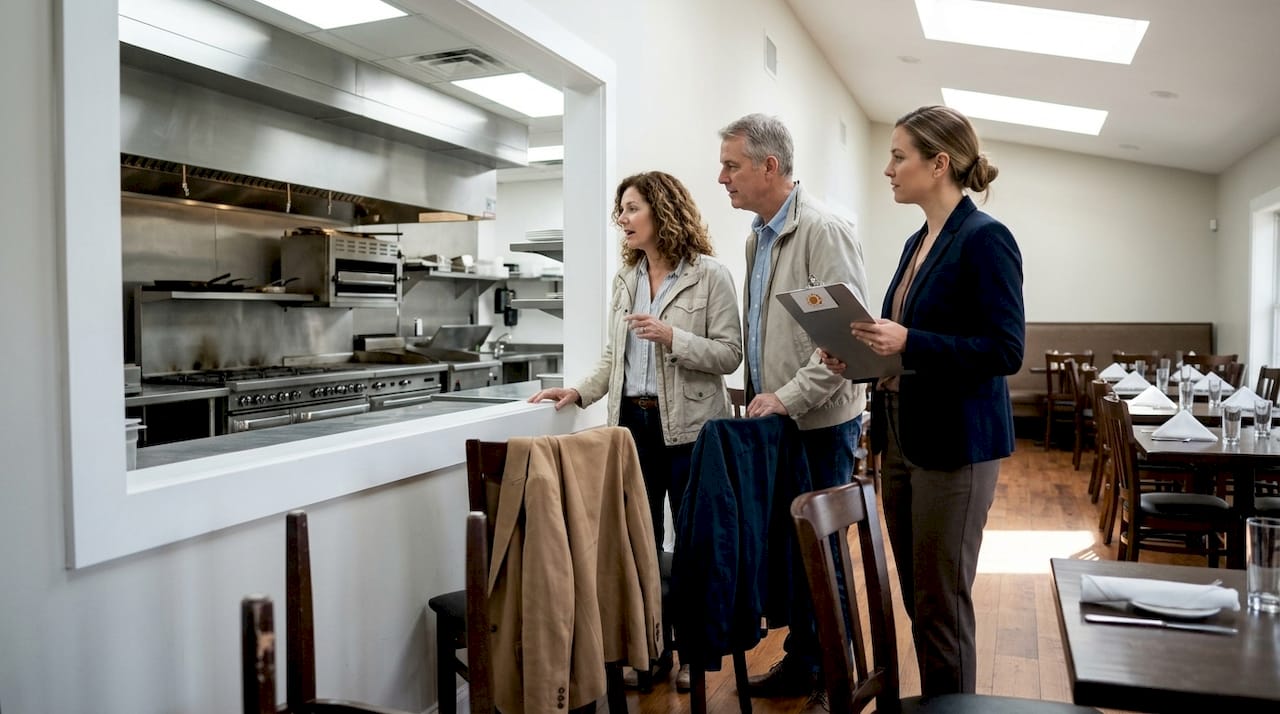
Staging also addresses the doubts buyers typically carry into a showing. Is this kitchen up to code? Will I need to tear everything out? Can I picture my brand here? A well-staged space answers those questions before they are asked. It signals that the previous owner cared about the business, which reassures buyers that maintenance and operations were handled responsibly.
Understanding restaurant real estate basics helps sellers frame staging not as cosmetic fluff but as a strategic communication tool. Much like the benefits of hospitality training teach staff to project confidence and professionalism, staging teaches your space to do the same.
Pro Tip: Focus your staging energy on three high-impact areas first: flow, lighting, and cleanliness. These three factors shape the emotional experience of every buyer who walks through your door, and they cost far less to address than most owners expect.
Key steps to stage your restaurant property for sale
A structured staging process can make your listing stand out while minimizing sale friction. Here is a step-by-step framework tailored specifically for restaurant sellers:
- Deep clean everything. Start with the kitchen, bathrooms, and dining room. Remove grease buildup, sanitize all surfaces, and eliminate odors. This is non-negotiable.
- Make necessary repairs. Fix broken chairs, cracked tiles, malfunctioning equipment, and flickering lights. Buyers notice deferred maintenance and price it into their offers.
- Optimize the dining room layout. Arrange tables and seating to demonstrate the maximum comfortable cover count. Show buyers what a full house looks like, not a storage situation.
- Neutralize personal branding. Remove your logos, branded signage, and personal decor. Buyers need to visualize their own concept, not yours.
- Address lighting throughout. Replace burned-out bulbs, add warm lighting to dining areas, and ensure the kitchen is well-lit and visible on camera.
- Stage the kitchen for operational readiness. Organize equipment, clean the hood system, and display key appliances. If equipment conveys with the sale, make sure it looks like an asset.
- Add subtle, neutral decor. Fresh plants, clean menus on tables, or simple table settings help buyers picture a functioning dining room without overwhelming them.
- Invest in professional photography. This is the single highest-return staging investment. Great photos drive more showings, and more showings drive better offers.
Here is a quick reference for cost versus impact:
| Staging action | Estimated cost | Impact on buyer perception |
|---|---|---|
| Deep cleaning | $200 to $800 | Very high |
| Minor repairs | $100 to $1,500 | High |
| Lighting upgrades | $150 to $600 | High |
| Neutral decor additions | $50 to $300 | Medium |
| Professional photography | $300 to $1,000 | Very high |
If your budget is tight, prioritize cleaning, repairs, and photography. These three actions deliver the highest return. You can also use a restaurant staging checklist to make sure nothing critical gets missed before your first showing.
Common mistakes and expert tips for effective staging
Knowing what not to do is just as important as knowing the right steps. Avoiding clutter and strategic cosmetic updates can immediately improve your restaurant’s marketability, yet many sellers fall into predictable traps.
Here are the most common staging mistakes restaurant sellers make:
- Over-personalizing the space. Leaving your brand’s signage, color scheme, and personal memorabilia makes it hard for buyers to see anything but your concept.
- Ignoring the kitchen. Many sellers focus all their energy on the dining room and forget the kitchen is often the deciding factor for an operator buyer.
- Neglecting lighting. Poor lighting in listing photos is one of the top reasons buyers scroll past a listing without scheduling a showing.
- Skipping professional photography. Smartphone photos, no matter how well-intentioned, rarely capture the scale, light, and layout that attract serious buyers.
- Leaving equipment in disrepair. Broken or visibly aged equipment raises red flags about the property’s overall condition and maintenance history.
Pro Tip: Invest in neutral decor and targeted deep cleaning before any showing. These two actions deliver the highest return on investment for sellers with limited staging budgets. For cafe owner staging tips and efficiency strategies, smaller venue owners can find practical guidance tailored to their scale.
Staging strategy also changes depending on the type of restaurant. A fine dining establishment benefits from elegant table settings, polished glassware, and soft lighting. A fast casual venue should emphasize counter efficiency, cleanliness, and visible storage solutions. Specialty concepts like ghost kitchens or bakeries need to showcase production capacity and equipment condition. Understanding your buyer’s concept helps you stage for their specific vision.
If you are exploring options for buying a restaurant or selling one, working through restaurant-only platforms ensures your staged property reaches buyers who already understand its value.
Our take: Why staging wins in today’s restaurant real estate
Here is something most listing guides will not tell you: unstaged restaurant listings do not just sell slower, they attract the wrong buyers. When a space looks worn or unclear in its purpose, it filters in bargain hunters and filters out serious operators who are ready to move quickly and pay fairly.
The overlooked psychological value of a walk-in-ready space is enormous. Buyers are not just evaluating square footage and equipment. They are evaluating risk. A clean, well-presented restaurant says, “This business was run with care.” That message is worth more than almost any price reduction you could offer.
Staging is not about tricking buyers. It is about removing the mental friction that stops them from committing.
We also believe staging reflects a seller’s deeper commitment to the transaction. When you invest time and resources into presenting your property well, you signal to buyers and their brokers that you are a motivated, professional seller worth working with. That reputation matters, especially in a competitive market where attracting serious tenants and buyers comes down to first impressions. Staging is not an optional extra. In 2026’s restaurant real estate market, it is a baseline expectation for sellers who want results.
Find your next restaurant opportunity with PepperLot
Staging your restaurant property the right way opens the door to better offers and faster closings. PepperLot makes the next step straightforward.
Our marketplace features restaurants with business for sale and a full restaurant for lease, all with restaurant-specific listing details that serious buyers actually care about. From grease traps to seating capacity to permit status, every listing is built to inform, not confuse. Sellers benefit from targeted promotion, access to over 500 active users in the F&B real estate network, and location intelligence advantages that help buyers and sellers understand exactly what a property is worth. List your space or explore current opportunities at PepperLot today.
Frequently asked questions
Does staging a restaurant property really affect sale price?
Yes, staged restaurant properties often receive higher offers by appealing to buyers’ vision and reducing perceived risk. Staged properties attract more buyer interest and typically sell faster, giving sellers a stronger negotiating position.
How much should I budget for staging my restaurant?
Costs vary, but targeted improvements like deep cleaning and professional photography offer the best ROI without major expense. A structured staging process can make your listing stand out while minimizing sale friction.
What are the most important things to stage in a restaurant?
Focus on cleanliness, lighting, functional kitchen areas, and a welcoming layout to maximize buyer appeal. Avoiding clutter and cosmetic updates can immediately improve your restaurant’s marketability.
Should I hire a professional stager or can I do it myself?
Many owners handle basic staging themselves, but professionals can add market insight, especially for larger or unique venues. Staging highlights a restaurant’s potential for future operators and investors in ways that DIY efforts sometimes miss.
What’s the difference between staging a restaurant and staging a home?
Restaurant staging focuses on operational flow, cleanliness, and business features, while home staging centers around comfort and residential style. Understanding key staging differences between commercial and residential properties helps sellers tailor their approach effectively.
Recommended
- Top benefits of buying restaurant space for growth
- List Your Restaurant For Sale in Oakland | Tablelot.com
- How to Sell a Restaurant Space in California — The Complete Guide for Owners and Investors | PepperLot Blog
- Restaurant sale vs. lease: 4 key differences for success
- Optimize your restaurant website for more customers in 2026 | Sorbey Blog | Sorbey
Leave a Reply