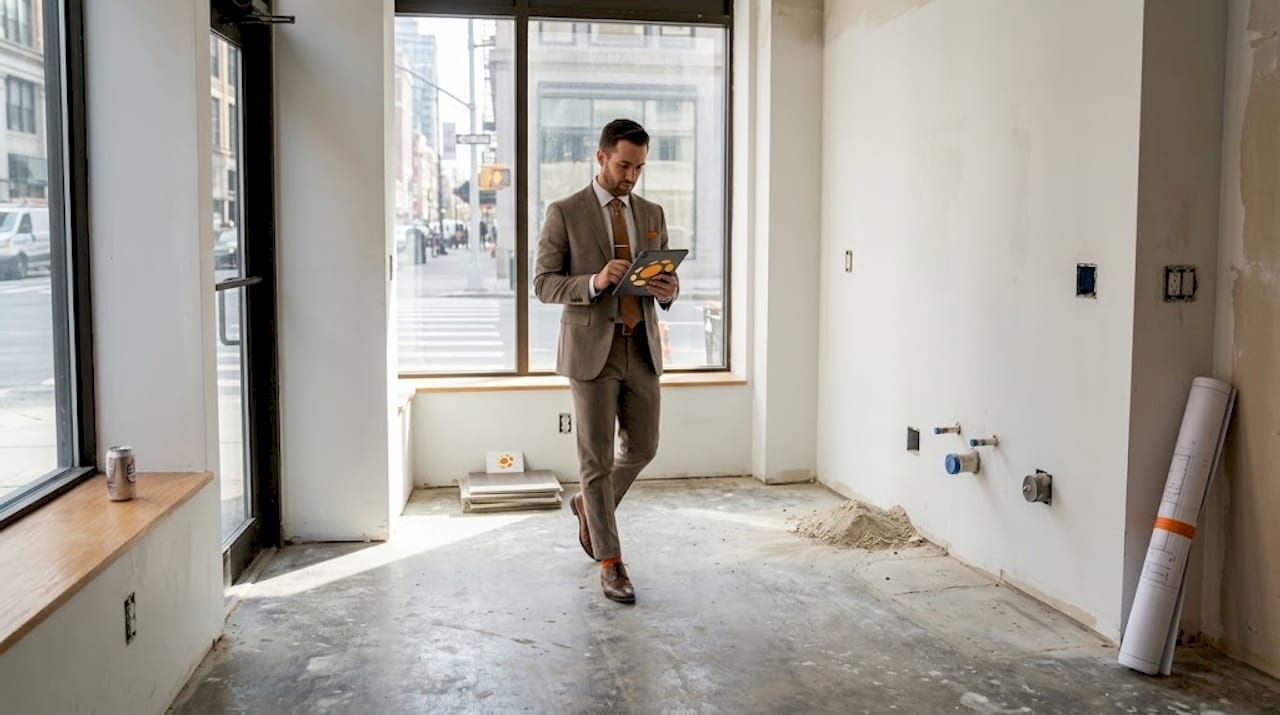
Most advice on this question is written for businesses in general. Restaurants are not businesses in general. A law office can move into 2,000 square feet of empty shell space and be open in a month. A restaurant in that same shell needs gas service, a Type I hood, make up air, a grease interceptor, floor drains, a three compartment sink, a mop sink, and a health department sign off. That gap is the whole decision.
So the useful question is not whether to lease or buy. It is who pays for the build out, and who keeps the value of it when you are done.
The number that decides it: occupancy cost
Before anything else, work out what you can afford. In restaurants, occupancy cost is measured as a percentage of gross sales. It includes base rent, common area maintenance, property taxes, and insurance. The general working range is 6 to 10 percent of gross sales. Quick service can sometimes carry a little more because of higher sales per square foot. Full service with a large dining room usually needs to sit lower.
If you project 1.2 million dollars in annual sales and you hold occupancy at 8 percent, your total annual occupancy budget is 96,000 dollars, or 8,000 dollars a month. That is your ceiling. Every lease you look at and every mortgage you model has to fit under it. Run this before you tour a single space. It eliminates most of the market in a few minutes and stops you falling for a room you cannot afford to operate in.
What leasing actually costs
The headline rent is not the cost. Four other things move the number.
The build out. A restaurant built from a cold dark shell commonly runs 250 to 500 dollars per square foot and can go higher in dense urban markets with expensive permitting. Second generation restaurant space, meaning a location that already operated as a restaurant, commonly runs 50 to 150 dollars per square foot because the hood, gas, grease interceptor, and drains are already in place. On a 3,000 square foot space, that difference is often 500,000 dollars or more. For a fuller picture of the total number, see our guide to how much it costs to open a restaurant.
The tenant improvement allowance. Landlords will contribute toward build out, usually quoted as dollars per square foot. A meaningful allowance is real money, but understand what you are trading for it. Allowances get repaid through higher base rent over the term. You are borrowing from your landlord at a rate you should calculate rather than accept.
The personal guarantee. Almost every restaurant lease asks for one, and this is the item that follows you home. Negotiate for a limited guarantee, a burn off after a set number of on time payments, or a good guy clause that caps your exposure if you surrender the space cleanly. Landlords say no less often than tenants expect, because a landlord would rather have a clean handover than a fight.
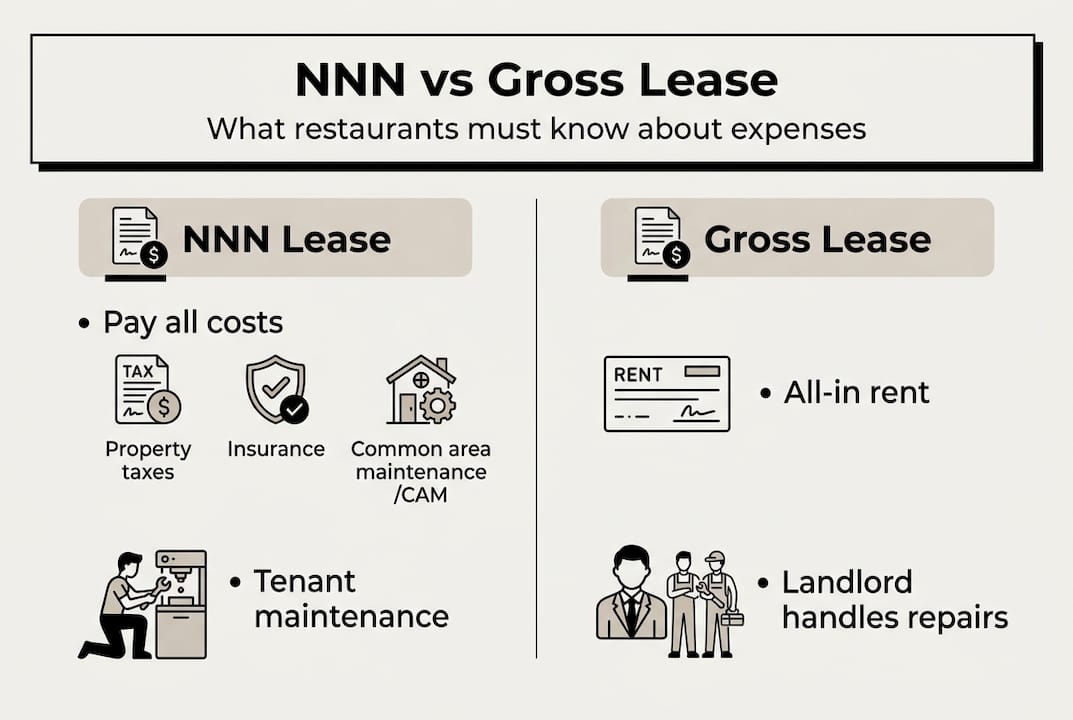
Free rent. Ask for construction period rent abatement covering the months you are building and not selling. Three to six months is a normal ask on a ten year term. Our step by step guide to leasing restaurant space walks through the rest of the negotiation, and if you are being quoted a triple net deal, read what operators must know about NNN leases first.
What you leave behind. Everything you build into the premises typically becomes the landlord’s property at the end of the term. You spent the money. They keep the asset. That is the central trade of leasing.
What buying actually costs
Buying converts rent into debt service and hands you the asset. It also hands you a second business.
The financing. Owner occupied commercial property has better loan options than investment property. SBA 504 loans are built for exactly this, and the owner occupancy requirement for an existing building is 51 percent of the square footage, which a restaurant operating in its own building satisfies easily. Down payments in the 10 to 15 percent range are common, against 25 to 35 percent for conventional commercial debt. SBA 7(a) is the other route and can wrap real estate, equipment, and working capital into one loan.
The costs rent was hiding. As a tenant, the roof is not your problem. As an owner it is, along with the HVAC units, the parking lot, the plumbing under the slab, property taxes, and building insurance. Budget a capital expenditure reserve every year. Owners who skip this get one bad winter and a five figure emergency.
The upside. You control your own occupancy cost for the life of the loan instead of facing a renewal negotiation every five to ten years. You capture appreciation. And your build out spending improves an asset you own rather than one you rent.
The exit. This is where owning quietly wins. When you sell a restaurant business that leases its space, you sell goodwill, equipment, and an assignable lease, and the buyer’s lender will scrutinise that lease hard. When you own the building, you can sell the business and keep the building as an income property, sell both together, or do a sale leaseback and pull your equity out while continuing to operate. You have options a tenant does not have. For the narrower question of selling a restaurant business versus assigning its lease, see restaurant sale vs lease. Our step by step guide to buying restaurant property covers the acquisition process itself.
When leasing is the right call
Lease when you are testing a concept and are not certain it works in that trade area. Lease when the location you want sits in a corridor where nothing is for sale, which describes most high street and downtown retail. Lease when your capital is better spent on equipment, staff, and marketing than on a down payment. Lease when you plan to grow to several locations, because tying capital up in real estate slows expansion. And lease when the second generation space in front of you is good enough that the build out savings outweigh everything else.
When buying is the right call
Buy when the concept is proven and you know the location works. Buy when you are in a suburban or secondary market where freestanding restaurant buildings with their own parking actually trade. Buy when your projected debt service comes in at or below market rent for comparable space, which happens more often than operators expect. Buy when you intend to operate for a decade or more. And buy when the build out is heavy, because if you are spending 400,000 dollars on a kitchen you should think carefully before spending it inside someone else’s building.
The middle path most operators miss
You do not have to choose in a straight line.
Lease with a purchase option. Negotiate a right of first refusal, or an option to purchase at a set price or an appraised value at a defined point in the term. Landlords approaching retirement are often receptive. This lets you prove the concept on someone else’s balance sheet and buy once you know.
Buy the building and lease out the surplus. A freestanding building with more square footage than your concept needs can carry a second tenant whose rent covers a meaningful share of your debt service.
Sale leaseback later. Buy, operate, build value, then sell the real estate to an investor and lease it back. You free the equity for expansion while staying in the location.
A worked comparison
Take a 3,000 square foot second generation restaurant space in a suburban market.
Leasing at 30 dollars per square foot triple net comes to 90,000 dollars a year in base rent, plus roughly 8 dollars per square foot in common charges and taxes, so about 114,000 dollars a year, or 9,500 dollars a month. Add 200,000 dollars of build out that you will not own at the end. Assume a ten year term with an escalator, so the number climbs every year.
Buying the same building at 900,000 dollars with an SBA 504 loan at 10 percent down means 90,000 dollars of equity in and roughly 810,000 dollars financed. Debt service, taxes, insurance, and a capital reserve land in a broadly similar monthly range. The difference is that in year ten your rent has escalated and you own nothing, or your loan balance has amortised down and you own a building.
The numbers move with your market and your rate. The structural point does not. Leasing keeps your capital liquid and your exposure short. Buying converts your occupancy cost into equity and hands you a maintenance obligation.
What to check before you commit either way
Ask these about any space, leased or purchased. Is there an existing Type I hood, and does the make up air unit work. What is the incoming gas service in BTU, and is it enough for your equipment package. Is there a grease interceptor, what size, and does it meet current local code rather than the code when it was installed. What is the electrical service in amps. Is the space zoned for your use, and does it need a special use permit for alcohol, late hours, or outdoor seating. If it is second generation, why did the last operator leave, because the answer is either a bad operator or a bad location, and only one of those is your problem.
Search both at once
Most listing sites make you choose a lane before you have run the numbers. That is backwards. You should be looking at leases and buildings for sale side by side, in the same market, and letting the math decide.
PepperLot is a commercial real estate marketplace built exclusively for the food and beverage industry, covering restaurant leasing, property sales, and business sales across all 50 states. You can search restaurant space for lease and restaurants and restaurant buildings for sale in the same place, and compare what each option really costs before you sign anything.
Start with your occupancy cost ceiling. Everything else follows from it.
Browse sell a restaurant on PepperLot.