
Signing a restaurant lease without fully understanding its terms is one of the most expensive mistakes an operator can make. Many restaurateurs focus almost entirely on base rent, only to discover later that triple net charges, percentage rent clauses, and vague repair obligations quietly erode their margins. A single misread clause can cost tens of thousands of dollars over a five-year term. This guide breaks down every major lease concept you need to know, from lease structure to hidden costs to legal red flags, so you can walk into your next negotiation with clarity and confidence.
Table of Contents
- Understanding the main types of restaurant leases
- Typical lease lengths, renewals, and negotiation essentials
- Percentage rent and hidden costs: What really impacts your bottom line
- Red flags, legal pitfalls, and tips for protecting your business
- Why lease education is your restaurant’s competitive edge
- How PepperLot simplifies your restaurant lease journey
- Frequently asked questions
Key Takeaways
| Point | Details |
|---|---|
| Know lease types | Understanding gross, modified gross, and NNN leases will clarify both your costs and responsibilities. |
| Negotiate wisely | Standard leases can be improved with contingencies for buildout, permits, and renewal to protect your business. |
| Watch for hidden costs | Percentage rent and pass-throughs can significantly increase your rent—model all expenses before signing. |
| Prioritize legal clarity | Vague clauses on repairs or assignments can cost dearly; get every term defined. |
Understanding the main types of restaurant leases
Every restaurant lease falls into one of three broad structures. Knowing which one you’re looking at changes everything about how you budget, negotiate, and plan for the future.
Gross lease: You pay one flat monthly amount. The landlord covers most operating expenses including property taxes, insurance, and maintenance. It feels simple, but landlords price that simplicity into a higher base rent. You trade predictability for a premium.
Triple net (NNN) lease: You pay base rent plus your proportional share of property taxes, building insurance, and common area maintenance (CAM). As triple net differences show, NNN favors landlords with stable income, while gross leases offer tenants simplicity at a higher base rent. Modified gross leases sit in between, offering flexibility through negotiated base year stops.
Modified gross lease: A hybrid. Some expenses are covered by the landlord, others by you, and the split is negotiated. Watch for the “base year stop,” which is the expense level above which you start absorbing costs. If the base year is set low, your exposure grows fast.
Here’s a quick comparison to keep these straight:
| Lease type | Who pays operating costs | Typical base rent | Best for |
|---|---|---|---|
| Gross | Landlord | Higher | Tenants wanting simplicity |
| NNN | Tenant | Lower | Landlords wanting stability |
| Modified gross | Shared/negotiated | Mid-range | Both parties seeking flexibility |
Key things to watch in any lease structure:
- CAM charges can include landscaping, parking lot repairs, and even management fees
- Insurance pass-throughs vary widely depending on the building’s claims history
- Property tax escalations in NNN leases can spike unexpectedly after reassessment
- Administrative fees are sometimes added on top of CAM, often 10-15% of the CAM total
If you’re exploring California restaurant leasing options, understanding which lease type dominates your target market gives you a real negotiating advantage before you ever sit across the table from a landlord.
Typical lease lengths, renewals, and negotiation essentials
Restaurant leases are long commitments. Unlike office or retail leases, food service operations require significant buildout investment, which means landlords expect longer terms and tenants need longer runways to recoup costs.

Lease terms typically run 5 to 10 years, often with two 5-year renewal options. That’s potentially 20 years tied to one location. The renewal option is not automatic. You usually must notify the landlord 6 to 12 months before the current term ends, and missing that window can cost you the right to renew entirely.
Here’s what smart operators negotiate before signing:
- Free rent period: Ask for 1 to 3 months of free rent during buildout. You’re not generating revenue while construction runs, so you shouldn’t be paying full rent either.
- Tenant improvement (TI) allowance: The landlord contributes a dollar amount toward your buildout. This is standard in many markets and can offset significant startup costs.
- Permit and license contingencies: If your health permit or liquor license is denied, you need an exit clause. Without it, you’re legally bound to a space you can’t legally operate.
- Escalation caps: Rent increases annually in most leases. Negotiate a cap, typically 3% per year or CPI-linked, to prevent runaway increases in years 4 and 5.
- Renewal rent terms: Some leases let the landlord set renewal rent at “market rate.” That’s vague. Push for a fixed percentage increase or a clearly defined formula.
Pro Tip: Before signing, map out your rent obligations year by year including all escalations. If the number in year 8 makes your stomach drop, renegotiate now or walk away.
Operators in competitive urban markets like those browsing San Francisco restaurant lease terms or exploring Pasadena lease renewal strategies often find that renewal provisions are where long-term value is won or lost. A great location with a bad renewal clause is a ticking clock.
Percentage rent and hidden costs: What really impacts your bottom line
Base rent is just the headline number. The real financial story lives in percentage rent clauses and the costs most operators don’t discover until after they’ve signed.
Percentage rent means you pay base rent plus a percentage of your gross sales once those sales exceed a threshold called the breakpoint. As percentage rent basics explain, this share is often around 7% of gross sales above the breakpoint, which is common in retail and restaurant leases as a way for landlords to capture upside when your business performs well.
There are two types of breakpoints:
- Natural breakpoint: Calculated by dividing your annual base rent by the percentage rate. If you pay $84,000 per year in base rent and the percentage is 7%, your natural breakpoint is $1,200,000 in annual gross sales.
- Artificial breakpoint: A number negotiated independently of the formula. This can be set higher (better for you) or lower (worse for you) than the natural breakpoint.
Always run the math before agreeing to any percentage rent clause. A breakpoint set too low means you start sharing revenue with your landlord the moment you hit moderate success.
Beyond percentage rent, watch for these hidden costs:
- Common area maintenance (CAM): Covers shared spaces like lobbies, parking, and hallways. Always request an itemized CAM breakdown.
- Marketing fund contributions: Some landlords in multi-tenant buildings require tenants to contribute to a shared marketing budget.
- Utility pass-throughs: In some NNN leases, water, trash, and HVAC costs are billed separately.
- Insurance requirements: Landlords often require specific coverage levels. If your current policy doesn’t qualify, your premiums go up.
Pro Tip: Build a first-year financial model that includes base rent, estimated CAM, insurance, utilities, and a conservative percentage rent scenario. If the total exceeds 10% of your projected revenue, the location math may not work.
For operators evaluating Oakland restaurant rent structures, running this full cost model before negotiating is what separates operators who thrive from those who scramble.
Red flags, legal pitfalls, and tips for protecting your business
Even a well-structured lease with fair rent can destroy your business if the legal language is sloppy or one-sided. These are the clauses that trip up even experienced operators.
- Vague repair and maintenance language: If the lease says you’re responsible for “all repairs,” that could include the HVAC system, the roof, or structural elements. Push for a clear division: tenant handles interior, landlord handles structural and major systems.
- Restrictive use clauses: Your lease defines what type of food business you can operate. If it says “casual dining,” you may not be able to pivot to fast casual or add a ghost kitchen without landlord approval.
- Exclusivity clauses (or the absence of them): An exclusivity clause prevents the landlord from leasing nearby space to a direct competitor. Without one, a competing concept can open next door.
- Assignment and subletting rights: If you sell your restaurant or need to exit the lease, can you transfer it to a buyer? Many leases require landlord approval, which can complicate or kill a sale.
- Personal guarantee scope: Landlords often require personal guarantees. Negotiate to limit the guarantee to 12 to 24 months of rent rather than the full lease term.
“Contingencies for permits and liquor licenses are essential to avoid being locked into a costly lease without regulatory approval.”
This is non-negotiable. If your permits fall through and you have no contingency clause, you’re paying rent on a space you legally cannot open. Operators in markets like Newport Beach where coastal permits add complexity know this risk firsthand.
Always have a restaurant-experienced real estate attorney review your lease before signing. The cost is a few hundred to a few thousand dollars. The cost of not doing it can be catastrophic.
Why lease education is your restaurant’s competitive edge
Here’s a truth most guides skip: the operators who struggle most aren’t the ones with bad food or slow traffic. They’re the ones who signed leases they didn’t fully understand and spent years fighting terms they accepted without question.
Lease literacy isn’t a legal skill. It’s a business skill. The most successful restaurateurs we see treat their lease the same way they treat their menu engineering or labor scheduling: as a dynamic tool that needs active management, not a static cost to be filed and forgotten.
The uncomfortable reality is that most lease mistakes happen before opening day. Operators are excited, timelines are tight, and the pressure to sign feels enormous. That urgency is exactly when landlords hold the most leverage. Slowing down to understand every clause, every pass-through, and every renewal condition is where you reclaim that leverage.
Base rent is not the most important number in your lease. The combination of escalations, CAM exposure, renewal conditions, and use restrictions will shape your profitability far more over a 10-year term. Operators who internalize this stop negotiating on rent alone and start negotiating on the full picture. That shift in thinking is what separates a lease that works for you from one that slowly works against you.
How PepperLot simplifies your restaurant lease journey
Understanding lease terms is the first step. Finding the right space with the right terms in the right market is where the real work begins.
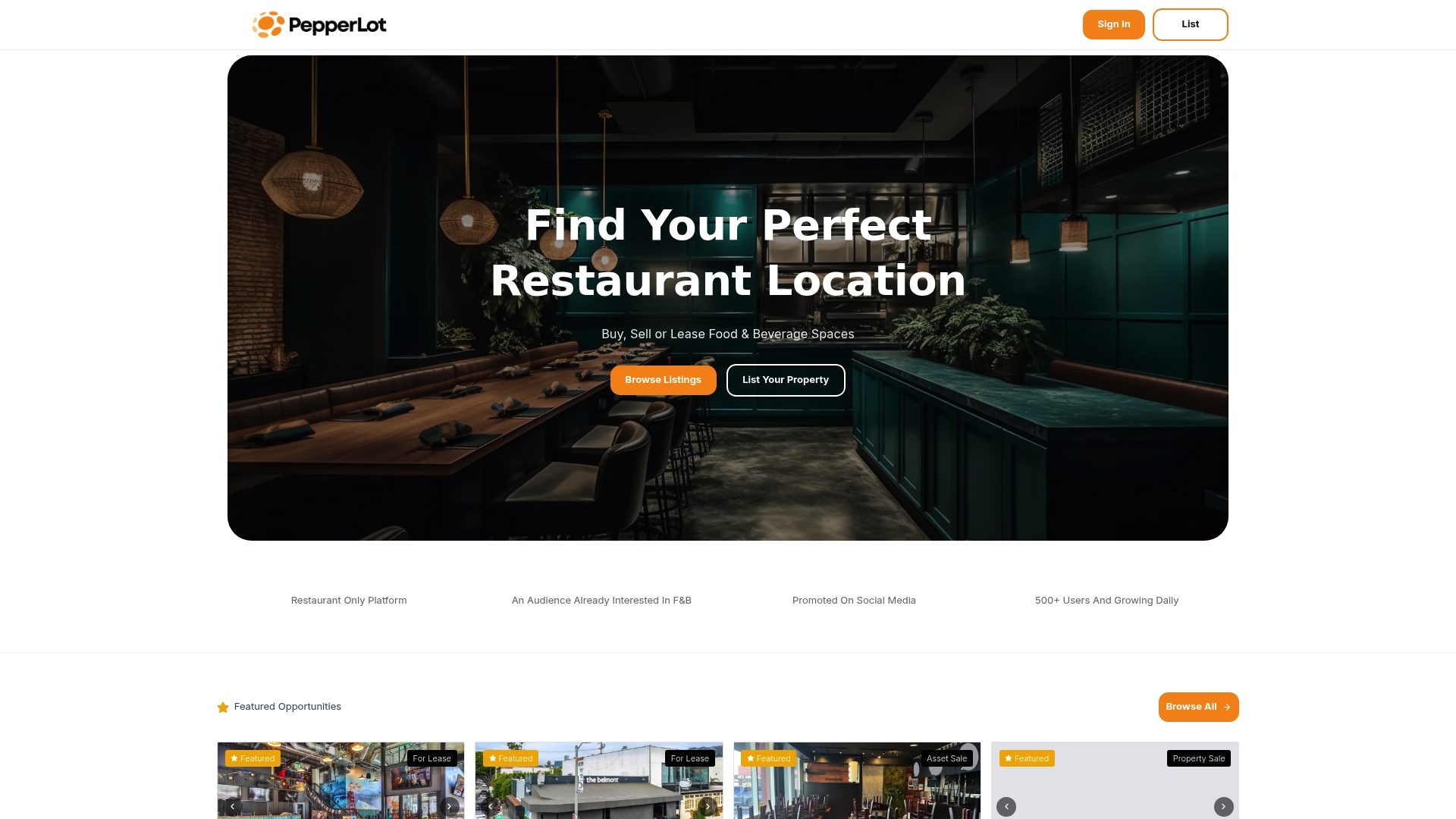
PepperLot is built specifically for restaurant operators navigating exactly this process. Every listing on the platform includes restaurant-specific details like grease trap specs, seating capacity, existing permits, and equipment, so you’re comparing spaces on the factors that actually matter. The location intelligence tools let you analyze local competition, demographics, and market demand before you ever schedule a showing. Whether you’re searching for your first location or expanding to a second, browse San Francisco lease listings and dozens of other markets to find spaces that match your concept, your budget, and your lease requirements.
Frequently asked questions
What is the typical duration for a restaurant lease?
Most restaurant leases run 5 to 10 years, often with options for two 5-year renewals. Missing the renewal notice window can forfeit that right entirely.
How does percentage rent work in restaurant leases?
You pay base rent plus a share, often around 7%, of gross sales above an agreed breakpoint. The breakpoint can be natural or artificially negotiated.
What’s the difference between NNN, gross, and modified gross leases?
NNN passes most operating costs to the tenant, gross is largely all-inclusive at a higher base rent, and modified gross is a negotiated hybrid with shared expense responsibilities.
How can I negotiate better terms for my restaurant lease?
Ask for free rent during buildout, include permit contingencies for licenses, cap annual escalations, and get renewal rent formulas defined in writing before signing.
What red flags should I look for in a restaurant lease?
Watch for vague repair obligations, missing exclusivity clauses, restricted assignment rights, and absent license contingencies that could trap you in a space you cannot legally operate.
Recommended
- Secure the Perfect Restaurant for Lease in Sacramento | Tablelot.com
- Secure a High-Traffic Restaurant for Lease in Anaheim | Tablelot.com
- Secure a Premier Restaurant for Lease in Long Beach | Tablelot.com
- Secure Your Next Concept with Restaurants for Lease in Stockton | Tablelot.com
- Restaurant brand positioning strategies that fill seats
Leave a Reply