
TL;DR:
- Restaurant real estate listings are categorized into For Lease, For Sale, and Sublease/Assignment, each with distinct risks and benefits.
- Leasing is the most common, offering flexibility and lower upfront costs, suitable for new operators.
- Off-market deals can provide better value due to less stigma and motivated landlords.
Searching for restaurant real estate can feel like reading a menu written in a foreign language. You see listings marked “For Lease,” “For Sale,” or “Sublease/Assignment,” and each one carries a completely different set of risks, costs, and opportunities. Pick the wrong type for your situation and you could burn through capital before you flip your first sign to “Open.” Restaurant real estate listings are categorized by transaction type, including For Lease, For Sale, and Sublease/Assignment, and each serves a different kind of operator. This guide breaks down every category so you can move fast and move smart.
Table of Contents
- What are the main types of restaurant real estate listings?
- For Lease: The most common path for operators
- For Sale: Buying the business or property
- Sublease and assignment: Taking over existing leases
- Compare restaurant listing types: Features at a glance
- A practitioner’s perspective: What most guides overlook
- Find your perfect restaurant property with Pepperlot
- Frequently asked questions
Key Takeaways
| Point | Details |
|---|---|
| Three main listing types | Restaurant properties are listed as for lease, for sale, or sublease/assignment, each with unique risks and benefits. |
| Turnkey spaces require scrutiny | Not all ‘turnkey’ listings are ready to operate; always check compliance and hidden costs. |
| Off-market deals offer advantages | Brokers use off-market listings to deliver better deals and avoid the stigma of failed tenant spaces. |
| Match listing type to strategy | Choose your listing path based on capital, experience, and long-term business goals. |
What are the main types of restaurant real estate listings?
Before you filter a single listing, you need to understand what you’re actually buying into. The three core categories are structurally different deals, not just different price points. Knowing the main listing types upfront saves you from wasting time touring spaces that don’t fit your business model or budget.
| Listing type | What you get | Typical commitment |
|---|---|---|
| For Lease | Right to occupy the space | Monthly rent + lease term |
| For Sale | Property or business ownership | Purchase price or business acquisition |
| Sublease/Assignment | Takeover of existing lease | Remaining lease term + obligations |
Here’s a quick breakdown of what each category involves:
- For Lease: You rent the property, often with equipment and fixtures already installed. This is the most common for operators looking to scale without heavy capital commitment.
- For Sale: You purchase the property outright (freehold) or buy the operating business along with a transferable leasehold interest.
- Sublease/Assignment: A current tenant with an existing lease steps aside, and you take over. Terms are inherited, not negotiated fresh from a landlord.
Each path has a distinct risk profile. Leasing keeps cash in your pocket but ties you to someone else’s property. Buying builds equity but requires capital and patience. Subleasing can be fast and affordable but comes loaded with inherited legal obligations.
For Lease: The most common path for operators
Leasing is where most operators start, and for good reason. It carries less upfront financial risk than buying, offers more flexibility if your concept evolves, and is the preferred route for operators managing multi-unit growth. Instead of locking millions into real estate, you preserve that capital for equipment, staffing, and marketing, which directly drive your revenue.
When reviewing a lease listing, pay close attention to these key features:
- Base rent and escalations: Know your starting rate and how much it increases annually.
- Lease term: Standard restaurant leases run 5 to 10 years, often with renewal options.
- Included fixtures: Hoods, grease traps, walk-in coolers, and plumbing lines already in place can save you $50,000 or more in buildout costs.
- Tenant improvements (TI): Many landlords offer TI allowances to attract strong operators. This is negotiable and worth fighting for.
- Personal guarantee: Understand what you’re signing on the dotted line. Many leases require a personal guarantee, which puts your personal assets on the hook.
For a real-world sense of what a strong lease deal looks like, browse this detailed lease example or review the restaurant leasing process on Pepperlot.
Now, the caveat that catches operators off guard: the word “turnkey.” A space marketed as turnkey implies you can open quickly with minimal work. But failed tenant spaces often list as “turnkey” yet need hood cleaning, grease trap resets, or permit renewals before a health inspector will approve you. Never assume turnkey means compliant.
Pro Tip: Before signing any lease, bring in a restaurant equipment technician and a code compliance consultant. Their combined fee is a fraction of the cost of surprises after you’ve taken possession.
For Sale: Buying the business or property
When you purchase a restaurant property, you’re making a fundamentally different bet. Instead of paying rent and building a landlord’s asset, you’re building your own. For Sale listings come in two distinct structures: freehold, where you buy the real estate itself along with the business, and leasehold, where you buy the operating business and a transferable lease.
Here’s how the features compare between a typical sale listing and a typical lease listing:
| Feature | For Sale listing | For Lease listing |
|---|---|---|
| Equipment included | Usually yes | Often yes |
| Real property ownership | Freehold only | No |
| Lease inherited | Leasehold only | Negotiated fresh |
| Permits/licenses | Transferred (verify) | New applications |
| Upfront capital required | High | Moderate |
| Long-term cost | Lower (no rent) | Ongoing rent expense |
Buying gives you control. You’re not subject to a landlord deciding not to renew or raising rent 30% at the end of your term. You build equity over time. For operators with strong capital positions or family businesses seeking generational assets, owning the real estate often makes more financial sense over a 20-year horizon.

Before committing, understand what you’re getting into by reviewing buying vs. leasing considerations specific to restaurant operators, as well as sale vs. lease considerations that many buyers overlook.
Key questions to ask on any sale listing:
- Are permits, health licenses, and certificates of occupancy transferable?
- What is the condition of the kitchen equipment, and is a warranty included?
- For leasehold sales, does the landlord approve the assignment of the lease?
- What financials does the seller provide, and have they been independently verified?
Sublease and assignment: Taking over existing leases
For experienced operators who know how to read between the lines of a deal, subleases and assignments can be some of the best-value opportunities in the market. Both let you enter a space under an existing lease, but they work differently in a critical legal sense.
- Sublease: The original tenant remains on the lease with the landlord. You pay rent to that tenant, not the landlord. The original tenant retains liability.
- Assignment: The original tenant transfers all lease rights and obligations to you. You deal directly with the landlord, and the original tenant is typically released.
Why do these deals sometimes offer better value? Brokers often keep sublease listings off-market to avoid the perception that a failed concept operated there. That stigma can deflate interest, which creates negotiating leverage for a savvy buyer who does their own due diligence.
“The best sublease deals I’ve seen never hit a public portal. A broker calls an operator they trust, the terms are agreed on quietly, and the deal closes in weeks, not months.”
For operators who can evaluate inherited equipment, verify existing lease obligations, and absorb the complexity of a three-party negotiation, assignment vs. sublease arrangements offer a faster and often cheaper path to a fully equipped space.
Pro Tip: Always get independent legal review of the full lease before accepting a sublease or assignment. You’re inheriting the terms someone else negotiated, and some of those terms may not protect you.
Compare restaurant listing types: Features at a glance
With all three types covered, here’s the side-by-side summary to guide your decision fast.
| Factor | For Lease | For Sale | Sublease/Assignment |
|---|---|---|---|
| Upfront cost | Moderate | High | Low to moderate |
| Risk level | Medium | High | Medium to high |
| Flexibility | High | Low | Low |
| Equity building | No | Yes | No |
| Speed to open | Fast | Slower | Fastest |
| Negotiation leverage | High | Moderate | Varies |
Choosing the right listing type comes down to your specific situation. Here’s a numbered framework to guide that decision:
- Assess your capital. Limited capital favors leasing or subleasing. Strong capital opens up purchase options.
- Evaluate your experience. New operators do best with fresh leases where they control their terms. Experienced operators can handle sublease complexity.
- Match your timeline. If speed matters, sublease or lease a turnkey space. If you’re building long-term, a purchase makes sense.
- Factor in your growth plan. Multi-unit operators need flexibility, which makes leasing superior. Single flagship concepts may justify buying the real estate.
- Check ownership decision factors specific to your market before committing. Local market conditions can flip the math entirely.
As restaurant listings are categorized by these distinct transaction types, treating them as interchangeable is the most expensive mistake you can make.
A practitioner’s perspective: What most guides overlook
Most articles about restaurant real estate listings stop at definitions. The real issue is what happens when theory meets the street.
“Turnkey” is the most abused word in restaurant real estate. A kitchen that was shut down six months ago is not ready to operate. The hood system needs cleaning and inspection. The grease trap may need pumping and certification. Health permits don’t transfer automatically. These are not minor inconveniences, they are deal-defining costs that inexperienced buyers fail to price in before signing.
Off-market listings, on the other hand, are where the genuine value often lives. Failed tenant spaces avoid public exposure through specialized brokers who quietly match the space to qualified operators. The stigma that holds other buyers back is actually your advantage if you know how to assess the physical condition and legal standing of the property independently.
An off-market restaurant space listed discreetly often comes with more motivated landlords, better TI packages, and less competition. Build relationships with specialized restaurant real estate brokers now, before you need a space, not after.
Find your perfect restaurant property with Pepperlot
Now that you understand what separates a lease from a sale from a sublease, the next step is finding live listings that match your strategy.
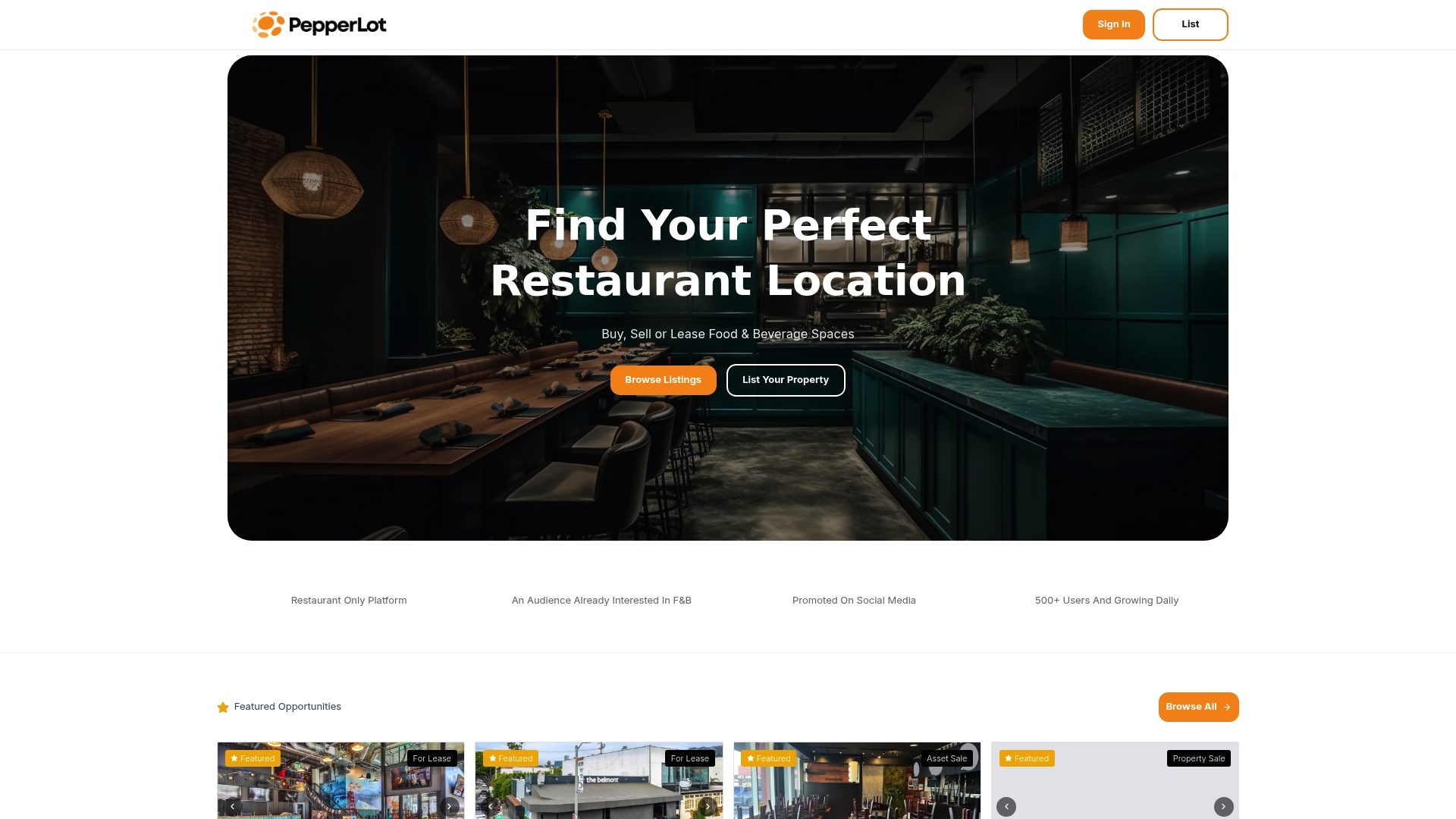
Pepperlot is built specifically for restaurant operators, landlords, and brokers who need more than a generic commercial real estate search. Every listing on the PepperLot marketplace includes restaurant-specific details like grease trap status, hood type, seating capacity, and permit history. You can browse a full restaurant for lease or explore opportunities like a restaurant space with business for sale. Stop filtering through irrelevant results and start finding spaces that were built for operators like you.
Frequently asked questions
What is a ‘turnkey’ restaurant listing?
A turnkey listing advertises a space as ready to operate, but failed tenant spaces often require hood cleaning, grease trap resets, and permit renewals before a health department will approve reopening. Always verify compliance independently.
Are off-market restaurant listings better than public listings?
Not always better, but often more advantageous. Brokers access off-market deals to avoid the stigma of failed tenants, which can mean less competition and a more motivated landlord willing to negotiate.
Which listing type is best for new operators?
For lease is typically the strongest starting point because, as the most common for operators, it offers lower upfront costs and the flexibility to renegotiate or exit without owning a depreciating asset.
What’s the difference between a sublease and an assignment?
In a sublease or assignment situation, the key legal difference is liability: a sublease keeps the original tenant responsible to the landlord, while an assignment fully transfers all lease obligations to the incoming operator.
Recommended
- Why Restaurant-Only Listing Platforms Benefit Property Owners and Agents | PepperLot Blog
- Restaurant Real Estate 101: How to Find, Lease, or Buy the Right Space for Your Concept | PepperLot Blog
- Why specialized real estate platforms are essential for restaurants
- Full Restaurant for Lease | PepperLot
- Essential restaurant tech checklist: upgrade your UK venue
Leave a Reply