
TL;DR:
- Second-generation restaurant spaces often contain existing infrastructure that can reduce buildout costs and timelines but carry hidden risks. These inherited systems may require costly upgrades or repairs if they do not align with the current concept and building codes. Conducting thorough inspections and assessments ensures informed decisions, preventing unexpected expenses and operational setbacks.
Walking into a second-generation restaurant space can feel like finding buried treasure. A functioning hood system, existing grease traps, plumbing already stubbed in. Operators often assume this automatically means a faster opening and a lighter bill. That assumption gets expensive fast. The reality is that shell and second-generation spaces each carry distinct economic profiles, legal risks, and strategic trade-offs that deserve careful analysis before you sign anything. Understanding the true differences between these two space types is one of the most valuable decisions you can make in restaurant real estate.
Table of Contents
- Defining shell and second-generation restaurant spaces
- Economic impact: Cost benchmarks and buildout considerations
- Hidden liabilities: Code, compliance, and infrastructure pitfalls
- Landlord perspective: Tenant improvement, risk, and re-tenanting value
- A fresh perspective: Why “turnkey” isn’t always the safest bet
- Explore restaurant spaces on Pepperlot
- Frequently asked questions
Key Takeaways
| Point | Details |
|---|---|
| Know your starting point | Shell and second-generation restaurant spaces differ by delivery condition, inherited systems, and buildout potential. |
| Savings aren’t guaranteed | Second-generation spaces may save money and time, but only when infrastructure fits the new concept and passes inspection. |
| Hidden costs require diligence | Outdated or incompatible systems in second-gen spaces can erase savings and create compliance headaches. |
| Landlords face unique risks | TI negotiations and re-tenanting speed depend on the space type and tenant’s needs for upgrades or demolition. |
| Strategy matters most | Operators should weigh long-term operational needs and brand standards against short-term cost and speed benefits. |
Defining shell and second-generation restaurant spaces
Now that we’ve set the stage, let’s clarify what makes these space types fundamentally different at delivery.
The term “shell space” describes a unit delivered with minimal improvements. It’s the structural container before any tenant work. However, not all shell spaces are equal. A cold shell (also called a grey shell) is the most bare-bones condition: raw concrete floors, exposed walls and ceilings, no HVAC, and often no interior plumbing. A warm shell (also called a vanilla shell) steps up significantly, providing HVAC, basic electrical panels, sprinkler systems, and sometimes restrooms. Warm shells are common in newer retail centers and strip malls where landlords want to attract food-use tenants without delivering a fully built restaurant.
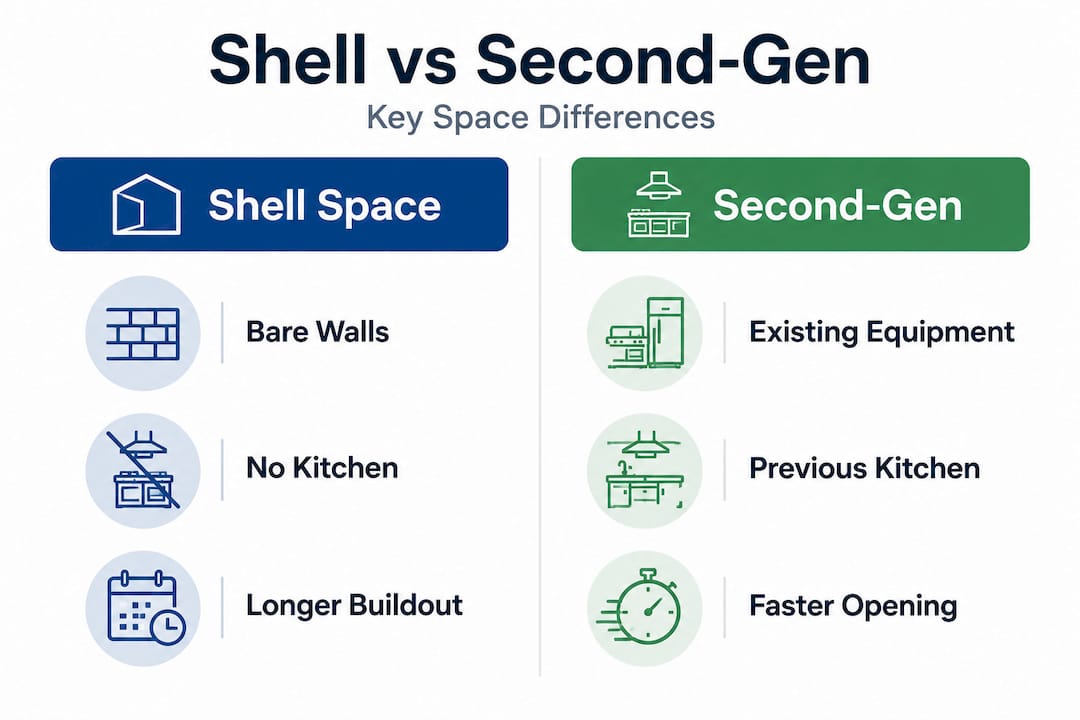
Restaurant space types definitions vary considerably by region and landlord, so always confirm exactly what is included before comparing lease deals. What a California landlord calls a “warm shell” may be dramatically different from what a Texas landlord delivers under the same label.
Second-generation spaces (commonly called “second-gen” or “2G”) are former restaurant units that still contain some or all of the previous operator’s infrastructure. The degree of retained infrastructure varies widely:
- Hood systems and exhaust ventilation (functional or needing service)
- Grease interceptors and trap systems
- Commercial plumbing rough-in and floor drains
- Gas lines and meter capacity
- Walk-in cooler and freezer boxes
- Type I and Type II exhaust systems
- Existing health permits and occupancy history
As noted in commercial real estate research, shell space is the starting condition at delivery, while second-generation retains restaurant-use infrastructure. This distinction sounds clean in theory but becomes complicated the moment you start evaluating specific assets.
Here’s a quick comparison of what you typically inherit or build:
| Feature | Cold shell | Warm/vanilla shell | Second-gen space |
|---|---|---|---|
| HVAC | None | Yes | Varies |
| Hood/exhaust | None | None | Often present |
| Grease interceptor | None | None | Usually present |
| Plumbing rough-in | None | Basic | Often complete |
| Electrical service | Minimal | Panel present | Panel + circuits |
| Flooring | Concrete slab | Concrete slab | Prior finish |
| Timeline to open | Longest | Moderate | Shortest (potentially) |
| Cost to build out | Highest | Moderate | Lowest (potentially) |
The word “potentially” does a lot of work in that table. And choosing the right restaurant space often comes down to understanding what “potentially” actually means for your specific concept, budget, and risk tolerance.
“Second-generation spaces offer the allure of a running start, but inherited infrastructure is only valuable if it aligns with your concept, passes inspection, and meets current code.”
Economic impact: Cost benchmarks and buildout considerations
With definitions in place, let’s explore what these differences mean for your budget and timeline.
The financial case for second-gen spaces sounds compelling on the surface. Research shows that second-gen spaces are roughly 10 to 15% cheaper and about three months faster to open than a comparable shell build-out, assuming the inherited infrastructure fits your concept. For a $500,000 buildout, 10 to 15% represents $50,000 to $75,000 in potential savings. That’s real money.
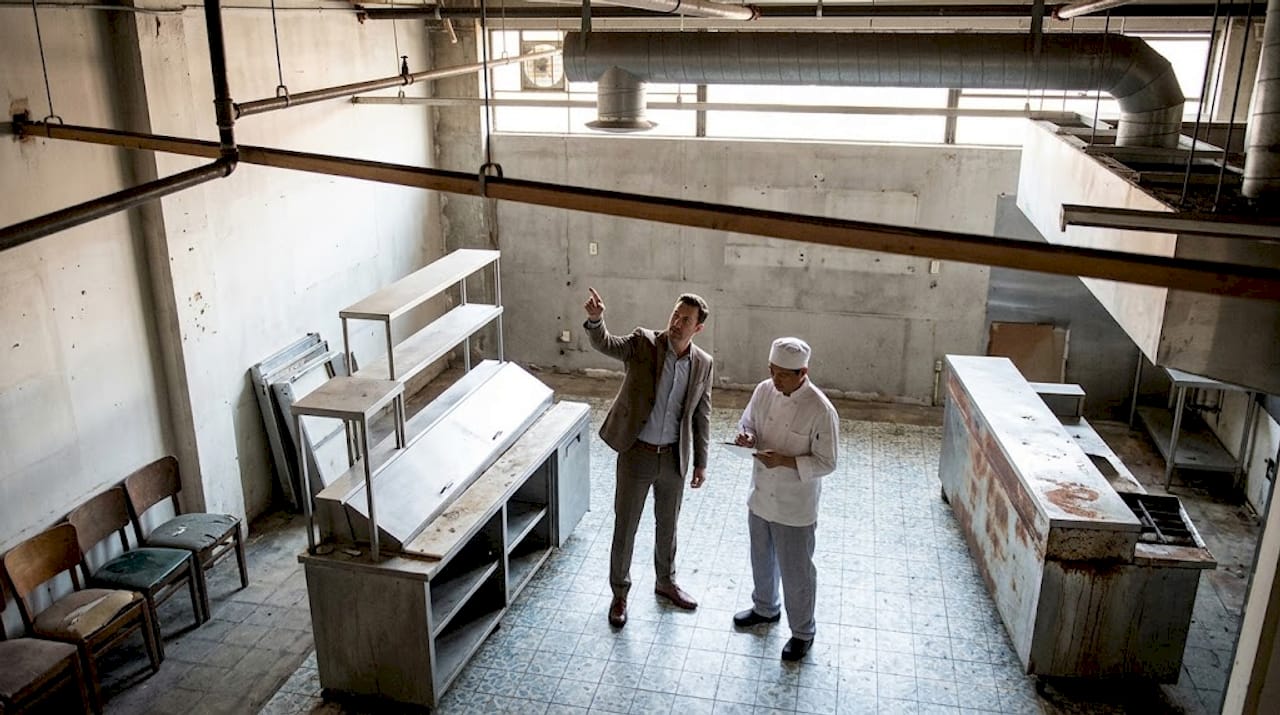
However, the savings math breaks down quickly when inherited systems don’t align. Existing infrastructure reduces buildout scope, but upgrades are often substantial, and older buildings may require budgeting similarly to a shell. In other words, a 1980s second-gen space in a building with outdated electrical service and a grease trap that predates current codes can easily close the gap with a fresh shell build-out, and sometimes exceed it.
Here’s a practical cost and timeline comparison:
| Scenario | Estimated buildout cost (1,500 sq ft) | Estimated timeline |
|---|---|---|
| Cold shell | $350,000 to $500,000+ | 6 to 12 months |
| Warm/vanilla shell | $250,000 to $400,000 | 5 to 9 months |
| Second-gen (compatible) | $150,000 to $300,000 | 3 to 6 months |
| Second-gen (incompatible) | $300,000 to $500,000+ | 5 to 10 months |
These ranges assume standard QSR or fast-casual formats. Full-service, fine dining, or highly specialized concepts can push costs significantly higher regardless of space type.
To evaluate whether a second-gen space will actually deliver cost advantages, operators and investors should follow a structured assessment process:
- Commission a full MEP inspection (mechanical, electrical, and plumbing) before signing any letter of intent. This is non-negotiable.
- Verify hood capacity and condition. An undersized hood or one with unclean ductwork creates both code and insurance issues.
- Test grease interceptor capacity against your expected grease load per local health codes.
- Confirm gas meter capacity for your equipment list. Many second-gen spaces were built for lower BTU loads.
- Get a code compliance review from your contractor or a local permit specialist, especially for fire suppression and ADA requirements.
- Estimate demo costs honestly. If you’re tearing out walls, reconfiguring the kitchen, or removing existing equipment, those costs add up fast.
- Price out any required upgrades before finalizing your TI (tenant improvement) negotiations.
Pro Tip: Never let the excitement of “turnkey-ready” language in a listing replace a proper conditions assessment. A full inspection typically costs $2,000 to $5,000. That investment can save you from a $100,000 surprise mid-construction.
Understanding hidden buildout costs is one of the most important steps any operator can take before committing to a space, regardless of its generation status.
Hidden liabilities: Code, compliance, and infrastructure pitfalls
Understanding the numbers is only half the battle. Let’s review potential pitfalls that catch operators off guard.
Second-gen spaces carry a unique category of risk: inherited problems you didn’t create but now own. Every piece of infrastructure left behind by the previous tenant comes with a history you don’t fully know. Equipment ages, codes change, and what passed inspection in 2012 may not pass inspection today.
Common hidden liabilities in second-generation restaurant spaces include:
- Outdated electrical service not rated for modern commercial equipment loads
- Non-compliant grease interceptors that fail current municipal size requirements
- Hood systems past service life requiring full replacement rather than repair
- Fire suppression systems (Ansul or equivalent) that are expired or undersized
- ADA non-compliance in restrooms, entryways, or seating areas
- HVAC systems with refrigerant types no longer manufactured or legally serviceable
- Unpermitted prior work that triggers a full as-built plan review before permits can be pulled
- Asbestos or lead paint in older buildings requiring licensed abatement before demo
Hidden costs can erase savings if MEP and infrastructure are outdated or incompatible, and code-driven upgrades and demolition may push costs above a shell build-out. This is not a rare scenario. Operators who skip the due diligence phase learn this lesson the hard way, often mid-project when change orders start arriving.
“Second-generation is ‘as-is’ and not a guarantee of savings. An existing conditions assessment is crucial before assuming any cost or timeline advantage.”
A particularly painful scenario involves spaces where the prior operator made improvements without pulling permits. When the new tenant’s contractor pulls permits for their own work, the city may require a full as-built review, forcing you to either legalize prior unpermitted work or demo it. This situation can add months and tens of thousands of dollars to a project that was supposed to be a fast conversion.
Pro Tip: Budget for at least 15 to 20% contingency on any second-gen project, even if the space looks clean and functional on a walkthrough. What’s visible during a tour rarely tells the full story.
The hidden costs of restaurant build-outs can appear across multiple project phases, from permitting and demo through final inspections. Knowing where to look before you commit is what separates experienced operators from first-timers who blow their opening budgets.
Landlord perspective: Tenant improvement, risk, and re-tenanting value
Operators aren’t the only ones facing decisions. Here’s what landlords need to know about risk and opportunity.
From the landlord side, the shell versus second-gen question is fundamentally about time, cost, and risk management. A vacant second-gen space carries infrastructure that may accelerate a deal or complicate one, depending on what the prospective tenant actually needs. Landlords who understand this dynamic negotiate better and attract better-qualified tenants.
Here’s how TI (tenant improvement) negotiations typically differ by space type:
- Cold shell spaces generally attract the highest TI allowances from landlords. Tenants are starting from zero, and landlords price that reality into the deal structure. Allowances of $75 to $150 per square foot are common in competitive markets.
- Warm shell spaces typically command moderate TI allowances. The landlord has already invested in HVAC and base systems, so the starting allowance is often lower, but tenants benefit from faster permitting and fewer base building unknowns.
- Second-gen spaces are the most variable. A landlord may offer a lower TI allowance on the premise that you’re inheriting valuable infrastructure. But if that infrastructure requires significant upgrades or partial demo, the lower allowance becomes a negotiating liability for the tenant.
TI delivery condition is a key cost driver, and second-gen spaces in particular require careful assessment due to high variance, offering the potential for faster openings but no guarantees. Landlords who proactively commission infrastructure condition reports can actually accelerate deal cycles, because tenants can evaluate the space with confidence rather than spending 60 to 90 days on their own due diligence.
The vacancy risk math also favors second-gen when marketed correctly. A space with a functional hood, grease trap, and plumbing package attracts a narrower but more qualified pool of restaurant tenants who are specifically looking for that infrastructure. Browse an active restaurant for lease in San Francisco to see how infrastructure specifics are increasingly featured as selling points rather than afterthoughts.
Smart landlords also recognize that second-gen spaces require a different disclosure posture. Representing a space as “turnkey ready” when the systems haven’t been assessed exposes the landlord to post-signing disputes, especially if code compliance issues halt construction. Transparency, backed by documentation, builds the kind of tenant relationships that lead to long leases and fewer conflicts.
A fresh perspective: Why “turnkey” isn’t always the safest bet
Here’s an uncomfortable truth that the industry doesn’t discuss enough: the instinct to grab a second-gen space because it’s faster and cheaper can actually work against you if your concept has specific operational DNA.
Consider a fast-casual ramen operator evaluating a space that previously housed a burger concept. The hood is there. The grease trap is there. But the entire kitchen workflow is optimized for a linear fry station, not the boiling stations, broth prep areas, and noodle prep flow that ramen requires. Ripping out and reconfiguring that kitchen to match your operational needs may cost nearly as much as building one from scratch, and you’ll spend months fighting the ghost of someone else’s layout.
Some franchise and operator guidance argues that new builds are preferable for brand control and operational perfection, despite longer timelines and higher costs. This isn’t just franchise thinking. Any operator with strong brand standards, proprietary equipment specifications, or highly specific workflow requirements should run the numbers on both paths before defaulting to the second-gen shortcut.
The real question isn’t “Is this space cheaper?” It’s “Will this space let my concept operate at its best for the next 10 years?” Speed to open matters, but operational efficiency compounds over time. A space that forces workarounds every service becomes a slow drain on your margin, your staff, and your guest experience.
For operators still weighing their options, the second-gen launch strategies worth pursuing are those where infrastructure alignment, not just cost savings, drives the decision.
Pro Tip: Before falling for a second-gen space because it’s fast, map your ideal kitchen workflow on paper and overlay it on the existing floor plan. If you’re moving more than 30% of the infrastructure, the “savings” case weakens significantly.
Explore restaurant spaces on Pepperlot
If you’re ready to explore space options tailored to your strategy, here’s where to start.
Whether you’re evaluating a shell build-out or hunting for the right second-gen conversion, the quality of your listings search matters enormously. Generic commercial real estate platforms list restaurant spaces alongside warehouses and dental offices, with no context about hood capacity, grease trap status, or existing permits.
Pepperlot is built exclusively for restaurant and food and beverage real estate. Every listing includes the infrastructure details operators actually need to evaluate a space: seating capacity, grease trap status, outdoor patio availability, and more. Browse a full restaurant for lease with complete operational details, or explore a vanilla shell for lease if a clean-start build matches your strategy. If a fully equipped conversion is your target, a turnkey second-gen restaurant in West Hollywood shows what detailed listings should look like. Landlords can list spaces directly and reach a network of over 500 active restaurant operators, investors, and brokers who are looking for exactly what you have.
Frequently asked questions
Are second-generation spaces always cheaper than shell spaces?
Second-generation spaces may be cheaper only if the inherited infrastructure fits and is in good condition. Second-gen reduces buildout costs only when systems align with the new concept, which isn’t guaranteed.
What infrastructure should I check before leasing a second-gen restaurant?
Verify hood capacity, grease interceptor condition, plumbing locations, gas line capacity, electrical service, and code compliance before committing. Savings are only realized when restaurant systems like hood, grease trap, plumbing, and electrical service align with the incoming concept.
How do landlord incentives differ for shell vs. second-gen spaces?
Second-gen spaces may offer faster openings and lower TI allowances, but landlords expect tenants to conduct thorough due diligence. Updates and code reviews are often needed to make second-gen spaces viable for a new concept.
Is it possible for a second-gen space to cost more than a shell space?
Yes, when inherited systems are outdated or incompatible, demolition and upgrades can push conversion costs above a shell build-out. Hidden liabilities and code upgrades can erase savings and may even justify a full raze-and-rebuild approach.
Should franchisees convert second-gen spaces or choose new builds?
If brand standards and workflow efficiency are critical, new builds may be preferable despite higher costs and longer timelines. Brand control and operational perfection sometimes justify starting from scratch rather than inheriting someone else’s layout.
Leave a Reply