TL;DR:
- Proper preparation and documentation are essential to attract qualified restaurant tenants quickly.
- Second-generation spaces with existing infrastructure save substantial buildout costs and time.
- Building relationships and strategic negotiations lead to better long-term leasing success.
Listing a restaurant space sounds straightforward until you realize how many deals fall apart before they even start. Landlords price too high, skip critical documents, or post vague listings that attract tire-kickers instead of serious operators. In a market where restaurant vacancy rates can swing dramatically by neighborhood, a poorly structured listing costs you months of carrying costs and missed revenue. This guide walks you through every step, from pre-listing preparation to measuring results, so you can move faster, negotiate smarter, and land the right tenant or buyer the first time.
Table of Contents
- What to prepare before listing your restaurant space
- Step-by-step restaurant space listing workflow
- Maximizing value with second-generation restaurant spaces
- Negotiations, protections, and avoiding costly mistakes
- Verifying your listing’s effectiveness and measuring results
- Our take: What most restaurant owners miss about space listings
- Find and list restaurant spaces with Pepperlot
- Frequently asked questions
Key Takeaways
| Point | Details |
|---|---|
| Preparation is critical | Having all key documents and market benchmarks ready will save time and ensure your listing stands out. |
| Promote second-gen assets | Highlighting existing infrastructure can save tenants major costs and attract serious operators quickly. |
| Screen and negotiate wisely | Proper vetting and clear terms with protections help prevent disputes and costly early failures. |
| Track and refine | Monitor listing performance and adjust strategy using inquiries and feedback to maximize results. |
What to prepare before listing your restaurant space
Once you understand the stakes, it’s critical to start with solid preparation so your listing stands out for the right reasons. Skipping this phase is the single most common reason listings linger on the market for months without a qualified inquiry.
The essential document checklist
Before you contact a broker or post anywhere publicly, gather these items:
- Three years of profit and loss statements (P&Ls): Serious operators want to see revenue trends, not just current numbers.
- Lease assignment clause: Confirm your lease allows assignment or sublease, and under what conditions. Missing this detail can kill a deal at the last minute.
- Hood certifications: A pre-listing checklist should always include current hood inspection certificates, because incoming tenants and their lenders will ask.
- Maintenance logs: HVAC, grease trap service records, and equipment warranties signal that the space has been cared for.
- Permits and health department records: Zoning approvals, certificate of occupancy, and any conditional use permits need to be on hand.
Pro Tip: Pull your utility bills for the past 24 months. Operators calculating their total occupancy cost will ask, and having this data ready positions you as a credible, organized seller or landlord.
Financial benchmarks to set before you price
Pricing blind is one of the costliest mistakes. Restaurant rents in urban markets can range from $10 to $150 per square foot annually, and your number needs to be defensible. Use this table as a starting reference:
| Market type | Rent range (per sq ft/yr) | Ideal rent as % of tenant sales |
|---|---|---|
| Suburban secondary | $10 to $40 | Under 8% |
| Urban mid-tier | $40 to $80 | 6% to 8% |
| High-density urban | $80 to $150+ | 5% to 7% |
| Tourist/destination | $60 to $120 | 5% to 6% |
If you’re thinking about selling a restaurant space rather than leasing, the same financial transparency applies. Buyers will scrutinize your numbers just as hard as tenants will.
Gathering marketing information early
Before you write a single word of your listing, document the physical details that restaurant operators care about most: seating capacity, hood size and CFM rating, grease trap capacity, walk-in cooler dimensions, electrical amperage, gas line size, and any outdoor patio square footage. These specifics separate a professional listing from a generic commercial real estate post.
Step-by-step restaurant space listing workflow
With your documentation and numbers in order, you’re ready to tackle each phase of the listing, from choosing your platform to initial outreach. The order matters here. Rushing to post before you’re ready creates a weak first impression that’s hard to recover from.
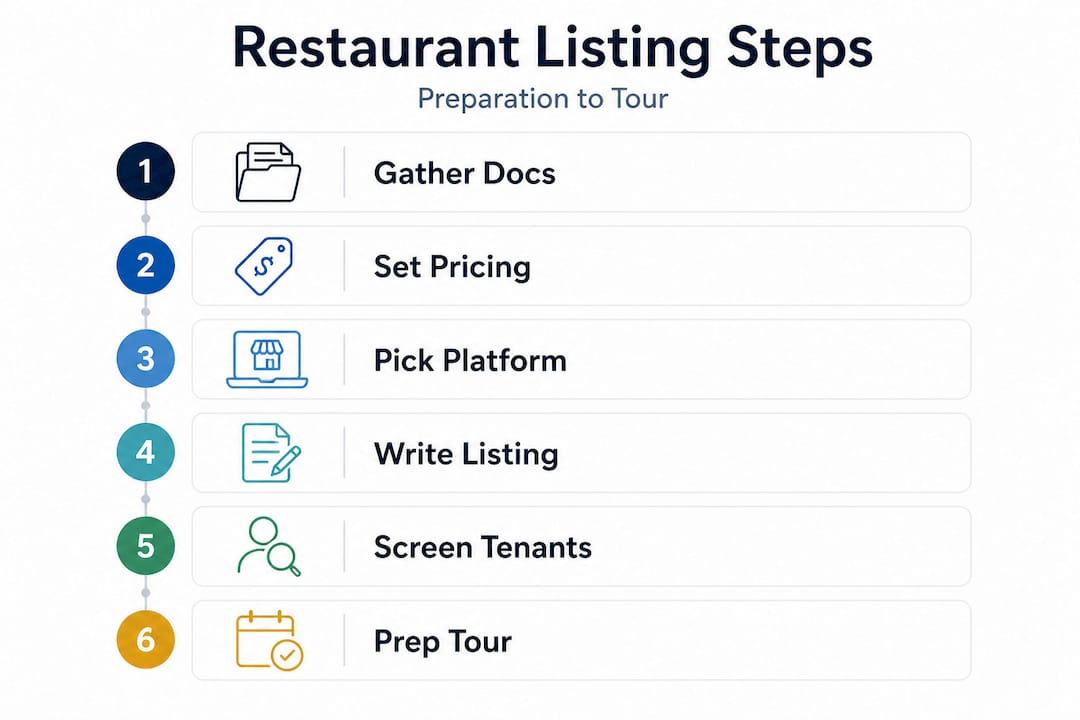
Step 1: Choose your platform strategically
Not every marketplace reaches the same audience. Here’s a quick comparison:
| Platform | Best for | Restaurant-specific features |
|---|---|---|
| LoopNet | Broad commercial exposure | Limited |
| Crexi | Investor and broker audience | Moderate |
| Industry publications | Niche operator reach | Moderate |
| Pepperlot | Restaurant operators exclusively | Full (grease trap, permits, seating) |
| Local brokers | Off-market and relationship deals | Varies |
Platforms like LoopNet and Crexi give you broad reach, but they mix your listing in with office parks and retail strips. A restaurant-focused marketplace gets your listing in front of people who already understand what a Type 1 hood means.
Step 2: Craft a listing that highlights second-generation assets
Second-generation features (existing hoods, grease traps, walk-ins) are your biggest selling points. Lead with them. Don’t bury them in paragraph three. Your listing headline should name the most valuable infrastructure first.
Step 3: State your terms clearly
Ambiguous listings waste everyone’s time. Include asking rent, lease type (NNN, gross, modified gross), lease term length, TI (tenant improvement) allowance if applicable, and any rent abatement period you’re offering. Operators read dozens of listings. Clear terms signal a serious landlord.
Step 4: Build your initial screening process
Before you schedule a single tour, create a simple intake form or email questionnaire. Ask about the prospect’s restaurant concept, years of experience, estimated annual revenue from prior locations, and their timeline. This filters out dreamers and focuses your energy on qualified operators. For a detailed look at the subleasing workflow, the screening steps apply equally whether you’re subleasing or leasing directly.
Step 5: Prepare your tour package
When a qualified prospect tours the space, have a printed or digital package ready. Include floor plans, equipment lists, utility averages, and a summary of lease term essentials so they leave with everything they need to make a decision.
Pro Tip: Video walkthroughs posted alongside your listing reduce unqualified tours by 30% to 40% in our experience. Operators in other cities or states can pre-qualify the space before flying in.
Maximizing value with second-generation restaurant spaces
Many successful listings hinge on how you leverage existing infrastructure, especially if your property is a second-gen site. Second-generation (or “second-gen”) refers to a space that was previously operated as a restaurant and still has the core infrastructure in place.

Why second-gen spaces command premium interest
For an incoming operator, building a restaurant from scratch in a raw shell costs between $75 and $400 per square foot in buildout expenses. A 2,000-square-foot space could run $150,000 to $800,000 before you serve a single plate. Second-gen spaces with existing hoods and grease traps save $100,000 or more in upfront capital, which is a massive draw for operators who are watching their startup budget carefully.
“The difference between a raw shell and a second-gen space isn’t just money. It’s six to twelve months of time. For an operator trying to open before a lease-up deadline, that time savings is worth as much as the dollar savings.”
What to highlight in your second-gen listing
- Hood type, size, and most recent inspection date
- Grease trap size and last service date
- Walk-in cooler and freezer dimensions and age
- Existing fire suppression system certification
- Gas and electrical capacity already in place
- Any remaining equipment included in the lease or sale
Understanding the full value of second-generation spaces is critical for pricing your listing correctly. Landlords who don’t account for this infrastructure often underprice their space and leave significant value on the table.
Positioning your listing against raw shells
When marketing, be explicit about the cost comparison. If a competing raw shell nearby is listed at $45 per square foot and yours is $55 but comes with $200,000 in existing infrastructure, your effective cost to the tenant is dramatically lower. Make that math visible in your listing. Operators who understand restaurant real estate will recognize the value immediately.
Negotiations, protections, and avoiding costly mistakes
Even the strongest listings can falter if you miss key negotiation and protection strategies. This is where landlords and sellers often give away value without realizing it.
Understanding tenant incentives and your exposure
Operators almost always seek TI allowances and rent abatement during negotiations. TI (tenant improvement) is money the landlord contributes toward buildout. Rent abatement is a free-rent period, typically two to six months, while the tenant constructs and opens. Both are legitimate tools, but you need to cap your exposure clearly in the lease.
Key protections to negotiate into every deal:
- TI ownership clause: If the tenant leaves before the lease term ends, who owns the improvements? Specify this upfront.
- Personal guarantee: Require a personal guarantee from the operator, especially for new concepts without a track record.
- Insurance minimums: Define general liability, property, and workers’ compensation minimums in the lease, not as an afterthought.
- Use clause: Restrict the type of food service allowed to protect your property and neighboring tenants.
- Assignment and sublease approval rights: You should have the right to approve any assignment or sublease, with reasonable standards defined.
“Landlords who skip the personal guarantee because a tenant seems credible often regret it when the concept fails in year two. The guarantee is your last line of defense.”
The risk of emerging vs. established markets
Emerging areas offer cheaper rents but carry higher risk for both landlord and tenant. If foot traffic hasn’t materialized yet, even a great operator can struggle. Established high-rent corridors reduce that risk but compress margins. Know which type of location you’re offering and price and market accordingly.
Understanding lease assignments and subleases in detail will help you structure these protections correctly before you sign anything.
Pro Tip: Always require a certificate of insurance naming you as additional insured before handing over keys, even for a soft opening or pre-opening buildout period. Accidents happen during construction.
Verifying your listing’s effectiveness and measuring results
Listing is only the first step. Success depends on tracking your results and refining your approach when the numbers tell you something isn’t working.
Key metrics to track after launch
- Inquiry volume in week one: A strong listing in a healthy market should generate at least three to five serious inquiries within the first two weeks.
- Inquiry-to-tour conversion rate: If you’re getting inquiries but no tours, your listing details or pricing may be creating doubt.
- Tour-to-offer conversion rate: If tours happen but offers don’t follow, the space itself or your lease terms may need adjustment.
- Time on market vs. local average: Research comparable spaces in your area. If you’re running 50% longer than average, something needs to change.
- Feedback patterns: If multiple prospects mention the same concern (rent too high, no parking, unclear terms), that’s a signal, not a coincidence.
Benchmarks for comparison
Use this table to check whether your listing terms are competitive before making adjustments:
| Metric | Benchmark range | Red flag |
|---|---|---|
| Rent as % of projected sales | 5% to 10% (ideal under 8%) | Over 10% |
| Buildout cost per sq ft | $75 to $400 (second-gen lower) | Raw shell over $400 |
| Startup total (independent full-service) | $275,000 to $425,000 | Over $500,000 signals risk |
| NNN additions (taxes, insurance, CAM) | 15% to 30% on top of base rent | Over 35% of base rent |
Tracking these numbers against measuring listing success benchmarks keeps you from making emotional decisions. If the data says your rent is 12% of a typical operator’s projected sales, the fix is clear.
Our take: What most restaurant owners miss about space listings
Here’s what years of watching restaurant real estate deals succeed and fail has taught us: the checklist matters, but the relationship often matters more.
Most owners treat listing as a broadcasting exercise. Post it, wait, respond. But the most successful transactions we see happen when the landlord or seller is genuinely invested in finding the right operator, not just any operator. That means reaching out directly to restaurateurs you respect in your market, talking to brokers who specialize in F&B before you go public, and sometimes holding a space off-market for two to three weeks while you quietly qualify candidates.
The myth that public marketplaces always outperform off-market deals is worth challenging. A well-connected broker with 20 active operator relationships can close a deal faster than six weeks of public listing, and with fewer tire-kickers burning your time. The best outcome for a second-gen space isn’t always the highest bidder. It’s the operator with the concept, capital, and commitment to make the location thrive, because a successful tenant protects your asset long-term.
The lessons from second-gen listing outcomes consistently show that landlords who invest time in operator selection outperform those who simply take the first qualified offer. Negotiation flexibility, particularly around TI and abatement, is also a tool most landlords underuse. Offering a slightly more generous TI in exchange for a longer lease term or a stronger personal guarantee often produces a better overall deal than holding firm on every point.
The operators who win in competitive markets are the ones who treat every listing interaction as a relationship, not a transaction.
Find and list restaurant spaces with Pepperlot
If you’re ready to put these best practices into action, here’s how you can take the next step. Pepperlot is built specifically for restaurant real estate, which means every listing includes the details that actually matter to F&B operators: grease trap specs, hood certifications, seating capacity, outdoor patio info, and permit status.
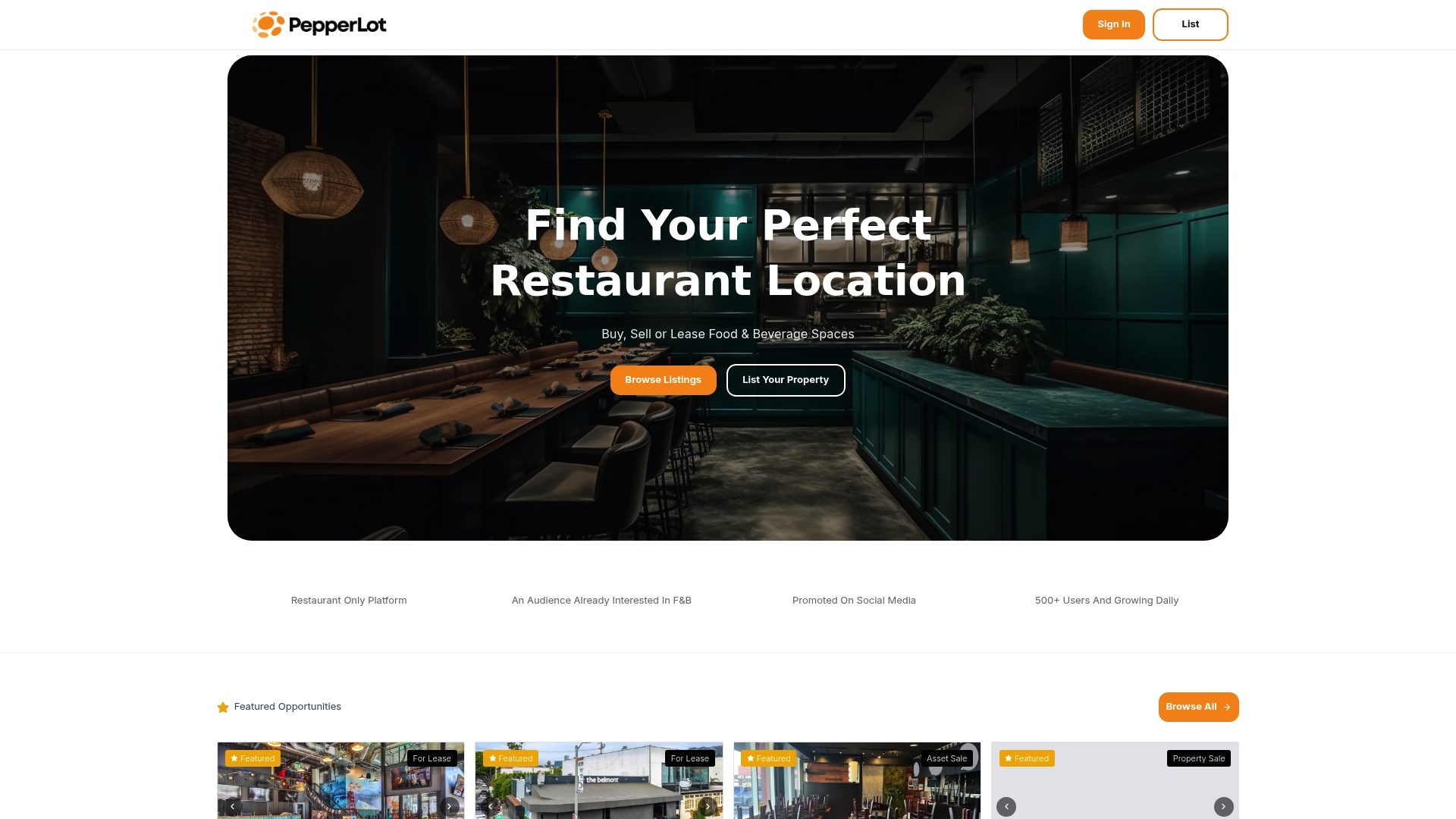
Whether you’re a landlord looking to attract qualified tenants fast or an operator searching for your next location, Pepperlot’s curated marketplace connects you with serious players on both sides of the deal. You can explore a restaurant space with business for sale or browse a turnkey second-gen restaurant lease to see exactly how professional listings are structured. With targeted social media promotion, a network of over 500 active operators, landlords, and brokers, and tools built for F&B real estate, Pepperlot removes the friction from every step of the process.
Frequently asked questions
What documents are required to list a restaurant space?
At minimum, you’ll need three years of P&Ls, a lease assignment clause, current hood certifications, and maintenance logs. Having these ready before you list signals credibility and speeds up the qualification process.
How do I know if my rent price is competitive for restaurant spaces?
Restaurant rents typically range from $10 to $150 per square foot annually, and the ideal target is under 8% of the tenant’s projected gross sales. If your asking rent pushes operators above that threshold, expect longer vacancy.
What’s the advantage of a second-generation restaurant space?
Second-generation spaces come with built-in infrastructure like hoods and grease traps, saving $100,000 or more in buildout costs. That savings also translates to faster opening timelines, which makes your listing significantly more attractive to operators on a budget.
How can I screen potential restaurant tenants effectively?
Use financials, prior restaurant experience, and a structured lease that includes protections like insurance and TI ownership to vet tenants before committing. A simple intake questionnaire before the first tour filters out unqualified prospects quickly.
Are off-market deals better than public listings?
Off-market deals via brokers sometimes yield better results by reaching motivated operators directly and reducing competition from unqualified inquiries. The right answer depends on your timeline, market, and how strong your broker relationships are.
Recommended
- How to Attract Serious Restaurant Tenants for Your Property in California | PepperLot Blog
- Restaurant Real Estate 101: How to Find, Lease, or Buy the Right Space for Your Concept | PepperLot Blog
- Expert Restaurant Real Estate Tips: Secure the Ideal Space – Pepperlot Blog
- How to Lease Restaurant Space: Step-by-Step Guide – Pepperlot Blog
Leave a Reply