
TL;DR:
- Choosing the right restaurant space impacts costs, operations, and survival chances.
- Second-generation spaces offer quick setup and cost savings but may require maintenance.
- Alternative formats like food halls and ghost kitchens enable rapid testing with lower capital investment.
Choosing a restaurant space is one of the most consequential decisions you’ll make as an operator. Get it right and you have a foundation built for growth. Get it wrong and you’re burning cash on a build-out that takes 18 months, fighting permits that don’t match your concept, or locked into a lease where foot traffic never materializes. The type of space you choose shapes your startup costs, your time to open, your daily operations, and ultimately your survival odds. This guide breaks down every major restaurant space type, from raw new builds to ghost kitchens, with clear comparisons and practical advice to help you choose with confidence.
Table of Contents
- How to evaluate restaurant space needs
- New build-out restaurants: custom solutions with higher investment
- Second-generation restaurants: speed and savings
- Food halls, ghost kitchens, and alternative models
- Comparing restaurant space types: decision guide
- A restaurant real estate veteran’s perspective
- Find your ideal restaurant space with Pepperlot
- Frequently asked questions
Key Takeaways
| Point | Details |
|---|---|
| Know your needs | Match restaurant space size and layout to your dining concept and projected customer volume. |
| Consider second-gen | Second-generation spaces can save over $100,000 and months of buildout time. |
| Alternative models | Food halls and ghost kitchens offer low-commitment options ideal for pop-ups and delivery brands. |
| Location is critical | A poor location can cause failure even with the right space; analyze traffic, demographics, and saturation. |
How to evaluate restaurant space needs
Before you tour a single property, you need to know exactly what you’re looking for. Too many operators fall in love with a space before they’ve done the math. Start with your concept and work backward.
The first variable is size. Space sizes vary by concept: a small cafe runs 750 to 1,600 sq ft with 20 to 40 seats, a mid-size casual restaurant needs 1,600 to 3,200 sq ft for 50 to 100 seats, and a large full-service venue requires 3,200 to 6,500 sq ft for 100 or more seats. These aren’t arbitrary numbers. They reflect how much revenue you can realistically generate per square foot of rent you’re paying.
The second variable is your kitchen-to-dining ratio. Fine dining runs a 2:1 ratio (30 to 33% kitchen), casual dining sits between 2:1 and 3:1 (25 to 33%), and quick-service operations run 3:1 to 4:1 (20 to 25%). If you’re opening a high-volume fast-casual concept and you’re looking at a space with a massive dining room and a cramped kitchen, that layout will fight you every single service.
Beyond size and ratio, you need to assess these critical attributes before committing:
- Zoning and permitted use: Confirm the space is zoned for food service. Some properties require a conditional use permit that can take months.
- Existing infrastructure: Grease traps, hood systems, gas lines, and three-compartment sinks are expensive to install from scratch.
- Occupancy load: Local fire codes set your legal capacity. This directly caps your revenue ceiling.
- Parking and access: Especially important for suburban and family-dining concepts.
- Foot traffic and demographics: Use location analysis to verify that your target customer actually passes by in meaningful numbers.
Pro Tip: Model your revenue before signing anything. Multiply your projected covers per day by your average check size, then by your operating days per year. Compare that number against your total occupancy cost. If rent exceeds 8 to 10% of projected revenue, reconsider the space or renegotiate the terms.
Understanding restaurant real estate basics early in your search saves you from chasing spaces that look great but don’t pencil out financially.
New build-out restaurants: custom solutions with higher investment
A new build-out means you’re starting with a raw shell or completely empty space and building every element of your restaurant from the ground up. No inherited layout. No previous operator’s quirks. Just blank walls and your vision.
The upside is total control. You design the kitchen exactly how your chef needs it. You configure the dining room for your brand experience. You choose every material, every fixture, every flow. For experience-driven concepts, fine dining, or flagship locations where the environment IS the product, this level of customization is genuinely worth the premium.
Here’s what that premium looks like:
- Construction cost: Raw build-outs run $150,000 to $500,000+, or roughly $200 to $400 per square foot depending on market and finish level.
- Timeline: Expect 12 to 18 months from lease signing to opening day, including permitting, design, and construction.
- Sales benchmarks: Full-service restaurants need to hit $150 to $250 per square foot in annual sales to break even on a new build. Counter-service concepts need $200 to $300.
- Permitting complexity: New builds trigger the full permitting gauntlet: zoning, building permits, fire inspections, health department sign-off, and ADA compliance reviews.
The biggest risk operators underestimate is time. Every month of construction is a month of rent with zero revenue. If your build-out runs six months over schedule (common), that’s six additional months of carrying costs before you serve a single guest.
Pro Tip: When negotiating a new build-out lease, push hard for a rent abatement period during construction. Landlords often grant three to six months of free rent on raw spaces. This can save tens of thousands of dollars and reduce your financial exposure significantly.
Understanding build-out costs in detail before you commit will prevent the most common and painful financial surprises operators face.
Second-generation restaurants: speed and savings
A second-generation space is a previously operated restaurant that still has its core infrastructure intact: commercial kitchen, hood system, grease trap, bathrooms, and often basic equipment. Someone else already paid for the hard stuff. You’re stepping into a space that’s been purpose-built for food service.
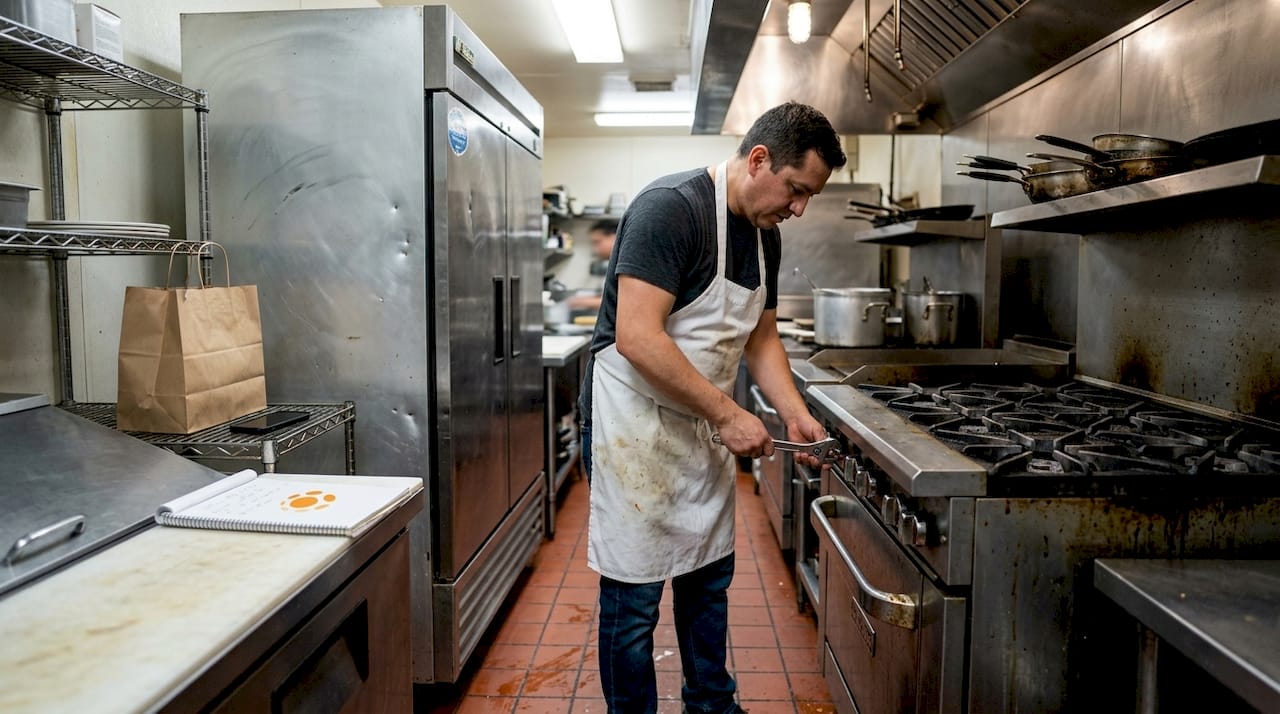
The financial case is compelling. Second-generation spaces save $100,000 or more in build-out costs and can cut your opening timeline from 18 months down to 60 days. In high-cost markets like New York City or California, where construction labor and materials are expensive, those savings can be the difference between a viable launch and an undercapitalized one.
Here’s what to weigh when evaluating a second-gen space:
- Layout fit: The previous operator’s kitchen layout may not match your workflow. A pizza concept taking over a sushi bar will likely need significant reconfiguration.
- Deferred maintenance: Grease traps, hood systems, and HVAC units may be at end-of-life. Always get an independent inspection before signing.
- Brand confusion: If the previous restaurant had a strong local identity, you may inherit their reputation, positive or negative.
- Equipment condition: Included equipment is only valuable if it works and fits your menu.
“The savings on a second-gen space are real, but so are the hidden costs. The operators who win are the ones who inspect thoroughly and negotiate a tenant improvement allowance to cover what needs updating.”, Restaurant real estate broker perspective
Second-gen spaces are ideal for fast-launch concepts, quick-service operators, and multi-unit chains looking to scale quickly. They’re also a smart fit for operators who want to test a new market without a massive capital commitment. For a deeper look at second-generation spaces and how to evaluate them, the due diligence process matters as much as the deal itself.
Pro Tip: Before you finalize any second-gen lease, hire a licensed contractor to walk the space and give you a written estimate of deferred maintenance. Use that number in your lease negotiation. Landlords often provide tenant improvement allowances to close deals.
The conversions vs new builds debate ultimately comes down to your concept fit and capital position. Understanding both sides of that equation helps you negotiate from strength. And if you’re still deciding between owning vs. leasing, the second-gen market offers compelling options in both categories.
Food halls, ghost kitchens, and alternative models
Not every restaurant concept needs a traditional lease. The past decade has produced genuinely new operating formats that lower the barrier to entry and let operators test concepts with far less capital at risk.
Food halls bring multiple food vendors under one roof with shared dining space. The foot traffic is built in, the infrastructure is managed by the operator, and the licensing structure is flexible. Instead of a traditional lease, most food hall arrangements use license agreements or revenue share models where vendors pay 8 to 12% of gross sales. That means lower fixed costs but a permanent cut of your revenue going to the hall operator.
Ghost kitchens take the concept further. There’s no customer-facing space at all. You operate purely for delivery and pickup, sharing a commercial kitchen with other virtual brands. The setup cost is minimal, the speed to market is fast, and you can run multiple virtual concepts from a single kitchen.
Here’s a direct comparison of all major space types:
| Space type | Upfront cost | Time to open | Flexibility | Branding control |
|---|---|---|---|---|
| New build-out | $150,000 to $500,000+ | 12 to 18 months | Low | Full |
| Second-generation | $50,000 to $150,000 | 60 to 120 days | Medium | High |
| Food hall | $10,000 to $50,000 | 2 to 6 weeks | High | Limited |
| Ghost kitchen | $5,000 to $30,000 | 1 to 4 weeks | Very high | Minimal |
The tradeoffs are real. Food halls and ghost kitchens give you speed and low capital risk, but you sacrifice brand presence, community connection, and long-term equity. You’re also permanently sharing revenue with the platform operator.
Pro Tip: Use a food hall or ghost kitchen as a proving ground, not a permanent home. If your concept generates strong sales in a shared environment, you have real data to bring to a landlord when negotiating a traditional lease.
For operators curious about what a food hall space actually looks like in practice, seeing active listings gives you a concrete sense of what’s available in your target market.
Comparing restaurant space types: decision guide
With all four space types on the table, the question becomes: which one is right for you, right now? The answer depends on your business stage, capital position, concept type, and growth plan.
60% of new restaurants fail within their first three years, and poor location selection is a leading factor. The space type you choose is inseparable from the location decision. A ghost kitchen in a delivery-dense urban neighborhood is a completely different bet than a new build-out in a suburban strip mall.
Here’s a step-by-step process for matching space type to concept:
- Define your format and service model. Delivery-only, fast-casual, full-service, and fine dining each have different space requirements.
- Set your capital budget. Be honest about what you can actually spend, including a 20% contingency buffer.
- Establish your timeline. If you need to be open in 90 days, a new build is off the table.
- Analyze your target location. Use foot traffic data, demographic reports, and competition mapping to validate demand.
- Match space type to stage. First-time operators benefit from second-gen or food hall formats. Established multi-unit operators can absorb new build risk more easily.
- Filter by operational fit. A space that’s 80% right but opens on time beats a perfect space that opens 12 months late.
For startups and first-time operators, second-gen spaces offer the best balance of speed, cost, and operational readiness. For franchises and multi-unit chains, new builds provide the brand consistency and layout control that scales. For pop-ups and delivery-only concepts, ghost kitchens and food halls are purpose-built solutions.
Using data when evaluating restaurant location options gives you an objective filter that removes emotion from what is often an emotional decision.
A restaurant real estate veteran’s perspective
Here’s something most guides won’t tell you: the perfect restaurant space doesn’t exist. Every space is a set of trade-offs, and the operators who succeed are the ones who accept that reality early and make deliberate choices rather than chasing an ideal that keeps moving.
We’ve seen operators burn through $400,000 on a custom new build for a concept that could have launched in a second-gen space for $80,000. The extra $320,000 didn’t buy them a better restaurant. It bought them a prettier one that ran out of runway before it found its audience.
The most important question isn’t “Is this space perfect?” It’s “Does this space give my concept a real chance to succeed, and can I afford it without betting the entire business on the build?” A fast pivot into a second-gen space has saved more than a few operators who would have spent 18 months in construction limbo with a new build.
Match your space type to your exit strategy too. If you’re building toward a sale or franchise expansion, the buying vs. leasing analysis changes significantly. Prioritize location fit and operational fundamentals. Amenities are nice. A viable business is necessary.
Find your ideal restaurant space with Pepperlot
Pepperlot is built exclusively for restaurant real estate built specifically for restaurant real estate, covering every space type from turnkey full-service restaurants to ghost kitchens and food hall opportunities. Every listing includes the details that actually matter to operators: seating capacity, existing permits, grease trap status, hood systems, and patio access.
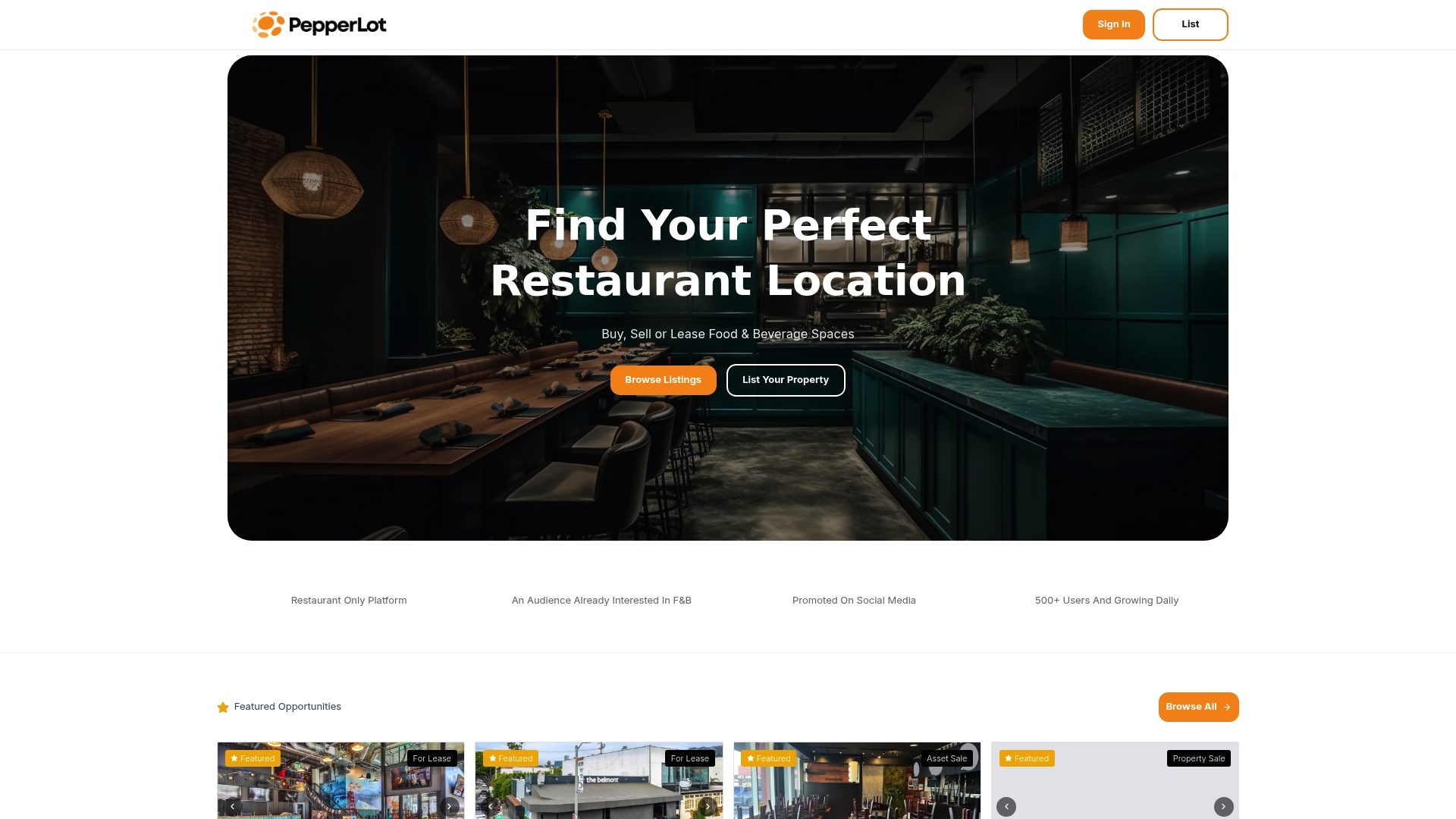
Whether you’re evaluating a restaurant space for sale or exploring ghost kitchen options for a delivery-first launch, Pepperlot’s active listings and location analysis tools give you the data you need to make a confident decision. Stop guessing on location and start validating with real market intelligence.
Frequently asked questions
What is a second-generation restaurant space?
A second-generation space is a previously built-out restaurant with essential infrastructure already in place. These spaces save $100,000 or more in build-out costs and can cut opening timelines from 18 months to as few as 60 days.
How much space do I need for my restaurant concept?
It depends on your format. Cafes need 750 to 1,600 sq ft, casual restaurants require 1,600 to 3,200 sq ft, and large full-service venues need 3,200 to 6,500 sq ft, with sizing driven by seat count and kitchen ratio.
What permits are required to open a restaurant?
You’ll need zoning approval, a food facility or health permit, building and fire code compliance, a business license, and an alcohol license if applicable. Requirements vary by city and state, so confirm with your local planning department early.
What are the main risks of building out a new restaurant space?
New builds carry the highest financial risk due to construction costs of $150,000 to $500,000+, long timelines of 12 to 18 months, and frequent permitting delays that extend your pre-revenue carrying costs.
Which space type is best for a pop-up or delivery-only concept?
Food halls and ghost kitchens are the best fit for pop-ups and delivery-only brands. They use license agreements or revenue share models of 8 to 12% of gross sales, keeping upfront investment low and time to market fast.
Recommended
- Restaurant Real Estate 101: How to Find, Lease, or Buy the Right Space for Your Concept | PepperLot Blog
- Restaurant sale vs. lease: 4 key differences for success
- Top benefits of buying restaurant space for growth
- Should You Buy A Restaurant Or Lease A New Space? | PepperLot Blog
- Kako urediti restoran: vodič za funkcionalan prostor
Browse restaurant space for lease and restaurants for sale on PepperLot.
Leave a Reply