
Missing a single filter on a generic property site can cost a restaurant operator months of wasted showings, misdirected inquiries, and deals that fall apart at due diligence. General commercial real estate platforms were built for offices, warehouses, and retail strips, not for operators who need a Type II hood, a grease trap, and food-use zoning all in one space. This guide breaks down exactly why specialized platforms outperform broad search tools for restaurant buyers, landlords, and brokers, and shows you how to build a smarter search strategy that saves time, reduces friction, and puts the right parties in the same room faster.
Table of Contents
- The common pain points of restaurant real estate searches
- How specialized platforms solve these problems
- Specialized vs. general real estate platforms: What’s the real difference?
- Potential drawbacks of niche platforms (and how to manage them)
- What the industry misses about specialized platforms
- Discover purpose-built spaces for your restaurant
- Frequently asked questions
Key Takeaways
| Point | Details |
|---|---|
| Streamlined matches | Specialized platforms match restaurants and landlords faster by filtering for unique requirements. |
| Reduced search friction | Food-use filters and intent visibility reduce wasted time and mismatches. |
| Balanced platform strategy | Combining niche and general real estate sites results in broad exposure and better outcomes. |
| F&B-specific insights | Industry-focused platforms offer analytics and features general sites lack. |
The common pain points of restaurant real estate searches
Anyone who has tried to find a restaurant space on a generic commercial platform knows the frustration. You set a square footage range, pick a neighborhood, and get back a list of properties that includes a former dental office, a strip mall unit with no ventilation, and a warehouse with zero kitchen infrastructure. Every result requires manual investigation just to find out it was never designed for food service.
The core problem is that generic property listings increase search friction for restaurants in ways that don’t affect other commercial tenants. A law firm can move into almost any office. A restaurant cannot move into almost any commercial space. The gap between “commercially zoned” and “ready for food service” is enormous, and general platforms rarely surface it.
Here are the most common pain points operators, landlords, and brokers report:
- No food-use zoning filters. A space may look perfect but sit in a zone that prohibits food preparation or requires expensive conditional use permits.
- Missing infrastructure details. Listings rarely mention grease traps, gas line capacity, hood systems, or three-compartment sinks, all of which are non-negotiable for most food concepts.
- No turnkey readiness indicator. Operators need to know if a space is a cold dark shell or a fully equipped kitchen. Generic platforms treat both identically.
- Unqualified inquiries for landlords. When a restaurant space is listed on a general site, landlords field calls from retail tenants, storage users, and curious browsers who have no intention of running a food business.
- Broker time waste. Brokers spend hours pre-qualifying leads that a specialized filter could have screened in seconds.
“Finding a restaurant space on a general platform is like searching for a commercial baking ingredient in a grocery store that doesn’t label its aisles. Everything is technically there, but nothing is where you need it.”
The lack of competitive restaurant listings on general platforms also means landlords miss the chance to attract the most operators who are ready to move. When critical details are absent, serious buyers move on and less-serious prospects fill the void. Specialized restaurant-only listing platforms were built specifically to close this gap.
How specialized platforms solve these problems
Specialized platforms flip the script. Instead of forcing restaurant professionals to work around a tool designed for everyone, they build the tool around the restaurant industry’s actual needs.
The most immediate improvement is filtering. On a platform built for F&B real estate, you can search by grease trap presence, hood type, seating capacity, outdoor patio availability, and existing permits. That one change eliminates the majority of irrelevant results before you ever open a listing.

For landlords, the advantage is equally significant. A tenant demand-driven marketplace makes tenant intent visible and reduces leasing timelines by surfacing operators who are actively searching for spaces that match specific criteria. A landlord with a turnkey sushi restaurant space doesn’t need to hear from a prospective nail salon. Specialized platforms filter that noise out automatically.
Here’s a direct comparison of what you get:
| Feature | General platform | Specialized F&B platform |
|---|---|---|
| Food-use zoning filter | Rarely available | Standard |
| Kitchen infrastructure details | Not included | Required field |
| Cuisine-type matching | Not available | Available |
| Tenant intent visibility | None | Built-in |
| serious lead quality | Low | High |
| Listing turnaround time | Standard | Faster with niche audience |
The PepperLot restaurant marketplace is a strong example of this model in action. Listings include grease trap status, permit history, seating capacity, and equipment details as standard fields, not optional add-ons. The platform also surfaces benefits for property owners by connecting them directly with operators who are searching for exactly what they have to offer.
Pro Tip: When listing a restaurant space, include every infrastructure detail you have, even if it seems minor. Operators searching on specialized platforms filter by those exact details, and a complete listing can double your serious inquiries.
Specialized vs. general real estate platforms: What’s the real difference?
The difference between specialized and general platforms goes beyond filters. It shows up in deal speed, user satisfaction, and the quality of every interaction from first search to signed lease.
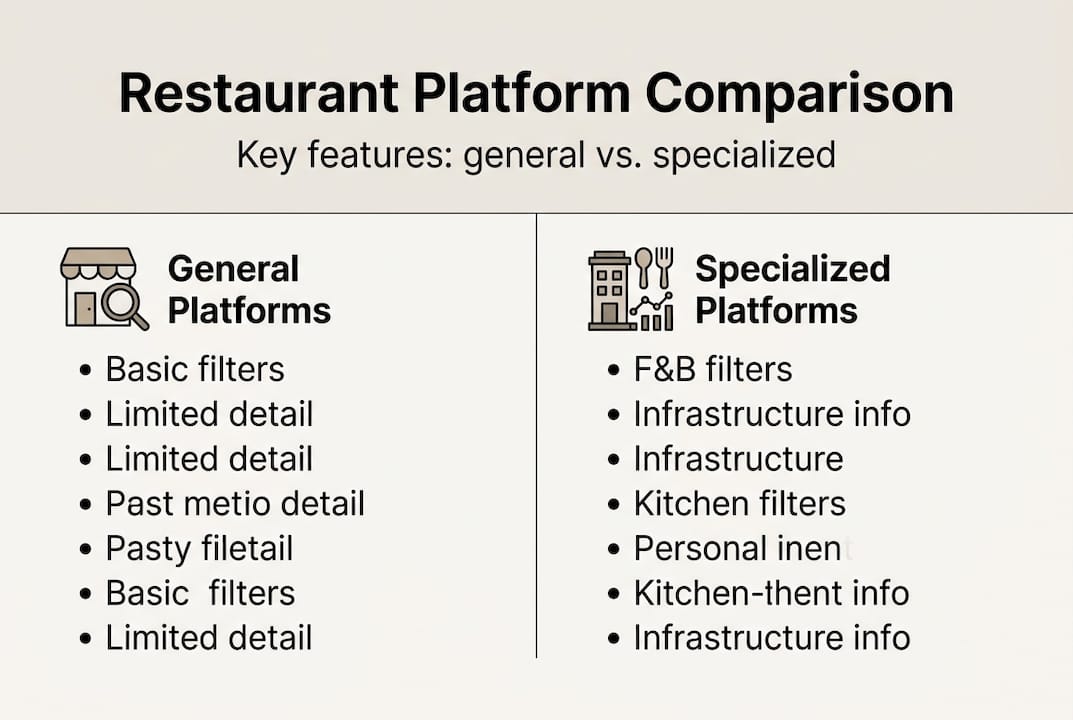
Specialized platforms can reduce search friction and shorten timelines for food businesses by ensuring that every listing, every user, and every tool on the platform speaks the same industry language. When a broker searches for a full-service restaurant space with a Type I hood and a beer and wine license, they don’t want to explain what those terms mean to the platform. They want results.
Here’s how the user experience breaks down by role:
| User type | General platform experience | Specialized platform experience |
|---|---|---|
| Operator/buyer | Filters too broad, results irrelevant | Precise filters, relevant results fast |
| Landlord | High volume, low quality leads | Fewer but far more serious inquiries |
| Broker | Manual pre-qualification required | Platform does initial screening |
| Seller | Limited F&B-specific exposure | Targeted audience of serious buyers |
Beyond the table, the communication tools on specialized platforms are also better calibrated. Messaging threads stay focused on deal-relevant details like lease terms, equipment value, and permit transfers rather than generic property questions. This makes the path from inquiry to offer significantly shorter.
For operators focused on finding the right restaurant space, the platform choice is not a minor logistical detail. It directly affects how long the search takes, how many dead ends you hit, and ultimately whether you secure the right location before a competitor does.
Key outcomes where specialized platforms consistently outperform general ones:
- Faster time from listing to serious inquiry
- Higher conversion rate from inquiry to showing
- Better match between tenant concept and space design
- Lower vacancy periods for landlords with F&B-specific properties
- Reduced legal and due diligence surprises because critical details are disclosed upfront
Potential drawbacks of niche platforms (and how to manage them)
Specialized platforms are not perfect for every situation. It’s worth being honest about the scenarios where a niche focus can create limitations.
The most common issue is a narrower total inventory. If you’re in a smaller market or searching for a space that could work for either retail or food service, a specialized platform may show fewer options than a broad commercial site. A niche-only approach may reduce dealflow if your needs expand beyond the platform’s defined scope.
Here’s how to manage this intelligently:
- Define your must-haves first. Before choosing a platform, list the non-negotiable features your space needs. If all of them are F&B-specific, a specialized platform is your primary tool.
- Use specialized platforms as your lead channel. Start your search on a niche platform to find the best-matched options, then supplement with broader searches only if inventory is thin.
- Don’t abandon general platforms entirely. Some landlords with great restaurant spaces still list only on general sites. A hybrid approach ensures you don’t miss those opportunities.
- Check platform activity levels. A specialized platform with low user activity may not serve you better than a busy general site. Look for platforms with an active, verified user base.
- Reassess as your concept evolves. If your restaurant concept pivots to a ghost kitchen or food hall model, your platform strategy should shift accordingly.
The goal is not platform loyalty. It’s deal quality. Use the tools that match your actual search criteria at each stage of your process.
Pro Tip: Bookmark restaurant real estate tips from specialized platforms even when you’re browsing general sites. The frameworks they provide for evaluating spaces apply regardless of where you find the listing.
What the industry misses about specialized platforms
Most conversations about specialized platforms focus on features. Better filters, smarter matching, faster leads. Those things matter, but they miss the deeper point.
Specialized platforms change the quality of information in a deal, not just the speed of finding it. When a landlord knows that an operator is searching specifically for a 1,800 square foot full-service space with an existing Type I hood in a high foot-traffic corridor, the entire negotiation changes. Both sides arrive at the table with context. That context reduces misunderstandings, compresses timelines, and builds trust before the first handshake.
General platforms can’t replicate this because they were never designed to capture F&B-specific intent. They see a tenant looking for commercial space. Specialized platforms see a pizza operator who needs a gas line, a grease trap, and parking for delivery drivers.
Market shifts reinforce this point. As ghost kitchens, food halls, and hybrid dining concepts reshape the industry, the property requirements for food businesses are becoming more varied and more technical. A platform that doesn’t speak that language will fall further behind. The specialized platform benefits are not static. They compound as the industry gets more complex.
A hybrid strategy still makes sense in thin markets. But for any serious restaurant operator, landlord, or broker, a specialized platform should be the first call, not the fallback.
Discover purpose-built spaces for your restaurant
You now have a clear picture of why platform choice matters in restaurant real estate. The next step is putting that knowledge to work with a tool built specifically for this industry.
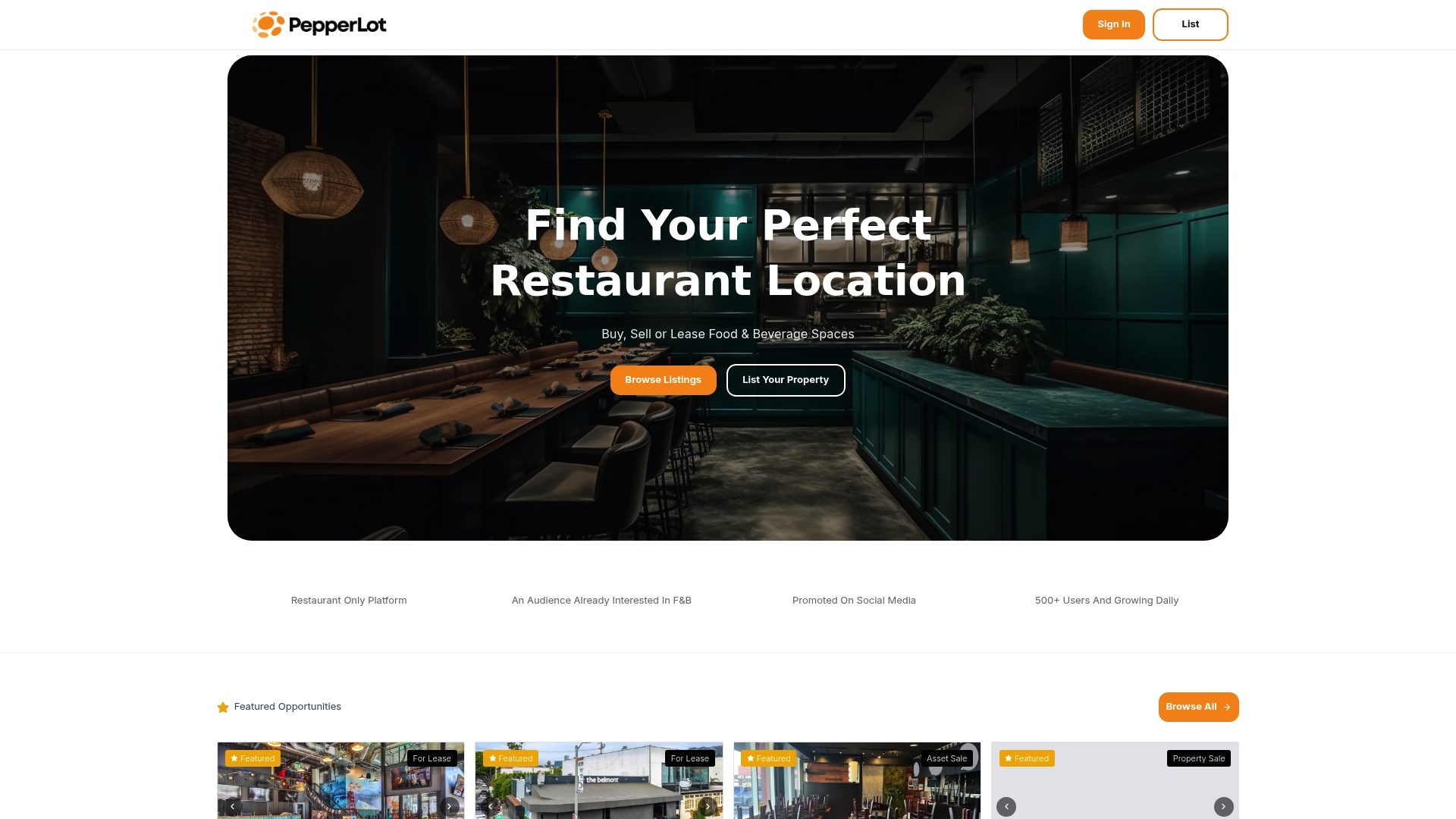
PepperLot gives you access to listings that include every detail a food business actually needs to evaluate a space. Browse a food business for sale in Inglewood, CA, or explore a San Francisco restaurant lease with full infrastructure details already disclosed. Use advanced location insights to analyze foot traffic, local competition, and demographic demand before you commit. With over 500 active operators, landlords, and brokers on the platform, your next serious match is closer than you think.
Frequently asked questions
What are the key features restaurant buyers should look for on a specialized platform?
Look for food-use zoning filters, kitchen infrastructure fields like grease traps and hood systems, and tools that match spaces by cuisine type or operational model. These specialized platform features directly streamline restaurant property matches and cut out irrelevant results.
How do specialized real estate platforms reduce search time for landlords?
By surfacing tenant intent and demand for specific restaurant properties, these platforms help landlords connect with serious inquiries faster and avoid wasted showings from unqualified prospects.
Are there risks to only using niche platforms for restaurant real estate deals?
Yes. A niche-only approach can limit your exposure to broader market inventory, especially in smaller cities, so combining specialized and general search tools gives you the best coverage.
Which specialized features do platforms like PepperLot and Sytes offer that general sites miss?
Platforms like PepperLot and Sytes offer F&B-specific filters and analytics, including tenant intent data, turnkey kitchen matching, and infrastructure details that general commercial platforms never capture.
Recommended
- Why Restaurant-Only Listing Platforms Benefit Property Owners and Agents | PepperLot Blog
- PepperLot, The Marketplace for Restaurant Real Estate
- Restaurant Real Estate 101: How to Find, Lease, or Buy the Right Space for Your Concept | PepperLot Blog
- How Data-Driven Marketplaces Are Changing Restaurant Leasing in California | PepperLot Blog
- Services – Sorbey | Restaurant Marketing Solutions | Sorbey
Browse restaurant space for lease and restaurants for sale on PepperLot.
Leave a Reply