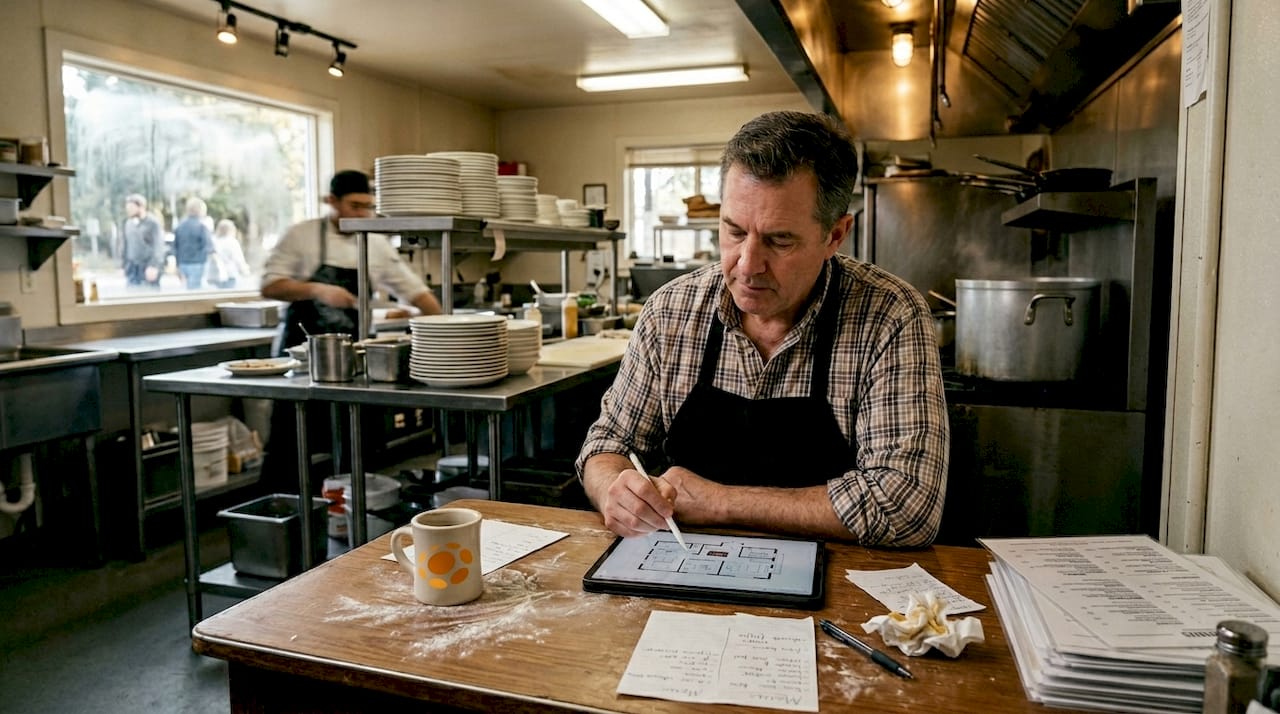
Location can determine whether a restaurant thrives or barely survives. But beyond choosing the right neighborhood, there’s a deeper decision most operators face early: should you buy the space or lease it? This choice shapes your cash flow, your creative freedom, and your long-term wealth. Leasing offers flexibility, but buying puts you in the driver’s seat in ways that compound over time. In this article, we break down the real advantages of purchasing restaurant space, from tax savings to equity growth, so you can evaluate what makes sense for your specific situation and goals.
Table of Contents
- Maximized control and customization
- Tax advantages and accelerated depreciation
- Long-term stability and equity growth
- Strategic decision factors: Buying vs. leasing
- Our perspective: How owners can make the right investment decision
- PepperLot: Your gateway to prime restaurant investments
- Frequently asked questions
Key Takeaways
| Point | Details |
|---|---|
| Customization freedom | Ownership lets you tailor your restaurant space to match your exact vision without landlord restrictions. |
| Tax and cash flow benefits | Buying enables valuable tax deductions and accelerated depreciation, boosting profits in early years. |
| Stability and equity growth | Owning gives you long-term security and builds asset value that can support future expansion. |
| Informed decision-making | Evaluate buying versus leasing based on business goals, location, and available capital to ensure the best fit. |
Maximized control and customization
When you own your restaurant space, you answer to one person: yourself. That kind of freedom is hard to put a price on, especially in an industry where your physical environment is part of your brand.
Leasing means working within someone else’s rules. Want to knock out a wall to expand your kitchen? You need approval. Want to install a custom ventilation system or upgrade your grease trap? You’re negotiating with a landlord who may not share your urgency or vision. Ownership eliminates that friction entirely. As full control over customizations confirms, owning gives you the freedom to redesign interiors, restructure kitchen layouts, and modify operations without waiting on anyone.
Here’s what that looks like in practice:
- Kitchen layout redesign: Move prep stations, add a second oven line, or expand cold storage without approval delays.
- Interior branding: Build the exact ambiance your concept demands, from lighting to flooring to acoustic panels.
- Operating hours: Open at 6 a.m. or close at 2 a.m. No lease clauses restricting your schedule.
- Outdoor expansion: Add a patio, install a pergola, or create a takeout window without landlord sign-off.
- Technology upgrades: Wire the space for your POS system, security cameras, or kitchen display screens your way.
This level of adaptability matters more than most operators realize. Restaurant concepts evolve. Menus change. Customer expectations shift. When you own the space, you can respond to those shifts immediately, not six weeks after a landlord review.
Operators exploring options in high-demand markets like leasing in Anaheim or leasing in California often find that leasing is the faster entry point, but ownership becomes the smarter long-term play once a concept is proven.
“The best restaurant spaces aren’t just found, they’re built. Ownership gives you the canvas to build exactly what your brand needs.”
Pro Tip: When designing your owned space, build in adaptable infrastructure from day one. Oversized electrical panels, extra plumbing rough-ins, and modular kitchen layouts cost a fraction upfront compared to retrofitting later.
Tax advantages and accelerated depreciation
Buying restaurant space isn’t just a real estate move. It’s a tax strategy. The financial benefits available to property owners can dramatically change your annual bottom line.
Here are the core tax advantages owners unlock:
- Mortgage interest deduction: Interest paid on your commercial mortgage is generally deductible, reducing taxable income every year.
- Property tax deduction: Annual property taxes paid on your restaurant space are deductible as a business expense.
- Standard depreciation: The IRS allows you to depreciate commercial real estate over 39 years, creating a consistent annual deduction.
- Cost segregation studies: This is where things get powerful. A cost segregation study reclassifies parts of your building into shorter depreciation categories, typically 5 or 15 years instead of 39.
- Bonus depreciation: In many cases, reclassified assets qualify for 60 to 100 percent bonus depreciation in the first year, creating a massive immediate deduction.
The numbers are striking. First-year savings of $142k to $615k are achievable on restaurant properties valued between $1 million and $9 million when cost segregation is applied correctly. That’s not a marginal benefit. That’s capital you can reinvest into staffing, marketing, or a second location.
| Property value | Estimated first-year tax savings |
|---|---|
| $1,000,000 | ~$142,000 |
| $3,000,000 | ~$280,000 |
| $6,000,000 | ~$450,000 |
| $9,000,000 | ~$615,000 |
The accelerated depreciation methodology works by reclassifying assets like flooring, lighting, and specialized equipment to 5 or 15-year depreciation lives instead of the standard 39-year commercial building schedule. For restaurant owners, this is particularly effective because so much of a restaurant buildout involves personal property and land improvements.
Operators considering ownership in markets like leasing in Pasadena should factor these tax benefits into their total return calculation before assuming leasing is the more affordable option.
Pro Tip: Hire a tax advisor who specializes in commercial real estate or the restaurant industry before closing on a property. A cost segregation study typically costs $5,000 to $15,000 but can generate tens of thousands in first-year savings.
Long-term stability and equity growth
One of the most underappreciated risks in the restaurant industry is losing your location. A landlord decides not to renew. Rent doubles at renewal. The building gets sold to a developer. Any of these scenarios can end a thriving restaurant overnight, regardless of how strong your brand is.
Ownership removes that risk entirely. You control the asset. No one can price you out or force you to relocate.
Beyond security, ownership builds equity. Every mortgage payment increases your stake in a tangible asset. Over time, that asset typically appreciates, especially in urban and suburban markets with strong food and beverage demand.
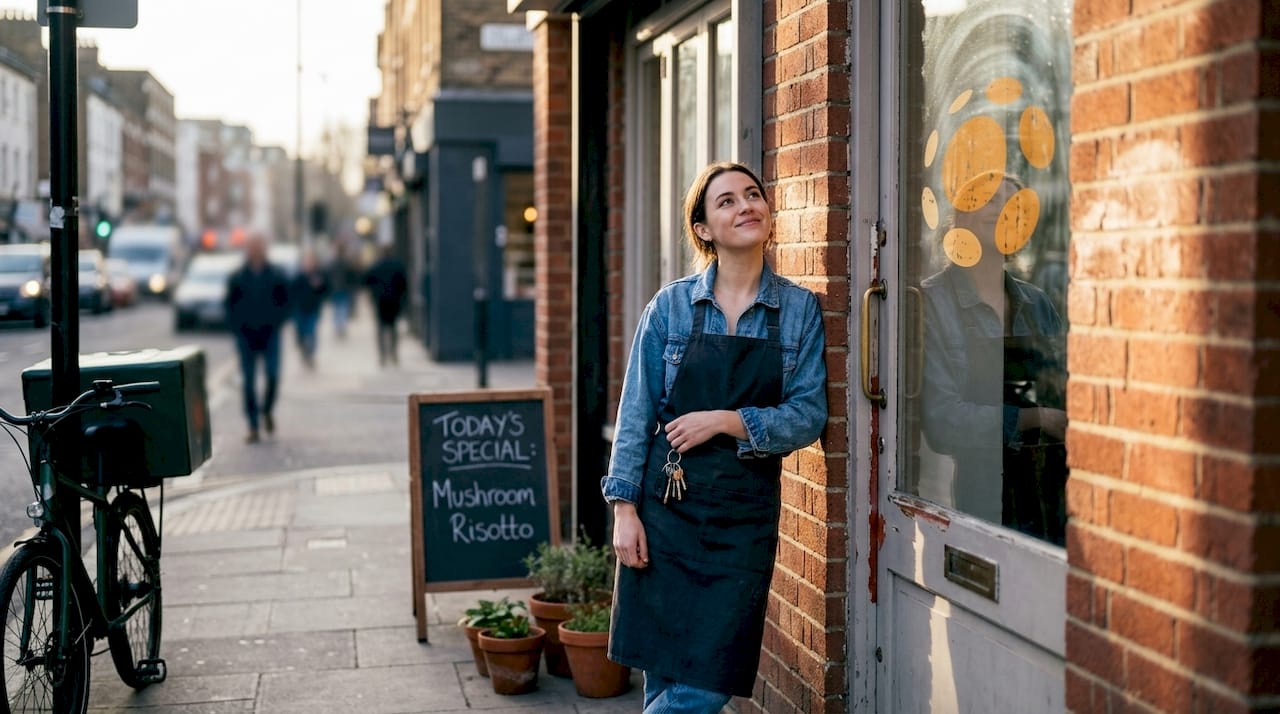
Here’s a side-by-side look at how buying and leasing compare on long-term financial stability:
| Factor | Buying | Leasing |
|---|---|---|
| Monthly cost predictability | Fixed mortgage payment | Variable rent increases |
| Asset appreciation | Yes, equity grows over time | No, payments build no equity |
| Location security | Permanent | Subject to landlord decisions |
| Capital requirement | High upfront | Lower upfront |
| Flexibility to relocate | Low | High |
Equity also becomes a financing tool. Once you’ve built meaningful equity in your property, you can use it to secure loans for expansion, renovations, or even a second location. It’s a compounding advantage that leasing simply cannot replicate.
“Owning your restaurant space turns a fixed operating cost into a wealth-building asset. Every year you operate, you’re building something that belongs to you.”
That said, leasing enables prime locations that may be unaffordable to purchase outright, and it preserves capital for operations. For operators in high-cost markets like leasing in Long Beach, leasing may be the only viable entry point. The key is knowing which stage of growth you’re in.
- Early-stage operators: Leasing preserves cash for concept development and marketing.
- Established operators: Buying locks in costs and starts building equity.
- Multi-unit operators: Owning flagship locations while leasing secondary sites can balance stability and flexibility.
Strategic decision factors: Buying vs. leasing
There’s no universal answer to whether buying or leasing is right for your restaurant. The right choice depends on your financial position, your concept’s maturity, and your long-term goals.
Leasing makes sense when:
- You’re launching a new concept and need flexibility to pivot or relocate.
- The ideal location is in a high-cost market where purchase prices are prohibitive.
- You need to preserve capital for operations, staffing, or inventory.
- Your business model depends on being in a specific high-traffic area you cannot afford to buy.
Buying makes sense when:
- Your concept is proven and you’re committed to a specific market long-term.
- You have the capital or financing for a down payment without straining operations.
- You want to eliminate rent risk and build equity simultaneously.
- You’re in a market where property values are expected to appreciate.
Here’s a quick comparison to help frame the decision:
| Decision factor | Buying | Leasing |
|---|---|---|
| Upfront capital needed | High | Low |
| Long-term cost control | Strong | Weak |
| Location flexibility | Low | High |
| Tax advantages | Significant | Minimal |
| Equity building | Yes | No |
| Risk of displacement | None | High |
As buying excels in equity, tax, and stability for the right operator profile, the decision really comes down to timing and capital readiness. Operators exploring competitive markets like leasing in San Francisco or leasing in Los Angeles often find that leasing is the practical starting point, with ownership as the long-term target.
The smartest operators we see use leasing strategically in the early years, then transition to ownership once their brand has traction and their financials can support it.
Our perspective: How owners can make the right investment decision
Here’s the uncomfortable truth the industry rarely says out loud: having the capital to buy doesn’t automatically mean you should.
We’ve seen operators lock up their liquidity in a property purchase, then struggle to fund a menu refresh, a marketing push, or a key hire. The building appreciates, but the business stagnates. That’s not a win.
Conventional wisdom treats buying as the obvious upgrade from leasing. But smart acquisition timing matters more than the act of buying itself. The right question isn’t “Can I afford to buy?” It’s “Does buying this space now accelerate my business, or does it constrain it?”
Market cycles matter too. Buying at peak valuations in a cooling market can erode the equity advantage you’re counting on. Operators in markets like leasing in Oakland know that timing and local market conditions shape the real return on a purchase.
Our hard-won lesson: buy when the space serves your growth, not just your ego. Ownership is powerful, but only when it’s aligned with where your business is headed, not where you wish it was.
PepperLot: Your gateway to prime restaurant investments
If you’re ready to move from evaluating options to taking action, PepperLot restaurant marketplace gives you a focused, intelligent starting point. Unlike generic commercial real estate platforms, Pepperlot is built exclusively for restaurant and food and beverage real estate, so every listing includes the details that actually matter to operators: grease traps, permits, seating capacity, kitchen specs, and more.
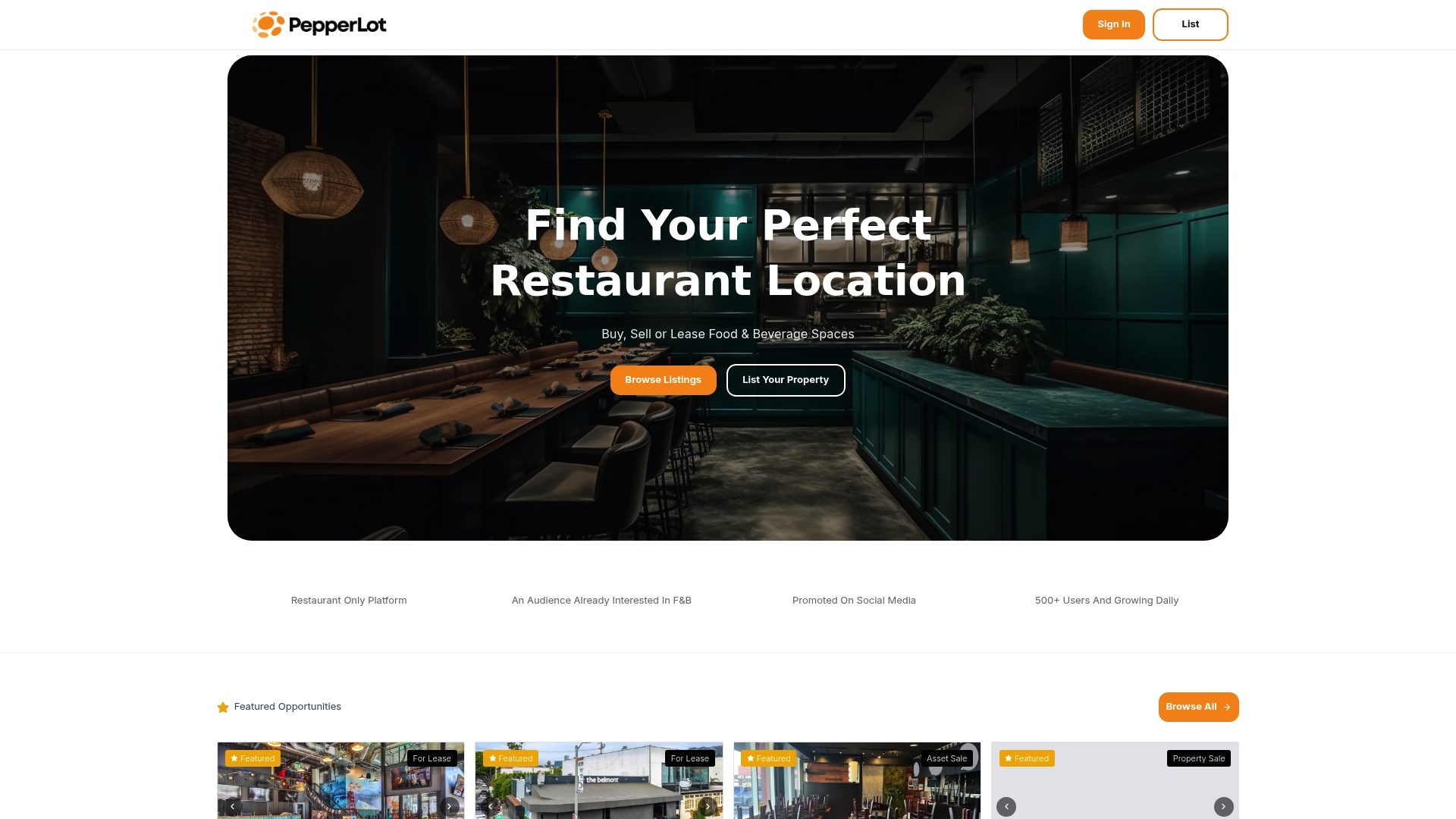
Whether you’re looking to purchase a space, explore lease opportunities, or list a property you’re ready to exit, Pepperlot connects you with serious buyers, qualified tenants, and experienced brokers. Check out active opportunities like selling restaurants in Oakland to see what’s available in your target market. With over 500 active users and data-driven location tools, Pepperlot helps you make smarter decisions faster.
Frequently asked questions
What are the main tax benefits of buying restaurant space?
Owners can deduct mortgage interest, property taxes, and depreciation for substantial annual savings. With cost segregation, first-year savings can reach $142,000 to $615,000 depending on property value.
How does cost segregation work for restaurant owners?
Cost segregation reclassifies assets like flooring and lighting to 5 or 15-year depreciation schedules instead of the standard 39-year commercial building timeline, accelerating deductions and boosting early cash flow significantly.
Is buying always better than leasing restaurant space?
Not always. Buying excels in equity and stability, while leasing offers access to prime locations with lower upfront investment and greater flexibility to relocate or scale.
What are the risks of owning restaurant space?
Ownership requires significant upfront capital, reduces your ability to relocate quickly, and exposes you to market downturns that can affect property values and equity. It also ties up liquidity that might be better used in operations during early growth stages.
Leave a Reply